Department of Diabetes, Endocrinology and Metabolic Diseases, City of Hope Comprehensive Cancer Center, Duarte, California, United States of America.
PLoS One. 2013 May 22;8(5):e64338. doi: 10.1371/journal.pone.0064338. Print 2013.
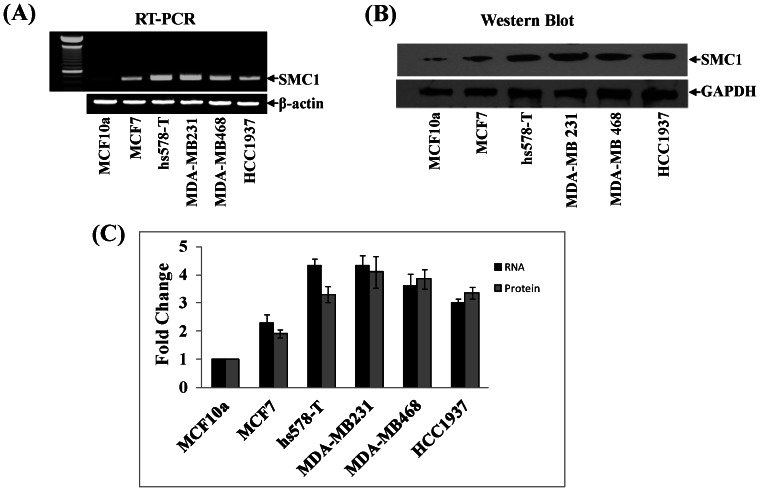
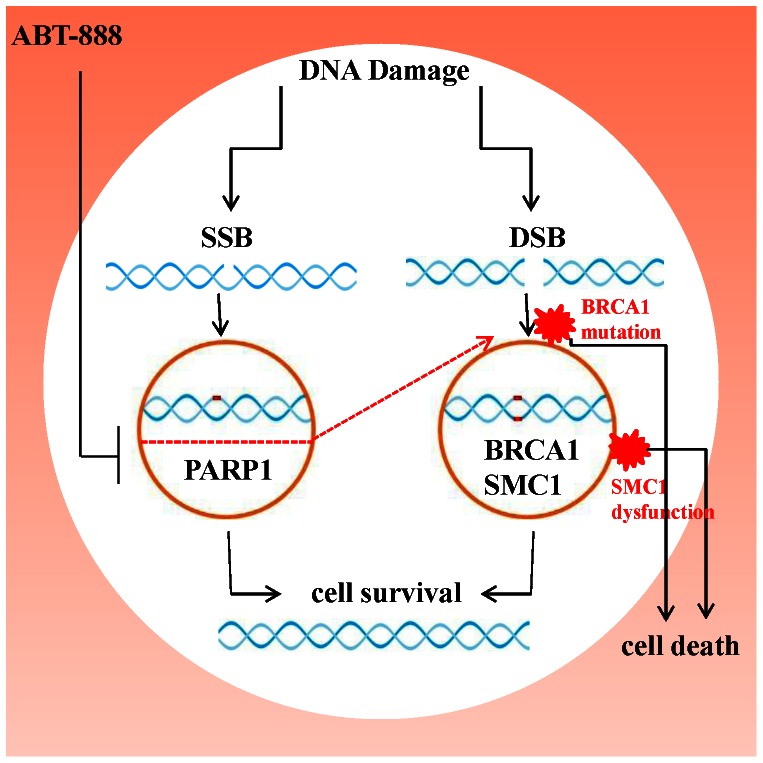
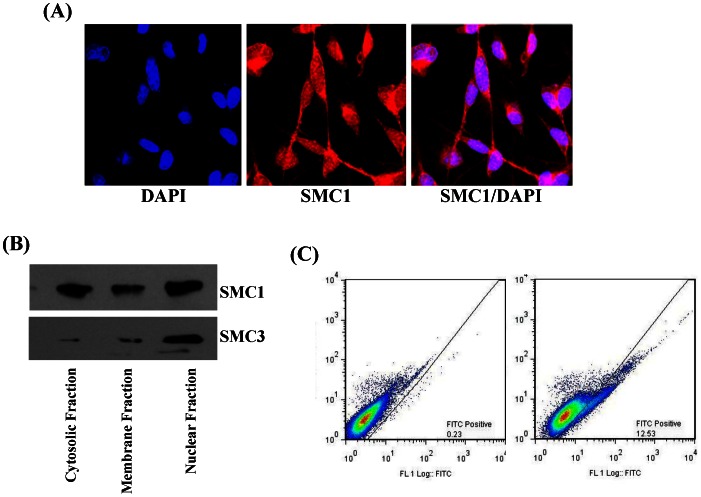
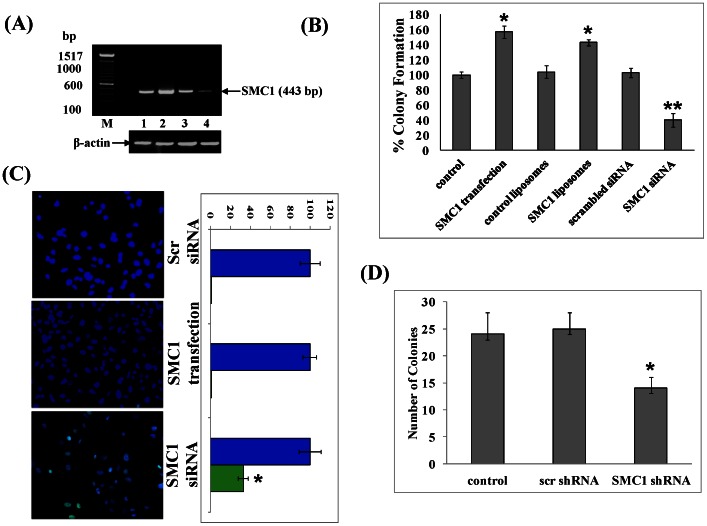
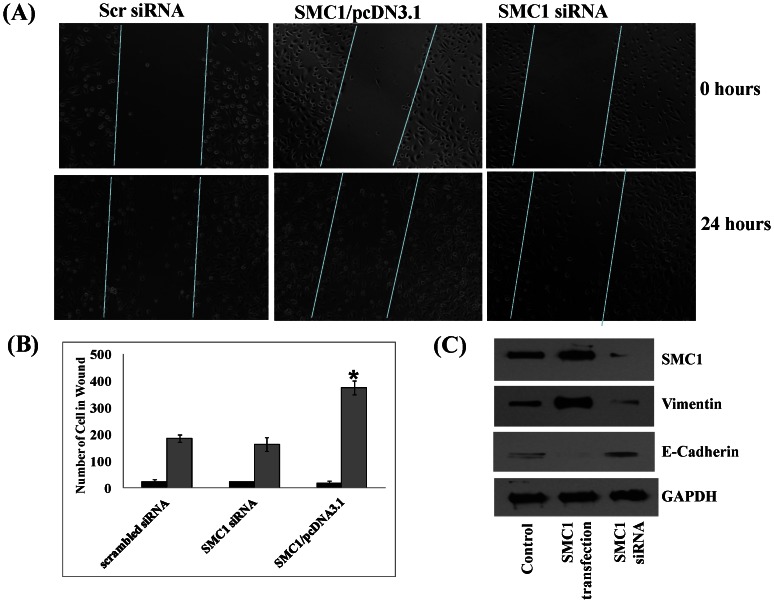
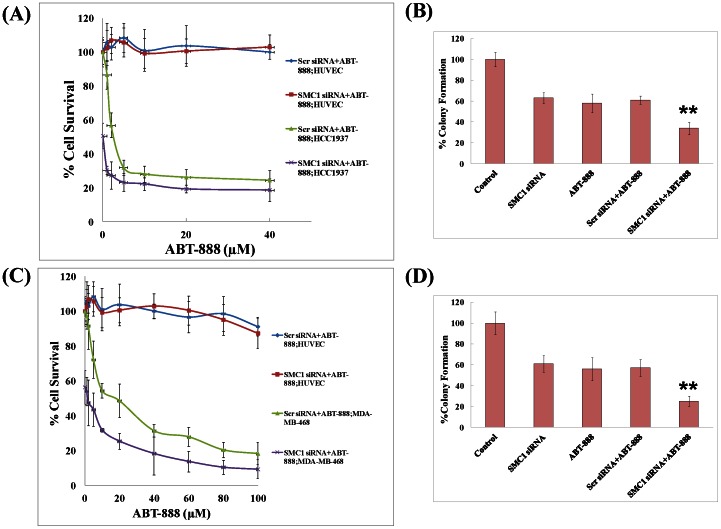
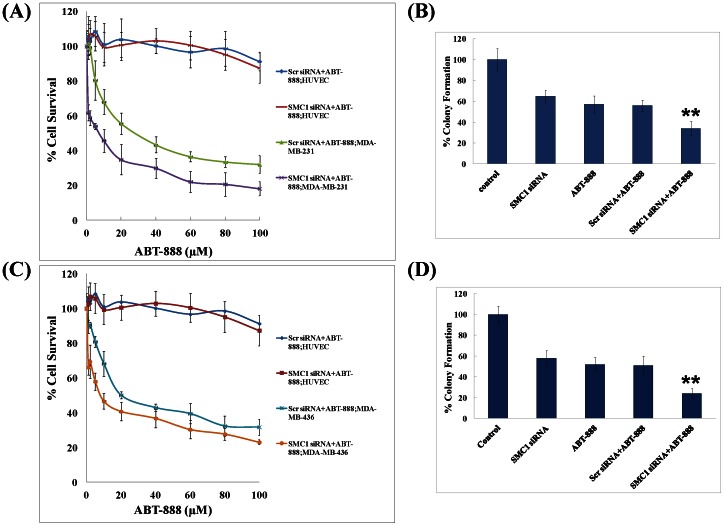
Triple-negative breast cancer (TNBC) is one of the hardest subtypes of breast cancer to treat due to the heterogeneity of the disease and absence of well-defined molecular targets. Emerging evidence has shown the role of cohesin in the formation and progression of various cancers including colon and lung cancer but the role of cohesin in breast cancer remains elusive. Our data showed that structural maintenance of chromosome 1 (SMC1), a subunit of the cohesin protein complex, is differentially overexpressed both at RNA and protein level in a panel of TNBC cell lines as compared to normal epithelial or luminal breast cancer cells, suggesting that the amplified product of this normal gene may play role in tumorigenesis in TNBC. In addition, our results show that induced overexpression of SMC1 through transient transfection enhanced cell migration and anchorage independent growth while its suppression with targeted small interfering RNA (siRNA) reduced the migration ability of TNBC cells. Increased expression of SMC1 also lead to increase in the mesenchymal marker vimentin and decrease in the normal epithelial marker, E-cadherin. Immunocytochemical studies along with flow cytometry and cell fractionation showed the localization of SMC1 in the nucleus, cytoplasm and also in the plasma membrane. The knockdown of SMC1 by siRNA sensitized the TNBC cells towards a PARP inhibitor (ABT-888) and IC₅₀ was approximately three fold less than ABT-888 alone. The cytotoxic effect of combination of SMC1 suppression and ABT-888 was also confirmed by the colony propagation assay. Taken together, these studies report for the first time that SMC1 is overexpressed in TNBC cells where it plays a role in cell migration and drug sensitivity, and thus provides a potential therapeutic target for this highly invasive breast cancer subtype.
三阴性乳腺癌(TNBC)是最难治疗的乳腺癌亚型之一,因为该疾病存在异质性,并且缺乏明确的分子靶点。新出现的证据表明,黏连蛋白在包括结肠癌和肺癌在内的各种癌症的形成和进展中发挥作用,但黏连蛋白在乳腺癌中的作用仍不清楚。我们的数据表明,结构维持染色体 1(SMC1),黏连蛋白蛋白复合物的一个亚基,在 TNBC 细胞系中的 RNA 和蛋白质水平上均表现出差异过表达,与正常上皮或腔乳腺癌细胞相比,这表明该正常基因的扩增产物可能在 TNBC 的肿瘤发生中发挥作用。此外,我们的结果表明,通过瞬时转染诱导 SMC1 的过表达增强了细胞迁移和锚定独立生长,而用靶向小干扰 RNA(siRNA)抑制 SMC1 则降低了 TNBC 细胞的迁移能力。SMC1 的表达增加也导致间充质标志物波形蛋白的增加和正常上皮标志物 E-钙粘蛋白的减少。免疫细胞化学研究以及流式细胞术和细胞分馏显示 SMC1 定位于细胞核、细胞质和质膜。siRNA 敲低 SMC1 使 TNBC 细胞对 PARP 抑制剂(ABT-888)敏感,IC₅₀ 比单独 ABT-888 约低三倍。SMC1 抑制和 ABT-888 联合的细胞毒性作用也通过集落繁殖实验得到证实。综上所述,这些研究首次报道 SMC1 在 TNBC 细胞中过表达,在细胞迁移和药物敏感性方面发挥作用,因此为这种高度侵袭性的乳腺癌亚型提供了一个潜在的治疗靶点。