Flinders Centre for Innovation in Cancer, Flinders University of South Australia, Adelaide, Australia.
PLoS One. 2013 May 23;8(5):e64362. doi: 10.1371/journal.pone.0064362. Print 2013.
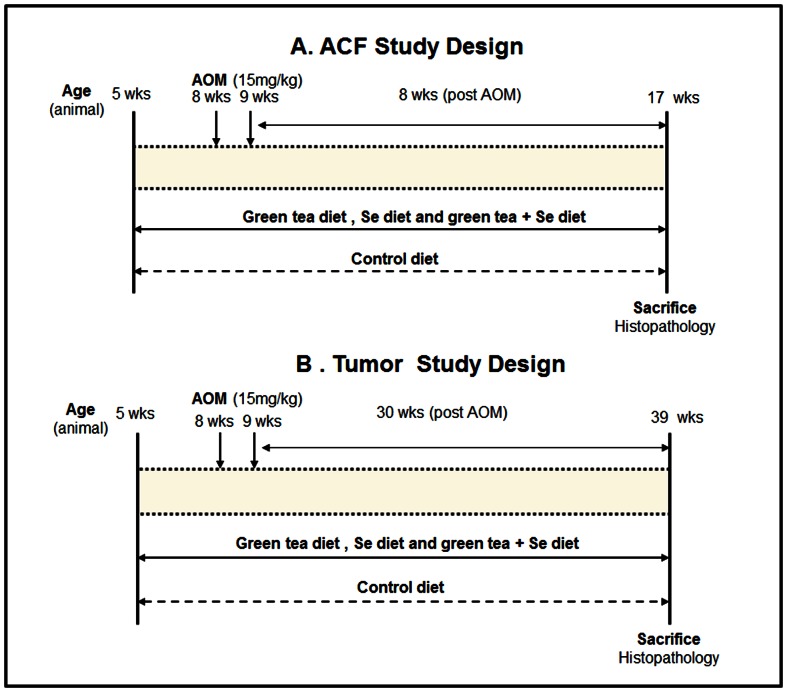
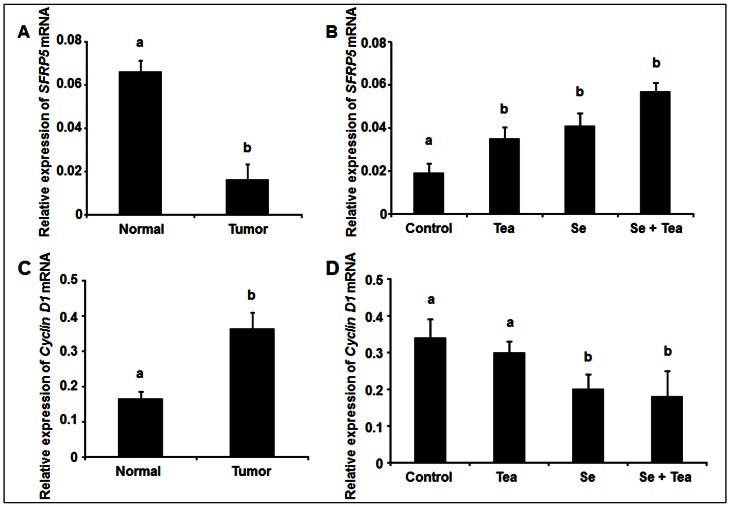
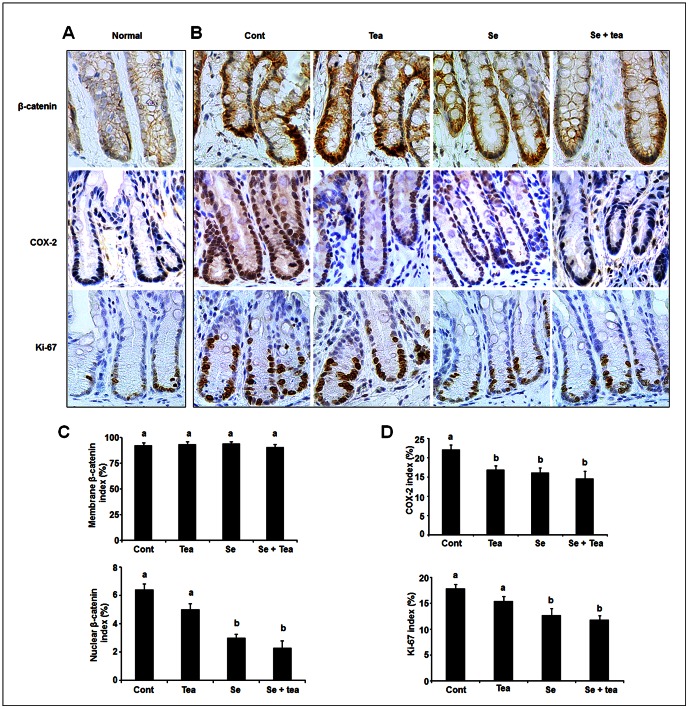
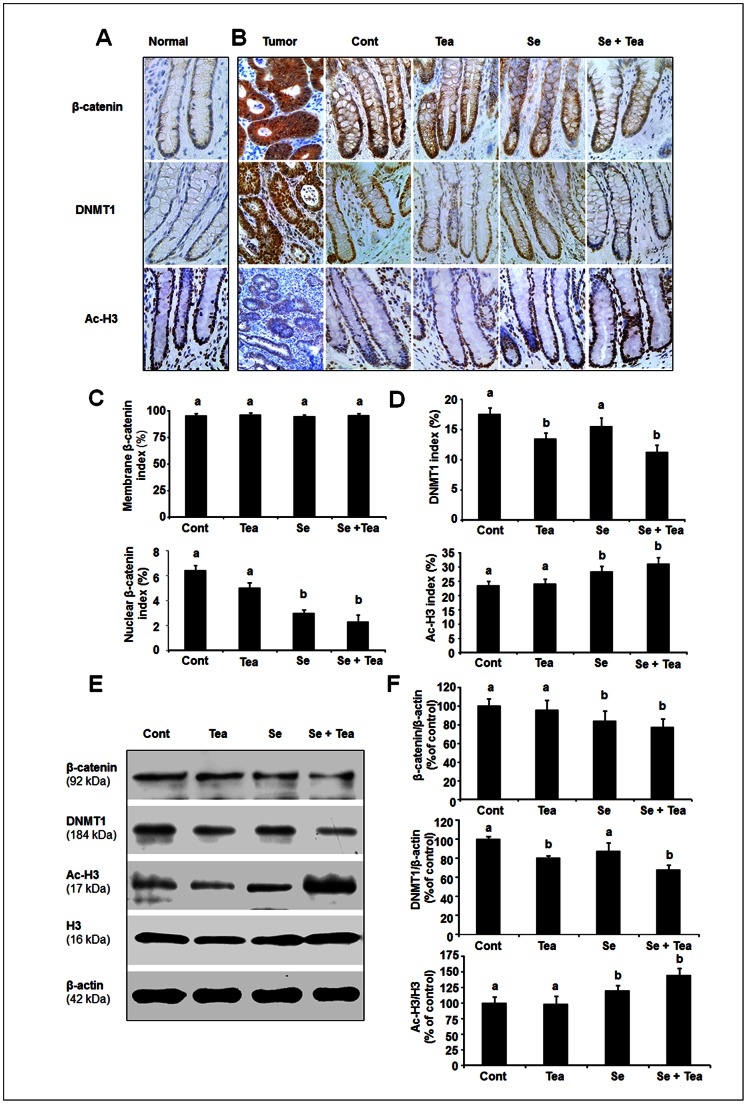
Dietary supplementation of selenium and green tea holds promise in cancer prevention. In this study, we evaluated the efficacies of selenium and green tea administered individually and in combination against colorectal cancer in an azoxymethane (AOM)-induced rat colonic carcinogenesis model and determined the underlying mechanisms of the protection. Four-week old Sprague-Dawley male rats were fed with diets containing 0.5% green tea extract, 1 ppm selenium as selenium-enriched milk protein, or combination of 1 ppm selenium and 0.5% green tea extract. Animals received 2 AOM (15 mg/kg) treatments to induce colonic oncogenesis. Rats were killed 8 or 30 wk later after the last AOM to examine the effect of dietary intervention on aberrant crypt foci (ACF) formation or tumor development. On sacrifice, colons were examined for ACF and tumors, the mRNA levels of SFRP5 and Cyclin D1, and the proteins levels of ß-catenin, COX-2, Ki-67, DNMT1 and acetyl histone H3. The combination of selenium and green tea resulted in a significant additive inhibition of large ACF formation, this effect was greater than either selenium or green tea alone, P<0.01; the combination also had a significant additive inhibition effect on all tumor endpoints, the effect of the combination diet on tumor incidence, multiplicity and size was greater than selenium or green tea alone, P<0.01. Rats fed the combination diet showed marked reduction of DNMT1 expression and induction of histone H3 acetylation, which were accompanied by restoration of SFRP5 mRNA in normal-appearing colonic crypts. The combination diet also significantly reduced ß-catenin nuclear translocation, Cyclin D1 expression and cell proliferation. These data show, for the first time, that combination of selenium and green tea is more effective in suppressing colorectal oncogenesis than either agent alone. The preventive effect is associated with regulation of genetic and epigenetic biomarkers implicated in colonic carcinogenesis.
膳食补充硒和绿茶有望预防癌症。在这项研究中,我们评估了单独和联合使用硒和绿茶对氧化偶氮甲烷(AOM)诱导的大鼠结肠癌变模型中结直肠癌的疗效,并确定了保护的潜在机制。4 周龄的 Sprague-Dawley 雄性大鼠喂食含有 0.5%绿茶提取物、1ppm 硒作为富硒乳蛋白或 1ppm 硒和 0.5%绿茶提取物组合的饮食。动物接受 2 次 AOM(15mg/kg)处理以诱导结肠肿瘤发生。最后一次 AOM 后 8 或 30 周处死大鼠,以检查饮食干预对异常隐窝病灶(ACF)形成或肿瘤发展的影响。牺牲时,检查结肠 ACF 和肿瘤、SFRP5 和 Cyclin D1 的 mRNA 水平以及 β-catenin、COX-2、Ki-67、DNMT1 和乙酰组蛋白 H3 的蛋白水平。硒和绿茶的联合使用导致大 ACF 形成的显著相加抑制,这种作用大于单独使用硒或绿茶,P<0.01;联合饮食对所有肿瘤终点也有显著的相加抑制作用,联合饮食对肿瘤发生率、多发性和大小的作用大于单独使用硒或绿茶,P<0.01。喂食联合饮食的大鼠显示 DNMT1 表达明显减少,组蛋白 H3 乙酰化诱导,这伴随着正常外观的结肠隐窝中 SFRP5 mRNA 的恢复。联合饮食还显著降低了 β-catenin 核易位、Cyclin D1 表达和细胞增殖。这些数据首次表明,硒和绿茶的联合使用比单独使用任何一种药物更能有效地抑制结直肠肿瘤发生。预防作用与调节与结肠癌变相关的遗传和表观遗传生物标志物有关。