Feinberg Cardiovascular Research Institute, Northwestern University School of Medicine, Chicago, IL.
Department of Medicine, Obesity and Nutrition Section, Mitochondria ARC, Evans Biomedical Research Center, Boston University School of Medicine, 650 Albany St., Boston, MA 02118, USA.
Circ Res. 2013 Jul 19;113(3):279-87. doi: 10.1161/CIRCRESAHA.113.301552. Epub 2013 May 29.
Heme plays a critical role in gas exchange, mitochondrial energy production, and antioxidant defense in cardiovascular system. The mitochondrial transporter ATP-binding cassette (ABC) B10 has been suggested to export heme out of the mitochondria and is required for normal hemoglobinization of erythropoietic cells and protection against ischemia-reperfusion injury in the heart; however, its primary function has not been established.
The aim of this study was to identify the function of ABCB10 in heme synthesis in cardiac cells.
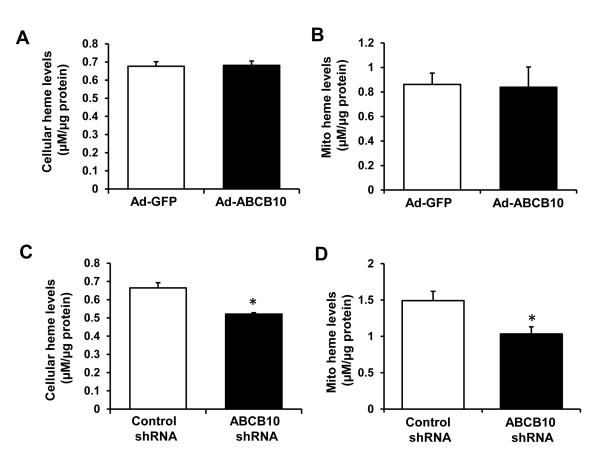
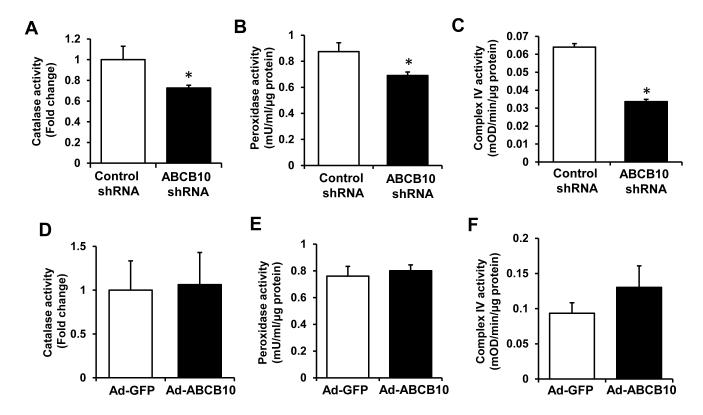
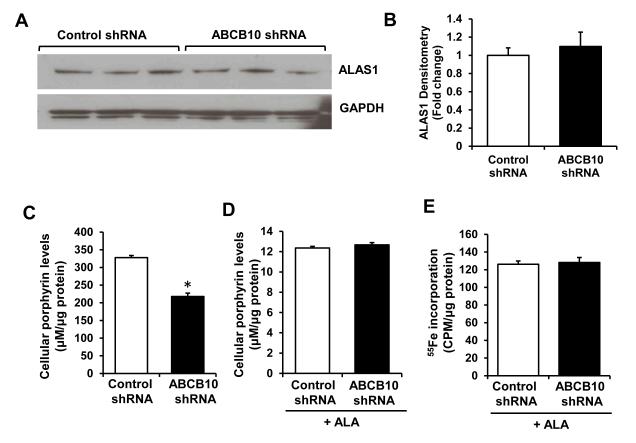
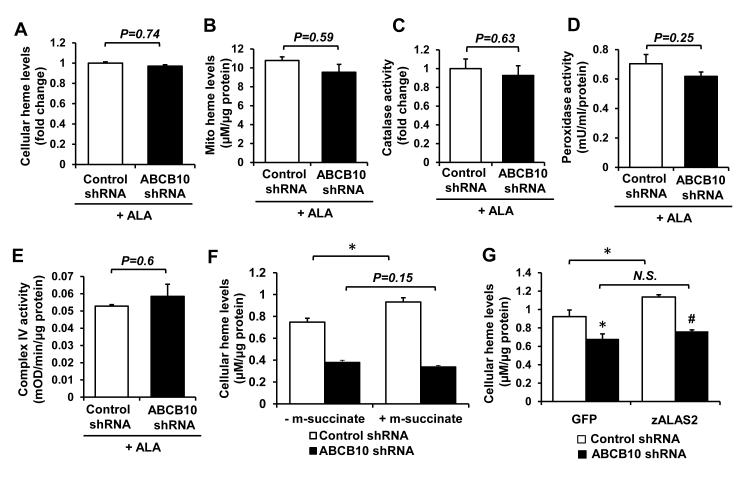
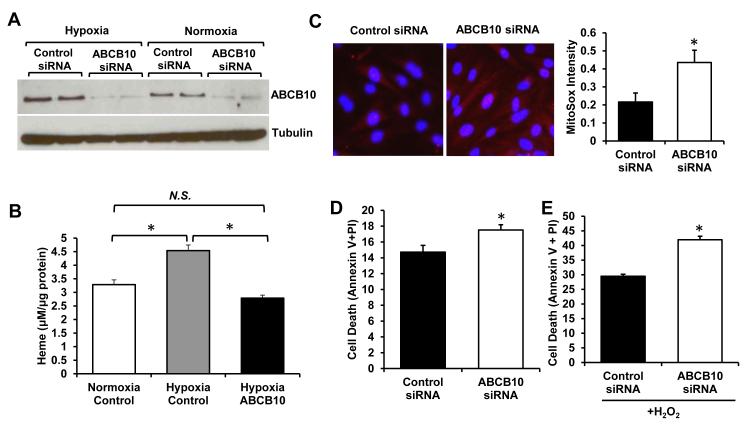
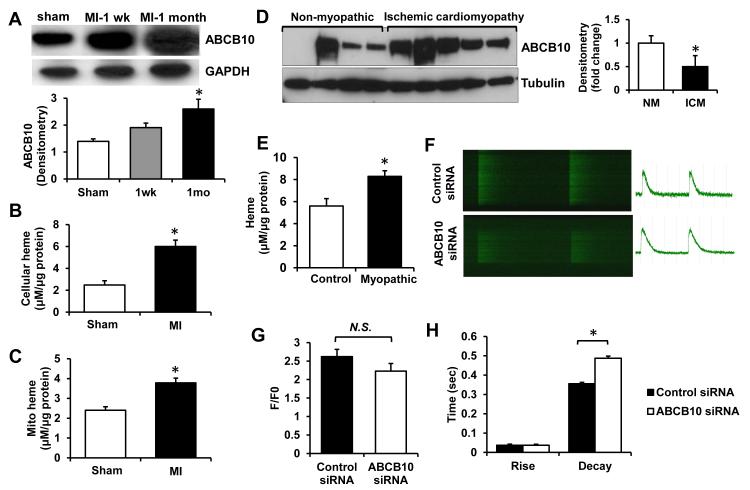
Knockdown of ABCB10 in cardiac myoblasts significantly reduced heme levels and the activities of heme-containing proteins, whereas supplementation with δ-aminolevulinic acid reversed these defects. Overexpression of mitochondrial δ-aminolevulinic acid synthase 2, the rate-limiting enzyme upstream of δ-aminolevulinic acid export, failed to restore heme levels in cells with ABCB10 downregulation. ABCB10 and heme levels were increased by hypoxia, and reversal of ABCB10 upregulation caused oxidative stress and cell death. Furthermore, ABCB10 knockdown in neonatal rat cardiomyocytes resulted in a significant delay of calcium removal from the cytoplasm, suggesting a relaxation defect. Finally, ABCB10 expression and heme levels were altered in failing human hearts and mice with ischemic cardiomyopathy.
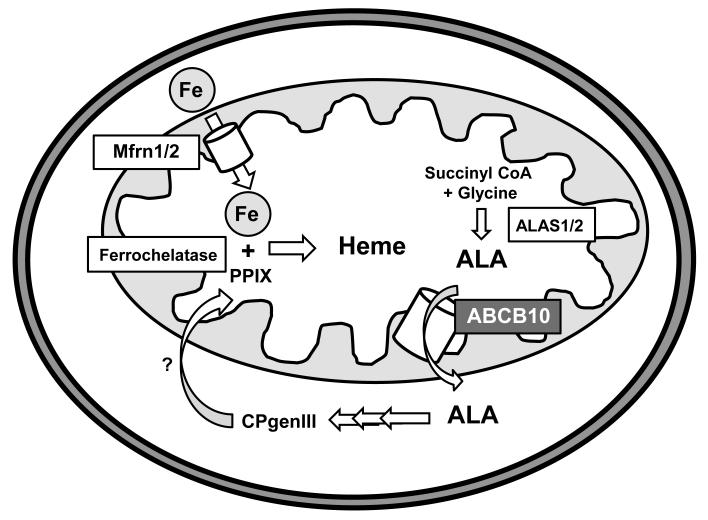
ABCB10 plays a critical role in heme synthesis pathway by facilitating δ-aminolevulinic acid production or export from the mitochondria. In contrast to previous reports, we show that ABCB10 is not a heme exporter and instead is required for the early mitochondrial steps of heme biosynthesis.
血红素在心血管系统的气体交换、线粒体能量产生和抗氧化防御中起着至关重要的作用。线粒体转运蛋白 ATP 结合盒(ABC)B10 已被提出将血红素输出线粒体,并且是红细胞生成细胞正常血红蛋白化和保护心脏免受缺血再灌注损伤所必需的;然而,其主要功能尚未确定。
本研究的目的是确定 ABCB10 在心脏细胞中血红素合成中的作用。
在心肌细胞中敲低 ABCB10 显著降低了血红素水平和含血红素蛋白的活性,而补充 δ-氨基酮戊酸则逆转了这些缺陷。在线粒体 δ-氨基酮戊酸合酶 2 过表达的情况下,该酶是 δ-氨基酮戊酸出口的限速酶,不能恢复 ABCB10 下调细胞中的血红素水平。ABCB10 和血红素水平因缺氧而增加,而 ABCB10 上调的逆转导致氧化应激和细胞死亡。此外,ABCB10 在新生大鼠心肌细胞中的敲低导致细胞质中钙的去除明显延迟,表明松弛缺陷。最后,心力衰竭患者和缺血性心肌病小鼠的 ABCB10 表达和血红素水平发生改变。
ABCB10 通过促进 δ-氨基酮戊酸的产生或从线粒体输出,在血红素合成途径中起着至关重要的作用。与之前的报道相反,我们表明 ABCB10 不是血红素外排泵,而是血红素生物合成早期线粒体步骤所必需的。