Department of Medical Oncology, Fox Chase Cancer Center Philadelphia, PA, USA.
Front Oncol. 2013 May 17;3:117. doi: 10.3389/fonc.2013.00117. eCollection 2013.
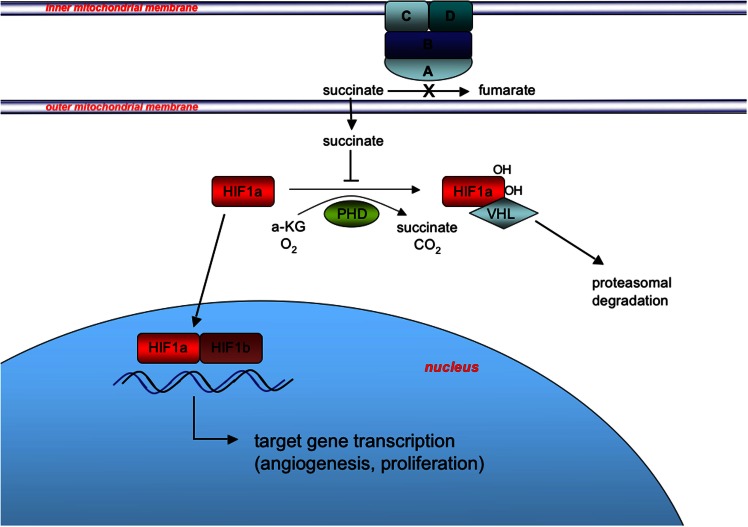
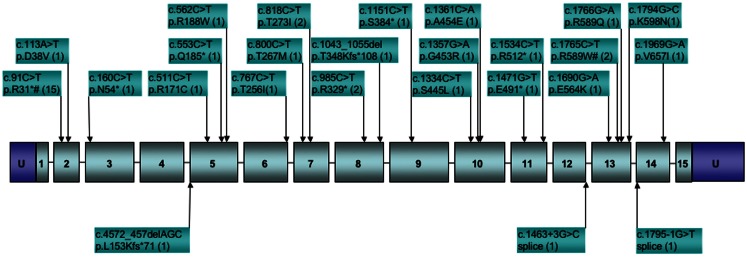
Gastrointestinal stromal tumors (GISTs) in adults are generally driven by somatic gain-of-function mutations in KIT or PDGFRA, and biological therapies targeted to these receptor tyrosine kinases comprise part of the treatment regimen for metastatic and inoperable GISTs. A minority (10-15%) of GISTs in adults, along with ∼85% of pediatric GISTs, lacks oncogenic mutations in KIT and PDGFRA. Not surprisingly these wild type (WT) GISTs respond poorly to kinase inhibitor therapy. A subset of WT GISTs shares a set of distinguishing clinical and pathological features, and a flurry of recent reports has convincingly demonstrated shared molecular characteristics. These GISTs have a distinct transcriptional profile including over-expression of the insulin-like growth factor-1 receptor, and exhibit deficiency in the succinate dehydrogenase (SDH) enzyme complex. The latter is often but not always linked to bi-allelic inactivation of SDH subunit genes, particularly SDHA. This review will summarize the molecular, pathological, and clinical connections that link this group of SDH-deficient neoplasms, and offer a view toward understanding the underlying biology of the disease and the therapeutic challenges implicit to this biology.
成人胃肠道间质瘤(GISTs)通常由 KIT 或 PDGFRA 的体细胞功能获得性突变驱动,针对这些受体酪氨酸激酶的生物治疗是转移性和不可手术性 GISTs 的治疗方案的一部分。少数(10-15%)成人 GISTs 和大约 85%的儿科 GISTs 缺乏 KIT 和 PDGFRA 的致癌突变。毫不奇怪,这些野生型(WT)GISTs对激酶抑制剂治疗反应不佳。WT GIST 的一个亚组具有一组独特的临床和病理特征,最近的一系列报告令人信服地证明了它们具有共同的分子特征。这些 GISTs 具有独特的转录谱,包括胰岛素样生长因子-1 受体的过度表达,并表现出琥珀酸脱氢酶(SDH)酶复合物的缺陷。后者通常但不总是与 SDH 亚基基因的双等位基因失活相关,特别是 SDHA。这篇综述将总结将这组 SDH 缺陷性肿瘤联系在一起的分子、病理和临床联系,并提供对疾病潜在生物学以及对这种生物学隐含的治疗挑战的理解。