Ponnam Surya Prakash Goud, Ramesha Kekkunaya, Matalia Jyoti, Tejwani Sushma, Ramamurthy Balasubramanya, Kannabiran Chitra
Kallam Anji Reddy Molecular Genetics Laboratory, L V Prasad Eye Institute, KAR Campus, Banjara Hills Road No.2, Hyderabad, Andhra Pradesh, India.
Mol Vis. 2013 May 29;19:1141-8. Print 2013.
To screen for pathogenic mutations in ten candidate genes in Indian families diagnosed with autosomal recessive and autosomal dominant cataracts.
Families with two or more affected individuals with bilateral familial congenital/developmental cataract were ophthalmically evaluated, and blood samples were obtained. Genomic DNA extracted from the blood leukocytes was screened with PCR amplification of the exons and the flanking intronic regions of various genes selected for analysis. The amplified products were subjected to single strand conformation polymorphism (SSCP) analysis. The variants in SSCP analysis were subjected to bidirectional sequencing by automated methods.
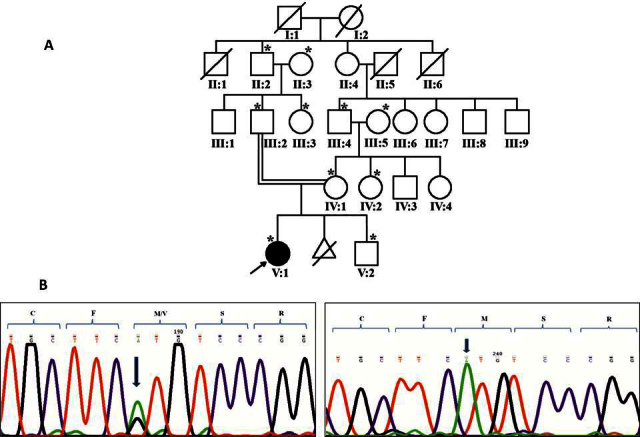
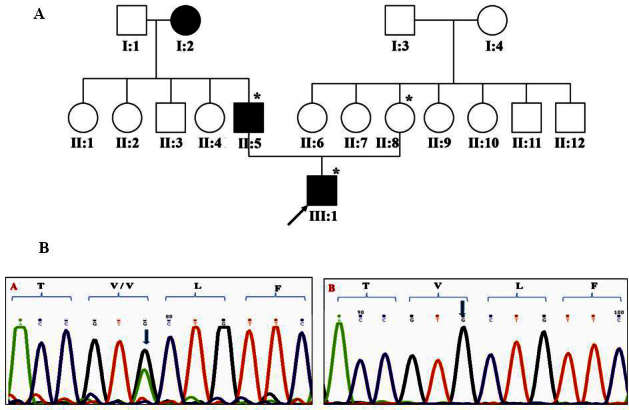
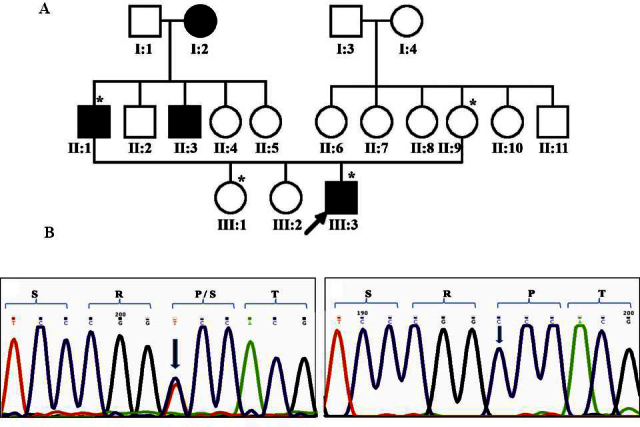
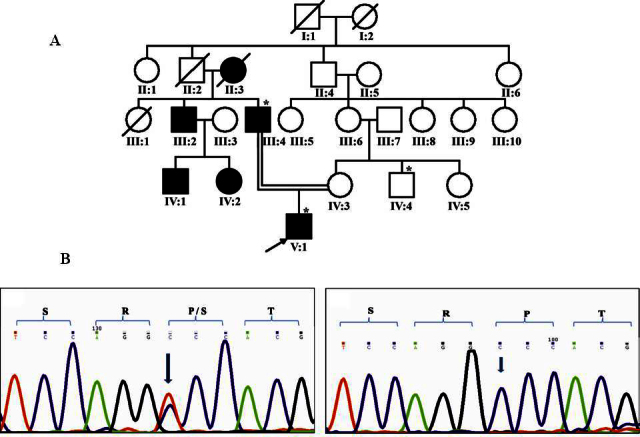
We identified four novel sequence changes that cosegregated with the disease phenotype in each family and were absent in at least 50 ethnically matched unrelated normal controls. These changes include a homozygous missense change of c.649G>A (Val196Met) in GJA8/connexin 50 (Cx50) in a family with autosomal recessive cataract, two heterozygous missense changes, c.658C>T (Pro199Ser) in GJA8/Cx50 and c.589C>T (Pro197Ser) in GJA3/connexin 46 (Cx46) in two separate families with autosomal dominant cataract, and a silent change ( c.84G>A/p.Val28Val, predicted to result in the creation of a new potential branch point) in GJA8 one family with an autosomal dominant inheritance of cataract. Of the four novel mutations identified, three mutations, Val196Met (GJA8), Pro199Ser (GJA8), and Pro197Ser (GJA3), are predicted to be in the second extracellular domain of the respective connexin proteins.
Our report extends the mutation spectrum of connexin genes GJA8 and GJA3 and confirms that connexin genes are among the most frequently mutated genes in hereditary cataracts. Our results suggest that connexin gene (GJA8 and GJA3) mutations occur in approximately 10% (4/40 families) of families with congenital hereditary cataracts in a population from southern India.
在诊断为常染色体隐性和常染色体显性白内障的印度家庭中,筛查十个候选基因中的致病突变。
对有两名或更多双侧家族性先天性/发育性白内障患者的家庭进行眼科评估,并采集血样。从血白细胞中提取基因组DNA,通过对选定用于分析的各种基因的外显子和侧翼内含子区域进行PCR扩增来进行筛查。扩增产物进行单链构象多态性(SSCP)分析。SSCP分析中的变异通过自动化方法进行双向测序。
我们鉴定出四个新的序列变化,它们在每个家庭中都与疾病表型共分离,并且在至少50名种族匹配的无关正常对照中不存在。这些变化包括一个常染色体隐性白内障家庭中GJA8/连接蛋白50(Cx50)的c.649G>A(Val196Met)纯合错义变化,两个常染色体显性白内障独立家庭中GJA8/Cx50的c.658C>T(Pro199Ser)和GJA3/连接蛋白46(Cx46)的c.589C>T(Pro197Ser)杂合错义变化,以及一个常染色体显性白内障遗传家庭中GJA8的沉默变化(c.84G>A/p.Val28Val,预计会导致产生一个新的潜在分支点)。在鉴定出的四个新突变中,三个突变,Val196Met(GJA8)、Pro199Ser(GJA8)和Pro197Ser(GJA3),预计位于各自连接蛋白的第二个细胞外结构域。
我们的报告扩展了连接蛋白基因GJA8和GJA3的突变谱,并证实连接蛋白基因是遗传性白内障中最常发生突变的基因之一。我们的结果表明,在印度南部人群中,先天性遗传性白内障家庭中约10%(4/40个家庭)存在连接蛋白基因(GJA8和GJA3)突变。