Department of Medicine, Feinberg School of Medicine, Northwestern University, Chicago, IL 60611-2951, USA.
Neurogastroenterol Motil. 2013 Sep;25(9):e591-8. doi: 10.1111/nmo.12168. Epub 2013 Jun 5.
Esophagogastric junction (EGJ) competence is the fundamental defense against reflux making it of great clinical significance. However, characterizing EGJ competence with conventional manometric methodologies has been confounded by its anatomic and physiological complexity. Recent technological advances in miniaturization and electronics have led to the development of a novel device that may overcome these challenges.
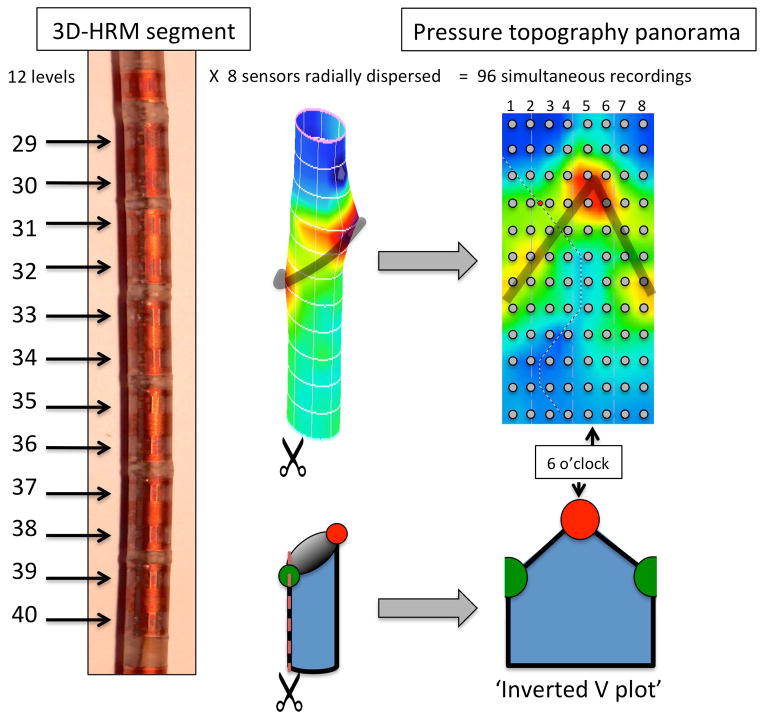
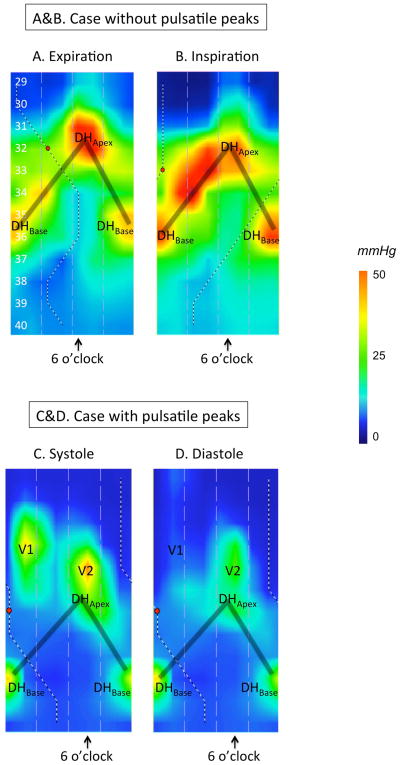
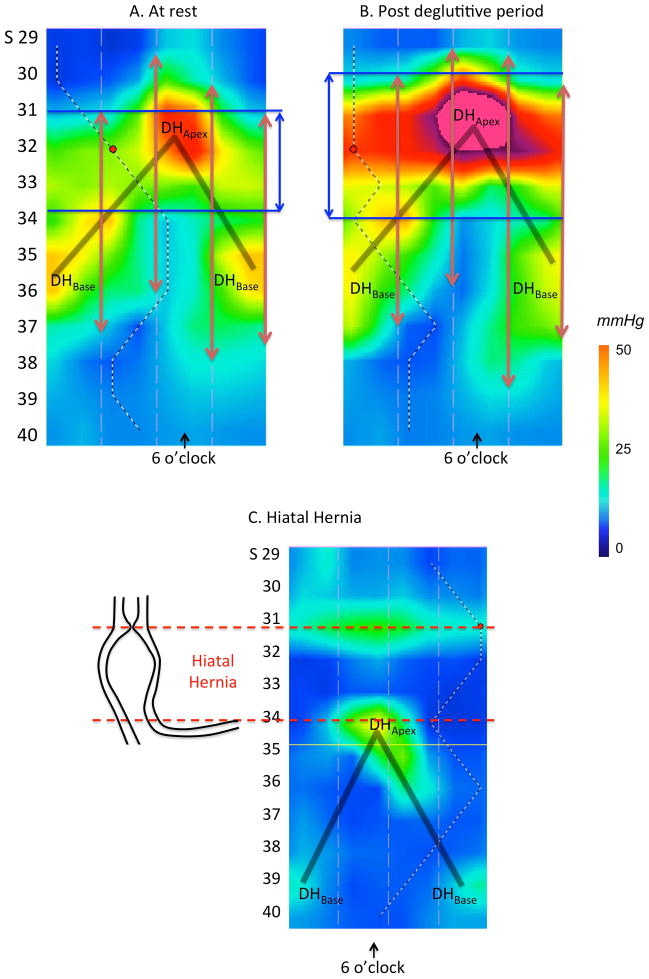
Nine volunteer subjects were studied with a novel 3D-HRM device providing 7.5 mm axial and 45° radial pressure resolution within the EGJ. Real-time measurements were made at rest and compared to simulations of a conventional pull-through made with the same device. Moreover, 3D-HRM recordings were analyzed to differentiate contributing pressure signals within the EGJ attributable to lower esophageal sphincter (LES), diaphragm, and vasculature.
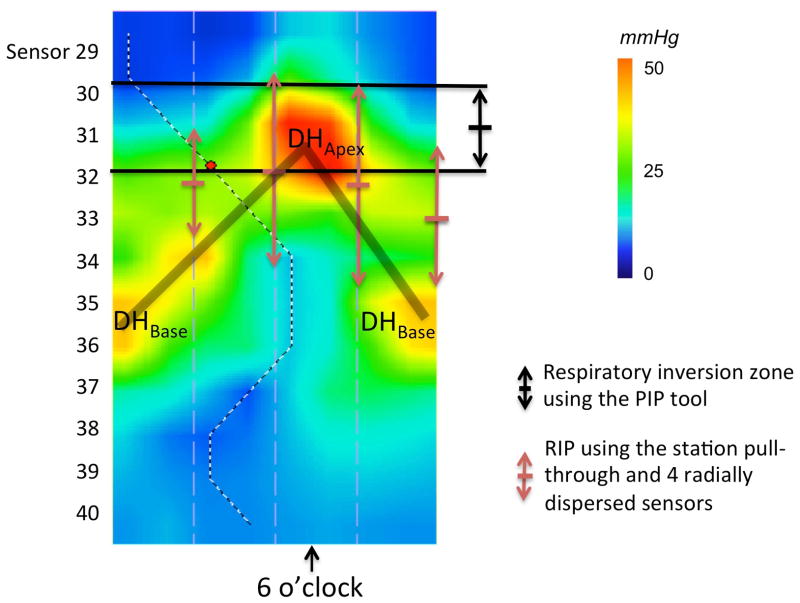
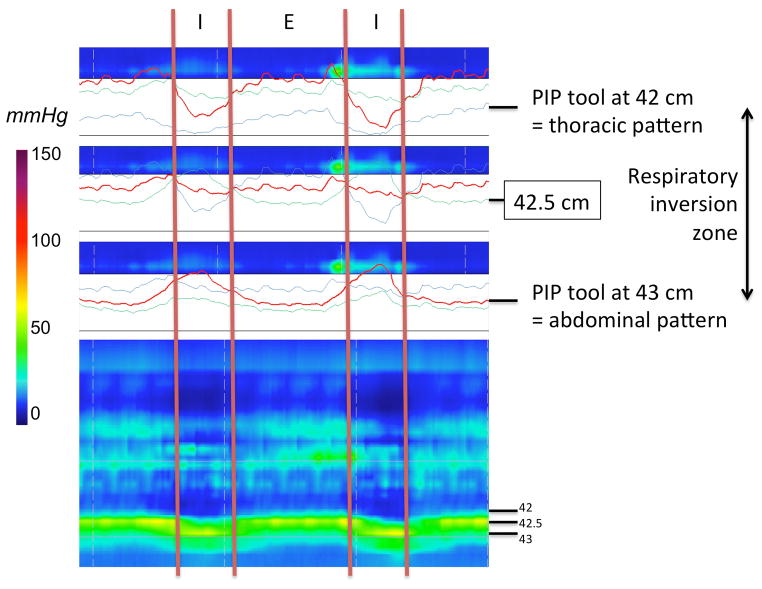
3D-HRM recordings suggested that sphincter length assessed by a pull-through method greatly exaggerated the estimate of LES length by failing to discriminate among circumferential contractile pressure and asymmetric extrinsic pressure signals attributable to diaphragmatic and vascular structures. Real-time 3D EGJ recordings found that the dominant constituents of EGJ pressure at rest were attributable to the diaphragm.
CONCLUSIONS & INFERENCES: 3D-HRM permits real-time recording of EGJ pressure morphology facilitating analysis of the EGJ constituents responsible for its function as a reflux barrier making it a promising tool in the study of GERD pathophysiology. The enhanced axial and radial recording resolution of the device should facilitate further studies to explore perturbations in the physiological constituents of EGJ pressure in health and disease.
食管胃交界(EGJ)功能是抗反流的基本防御机制,因此具有重要的临床意义。然而,由于其解剖和生理结构的复杂性,使用传统测压方法来描述 EGJ 功能一直存在困难。最近在微型化和电子技术方面的进步,导致了一种新型装置的发展,该装置可能克服这些挑战。
对 9 名志愿者进行了研究,使用新型 3D-HRM 装置,在 EGJ 内提供 7.5mm 的轴向和 45°的径向压力分辨率。在静息状态下进行实时测量,并与同一装置进行的传统拉通模拟进行比较。此外,对 3D-HRM 记录进行分析,以区分 EGJ 内归因于下食管括约肌(LES)、膈肌和脉管系统的贡献压力信号。
3D-HRM 记录表明,通过拉通方法评估的括约肌长度极大地夸大了 LES 长度的估计,因为它无法区分圆周收缩压和归因于膈肌和血管结构的不对称外在压力信号。实时 3D EGJ 记录发现,EGJ 压力在静息时的主要成分归因于膈肌。
3D-HRM 允许实时记录 EGJ 压力形态,有利于分析其作为反流屏障功能的 EGJ 组成部分,使其成为 GERD 病理生理学研究的有前途的工具。该装置增强的轴向和径向记录分辨率,应有助于进一步研究,以探索健康和疾病中 EGJ 压力生理组成部分的变化。