Department of Pharmacy, Center for Drug Research, Pharmaceutical Biotechnology, Ludwig-Maximilians-University, Munich, Germany.
BMC Biotechnol. 2013 Jun 4;13:49. doi: 10.1186/1472-6750-13-49.
A key issue for safe and reproducible gene therapy approaches is the autologous and tissue-specific expression of transgenes. Tissue-specific expression in vivo is either achieved by transfer vectors that deliver the gene of interest into a distinct cell type or by use of tissue-specific expression cassettes. Here we present the generation of non-viral, episomally replicating vectors that are able to replicate in a tissue specific manner thus allowing tissue specific transgene expression in combination with episomal replication. The episomal replication of the prototype vector pEPI-1 and its derivatives depends exclusively on a transcription unit starting from a constitutively active promoter extending into the scaffold/matrix attachment region (S/MAR).
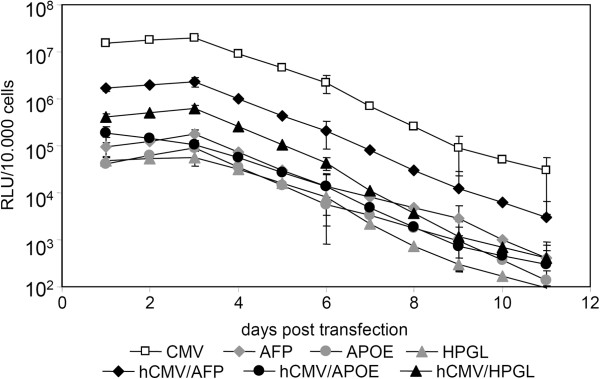
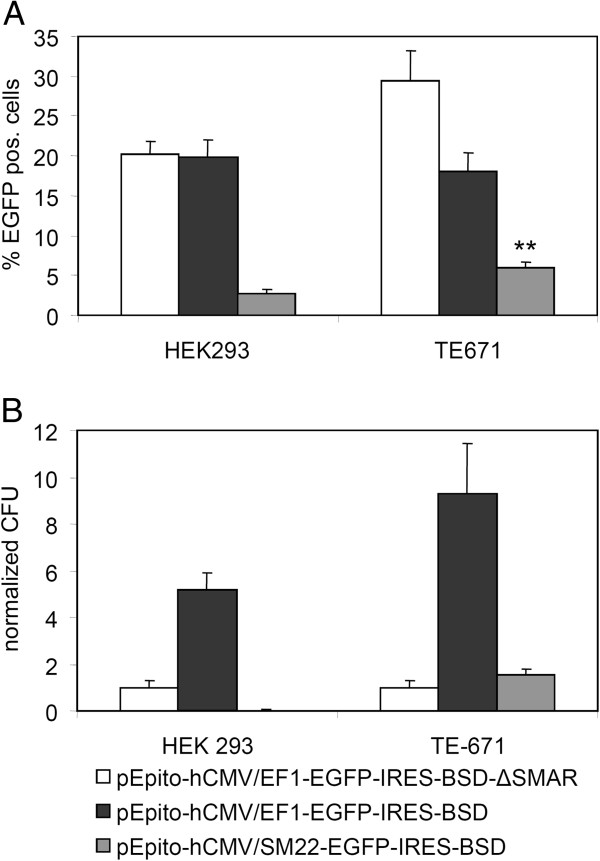
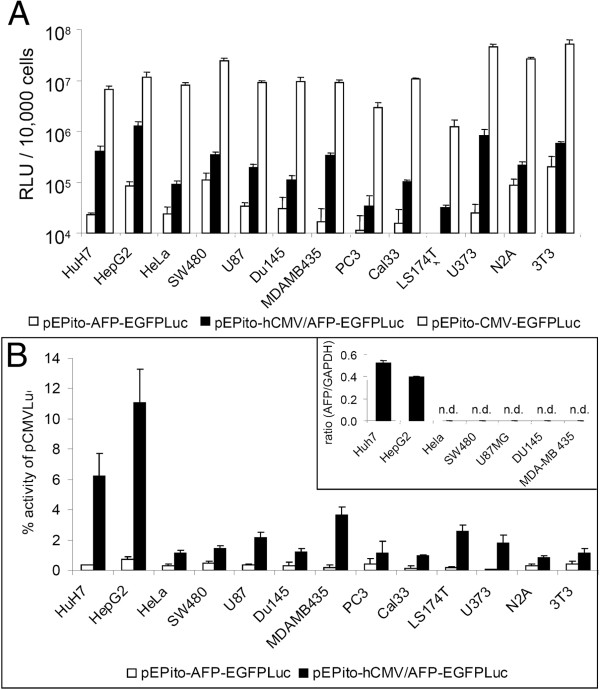
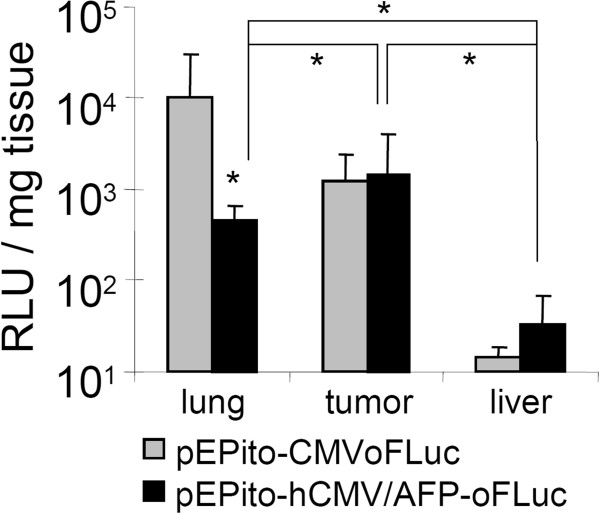
Here, we exchanged the constitutive promoter in the pEPI derivative pEPito by the tumor specific alpha fetoprotein (AFP) or the muscle specific smooth muscle 22 (SM22) promoter leading to specific transgene expression in AFP positive human hepatocellular carcinoma (HUH7) and in a SM22 positive cell line, respectively. The incorporation of the hCMV enhancer element into the expression cassette further boosted the expression levels with both promoters. Tissue specific-replication could be exemplary proven for the smooth muscle protein 22 (SM22) promoter in vitro. With the AFP promoter-driven pEPito vector hepatocellular carcinoma-specific expression could be achieved in vivo after systemic vector application together with polyethylenimine as transfection enhancer.
In this study we present an episomal plasmid system designed for tissue specific transgene expression and replication. The human AFP-promoter in combination with the hCMV enhancer element was demonstrated to be a valuable tissue-specific promoter for targeting hepatocellular carcinomas with non-viral gene delivery system, and tissue specific replication could be shown in vitro with the muscle specific SM22 promoter. In combination with appropriate delivery systems, the tissue specific pEPito vector system will allow higher tissue-specificity with less undesired side effects and is suitable for long term transgene expression in vivo within gene therapeutical approaches.
安全且可重现的基因治疗方法的一个关键问题是转基因的自体和组织特异性表达。体内的组织特异性表达要么通过将目的基因递送到特定细胞类型的转移载体来实现,要么通过使用组织特异性表达盒来实现。在这里,我们介绍了非病毒、附加体复制载体的产生,这些载体能够以组织特异性的方式复制,从而允许与附加体复制相结合的组织特异性转基因表达。原型载体 pEPI-1 及其衍生物的附加体复制完全依赖于从组成型激活启动子开始延伸到支架/基质附着区(S/MAR)的转录单元。
在这里,我们用肿瘤特异性甲胎蛋白(AFP)或肌肉特异性平滑肌 22(SM22)启动子替换了 pEPI 衍生物 pEPito 中的组成型启动子,导致 AFP 阳性人肝癌(HUH7)和 SM22 阳性细胞系中特异性转基因表达。在表达盒中加入 hCMV 增强子元件进一步提高了这两个启动子的表达水平。体外可对平滑肌蛋白 22(SM22)启动子进行组织特异性复制进行示例证明。用 AFP 启动子驱动的 pEPito 载体,在全身应用载体并与聚乙烯亚胺作为转染增强剂一起使用后,可在体内实现肝癌特异性表达。
在这项研究中,我们提出了一种设计用于组织特异性转基因表达和复制的附加体质粒系统。人 AFP 启动子与 hCMV 增强子元件的组合被证明是一种有价值的组织特异性启动子,可用于非病毒基因传递系统靶向肝癌,并且可以在体外用肌肉特异性 SM22 启动子显示组织特异性复制。与适当的传递系统结合,组织特异性 pEPito 载体系统将允许更高的组织特异性,更少的不必要的副作用,并适合于体内基因治疗方法中的长期转基因表达。