Institute of Plant Physiology, Polish Academy of Sciences, ul. Niezapominajek 21, 30-239 Kraków, Poland.
Plant Cell Rep. 2013 Sep;32(9):1465-75. doi: 10.1007/s00299-013-1458-6. Epub 2013 Jun 5.
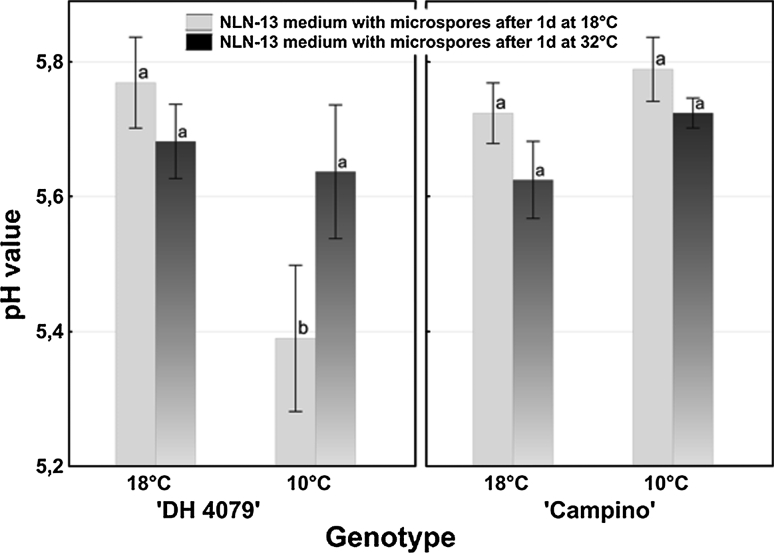
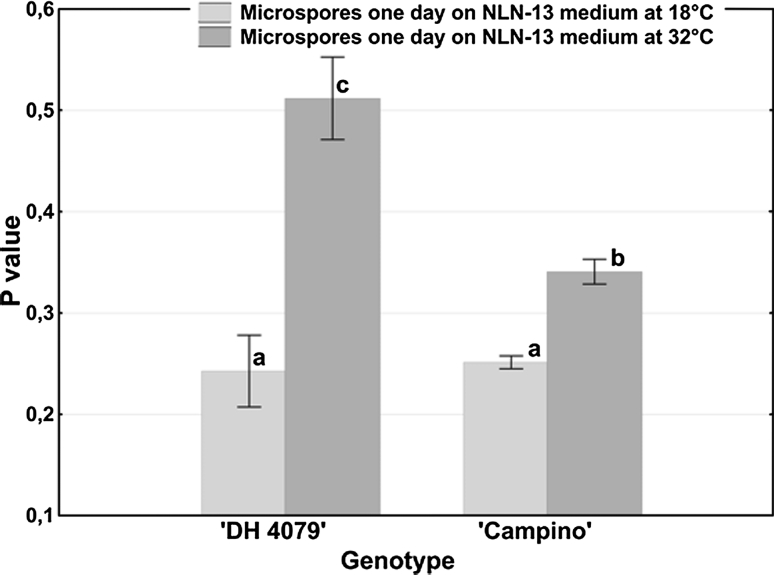
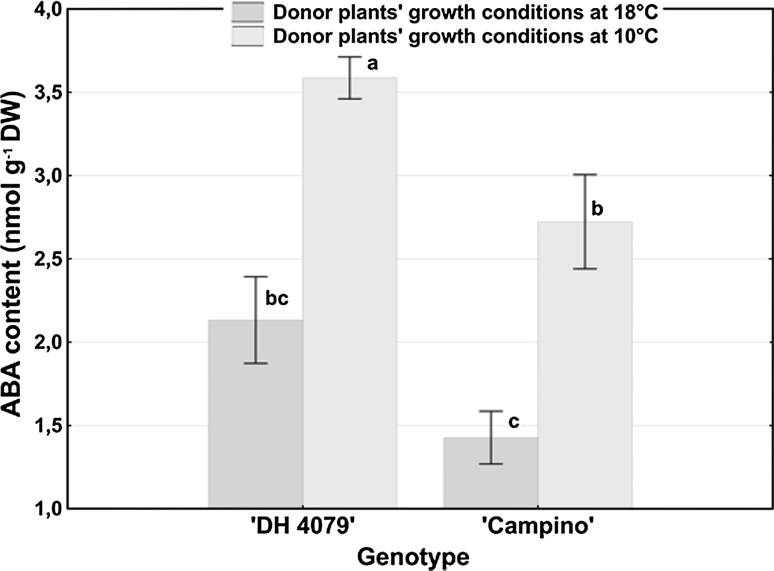
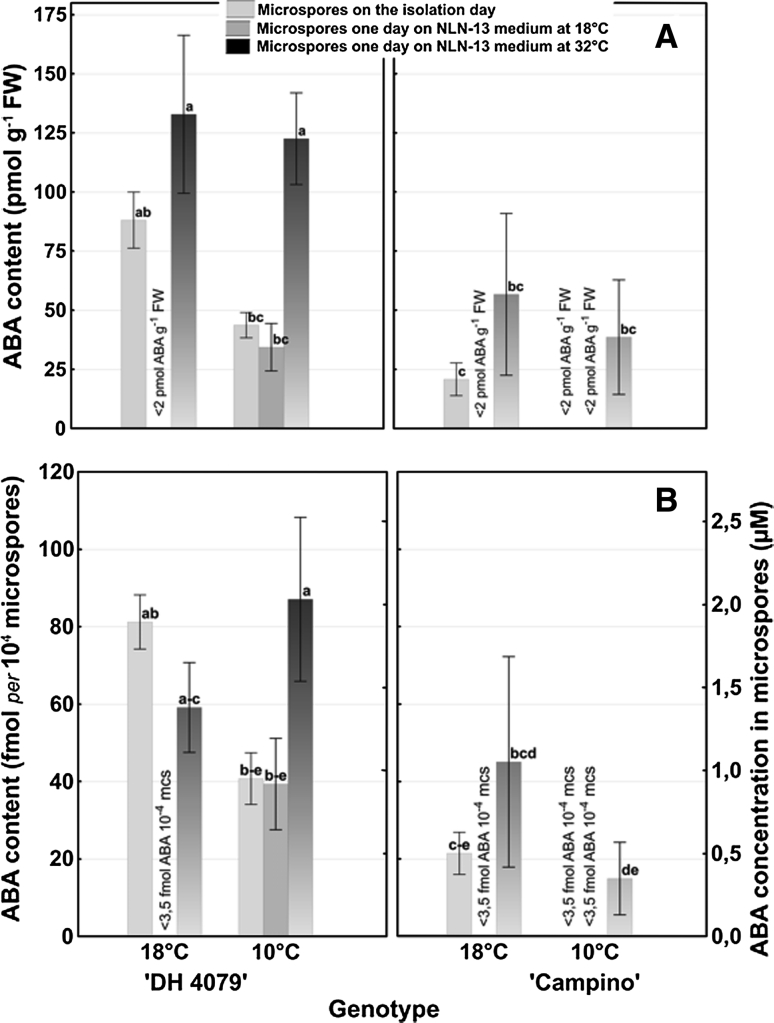
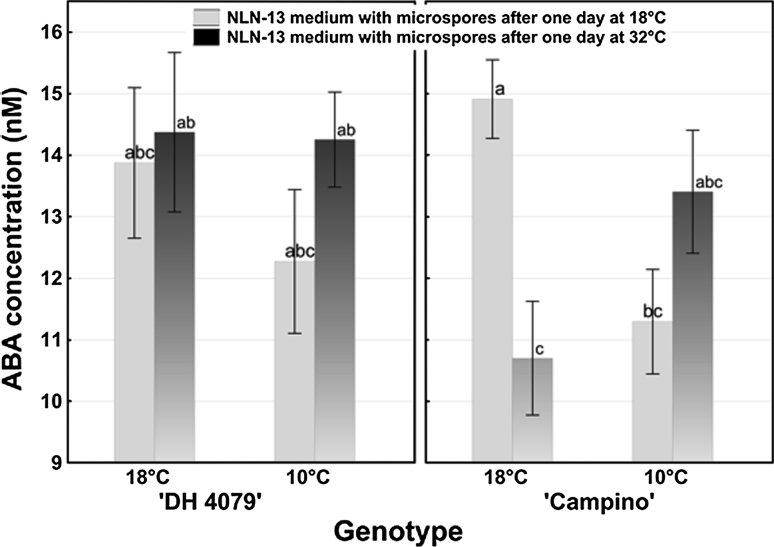
A better understanding of androgenesis with a focus on the changes in plasma membrane fluidity and endogenous ABA content affecting embryogenesis induction in microspore suspension of B. napus. Changes in plasma membrane fluidity (MF) and ABA content associated with androgenesis induction were under the study. Both parameters were monitored in microspores of two Brassica napus L. genotypes differing in their response to androgenic induction under heat (1 day at 32 °C). MF was assessed by DPH method. ABA content was evaluated by ELISA. Heat caused microspores' plasma membrane to become more rigid. Lower MF in microspores of 'DH 4079' (of high androgenic potential) seems to maintain proper cell protection and leads to efficient embryogenesis induction. Plasma membrane remodelling coincided with changes of ABA content in microspores and in the culture medium in both genotypes. ABA concentration (μM) and ABA content (fmol per 10(4) microspores or pmol g(-1) FW) were for the first time measured in microspores. ABA concentration (μM) in microspores and in the culture medium (nM) differed significantly for the genotype and the treatment. The interaction between both variables was also significant. In general, ABA content ranged from <3.5 to 87.1 fmol per 10(4) microspores. The highest content of ABA was detected in 'DH 4079' microspores at 32 °C. Assuming a mean microspores' radius of 10 μm, it corresponds to ABA concentration of 2.1 μM. Heat shock resulted in quantum of medium pH reduction (0.1-0.2) and increased levels of ABA in microspores and in the medium of both tested genotypes. However, heat induced increase of ABA content in microspores of non-responsive 'Campino' had no clear-cut impact, on androgenesis induction efficiency, which suggests a more complex mechanism of process initiation.
通过研究与雄核发育诱导相关的质膜流动性和内源 ABA 含量的变化,更好地了解雄核发育。在两种甘蓝型油菜( Brassica napus L.)基因型的小孢子中监测了这两个参数,这两种基因型在高温(32°C 下 1 天)下对雄核发育诱导的反应不同。通过 DPH 法评估 MF,通过 ELISA 评估 ABA 含量。热使小孢子的质膜变得更加刚性。高雄性发生潜能的“DH 4079”的小孢子中较低的 MF 似乎保持适当的细胞保护,并导致有效的胚胎发生诱导。质膜重塑与两种基因型中小孢子和培养介质中 ABA 含量的变化同时发生。ABA 浓度(μM)和 ABA 含量(每 10^4 个小孢子中的 fmol 或 pmol·g^-1 FW)首次在小孢子中测量。小孢子和培养基中(nM)的 ABA 浓度(μM)因基因型和处理而异。这两个变量之间的相互作用也很显著。一般来说,ABA 含量范围从<3.5 到 87.1 fmol per 10^4 个小孢子。在 32°C 时,“DH 4079”小孢子中检测到的 ABA 含量最高。假设小孢子的平均半径为 10 μm,则相当于 ABA 浓度为 2.1 μM。热休克导致培养基 pH 值降低(0.1-0.2),并增加了两种测试基因型的小孢子和培养基中的 ABA 水平。然而,热诱导的非响应型“Campino”小孢子中 ABA 含量的增加对雄核发育诱导效率没有明显的影响,这表明该过程起始的机制更为复杂。