Department of Surgery, The Affiliated Tumor Hospital of Nantong University, Nantong, Jiangsu Province, China.
PLoS One. 2013 May 31;8(5):e64261. doi: 10.1371/journal.pone.0064261. Print 2013.
The impact of perioperative allogenenic blood transfusion (ABT) on clinical outcomes for hepatocellular carcinoma (HCC) is conflicting and unclear. The aim of this meta-analysis is to evaluate the association between ABT and HCC clinical outcomes. Outcomes evaluated were all-cause death, tumor recurrence and postoperative complications.
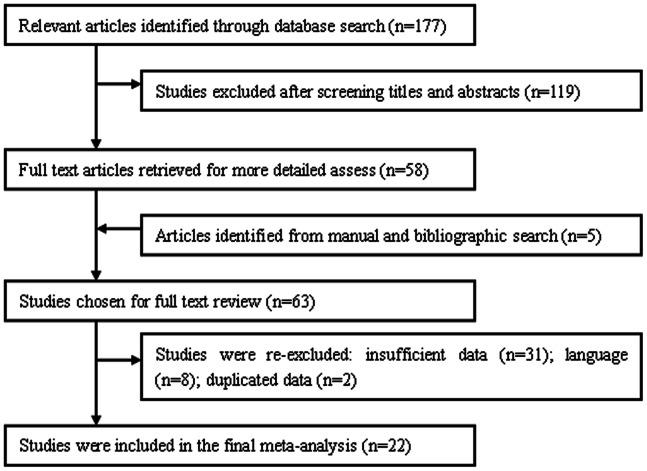
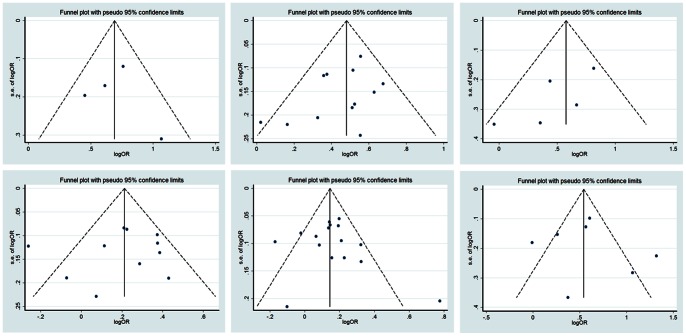
Relevant articles were identified through MEDLINE search (up to November 2012). Meta-analyses were performed by using the fixed or random effect models. Study heterogeneity was assessed by Q-test and I(2) test. Publication bias was evaluated by funnel plots, Egger's and Begg's test.
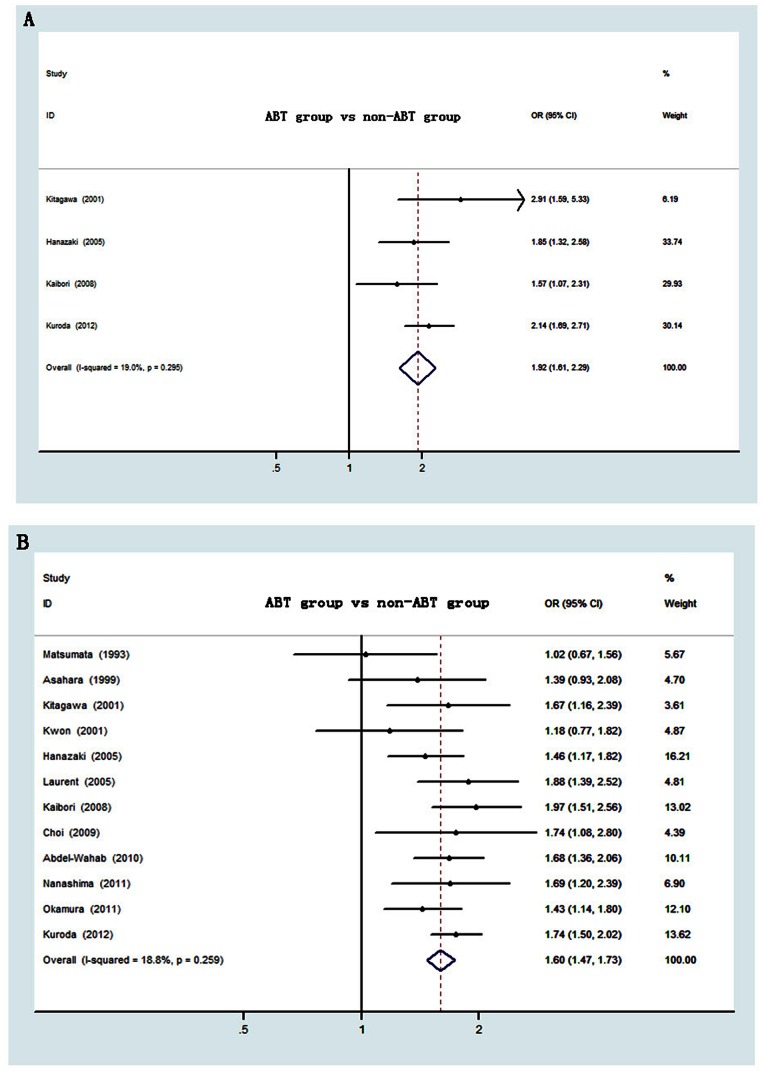
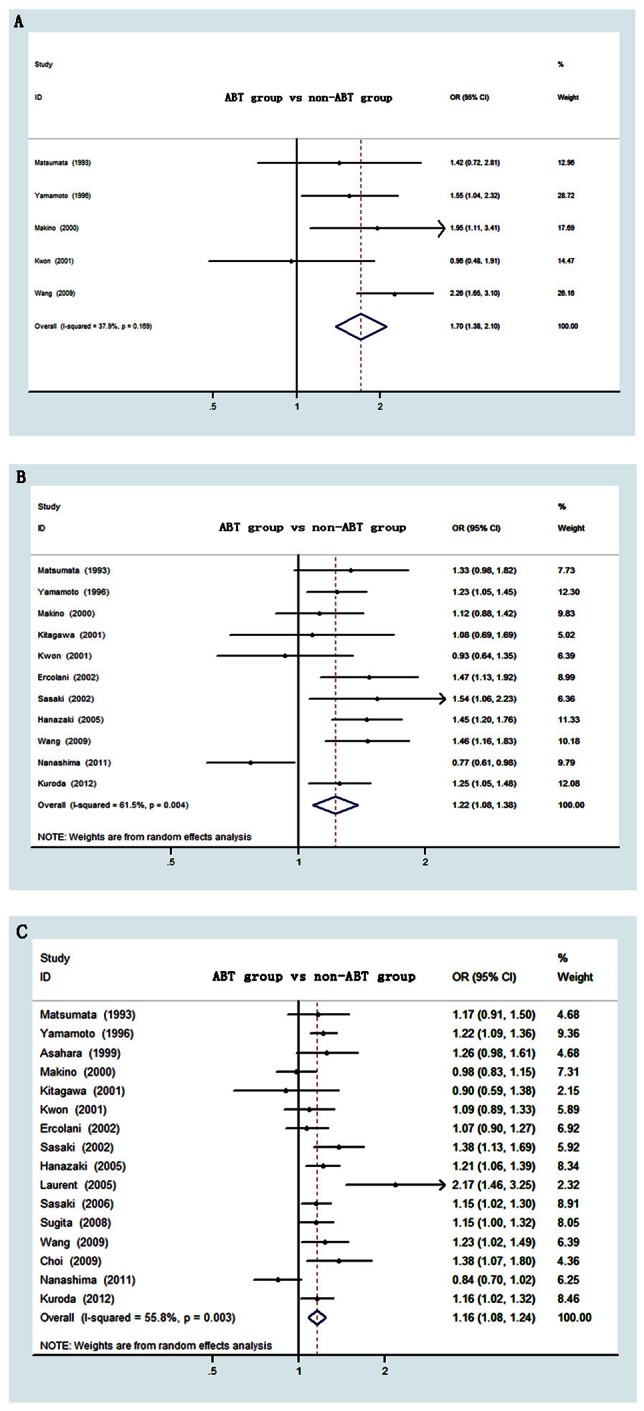
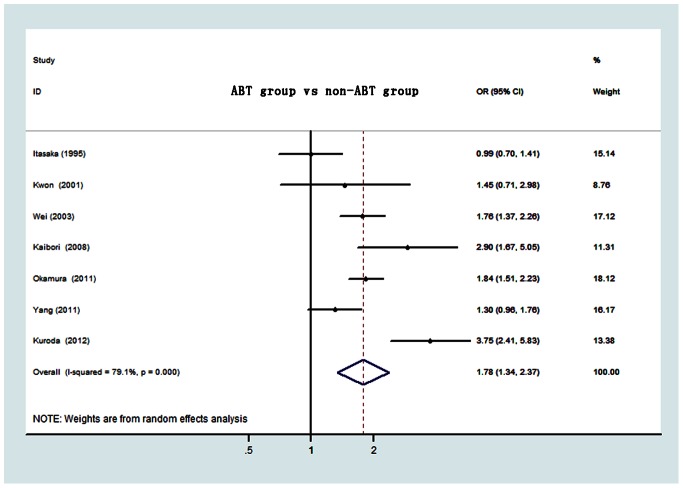
A total of 5635 cases from 22 studies finally met our inclusion criteria. Meta-analysis indicated HCC patients with ABT had an increased risk of all-cause death at 3 and 5 years after surgery (respectively: OR = 1.92, 95% CI, 1.61-2.29,P<0.001; OR = 1.60, 95% CI, 1.47-1.73,P<0.001 ) compared with those without ABT. The risk of tumor recurrence was significantly higher for ABT cases at 1, 3 and 5 years (respectively: OR = 1.70, 95% CI, 1.38-2.10, P<0.001; OR = 1.22, 95% CI, 1.08-1.38, P<0.001; OR = 1.16, 95% CI, 1.08-1.24, P<0.001). The HCC cases with ABT significantly increased postoperative complications occurrence compared with non-ABT cases (OR = 1.78,95% CI, 1.34-2.37, P<0.001).
The findings from the current meta-analysis demonstrated that ABT was associated with adverse clinical outcomes for HCC patients undergoing surgery, including increased death, recurrence and complications. Therefore, ABT should not be performed if possible.
围手术期异体输血(ABT)对肝细胞癌(HCC)的临床结局的影响存在争议且尚不明确。本荟萃分析的目的是评估 ABT 与 HCC 临床结局之间的关系。评估的结局包括全因死亡、肿瘤复发和术后并发症。
通过 MEDLINE 检索(截至 2012 年 11 月)确定相关文献。使用固定或随机效应模型进行荟萃分析。采用 Q 检验和 I(2)检验评估研究异质性。采用漏斗图、Egger 和 Begg 检验评估发表偏倚。
最终共有 22 项研究的 5635 例患者符合纳入标准。荟萃分析表明,与未接受 ABT 的 HCC 患者相比,接受 ABT 的 HCC 患者术后 3 年和 5 年的全因死亡风险增加(分别为:OR = 1.92,95% CI,1.61-2.29,P<0.001;OR = 1.60,95% CI,1.47-1.73,P<0.001)。接受 ABT 的 HCC 患者在术后 1 年、3 年和 5 年时肿瘤复发的风险显著更高(分别为:OR = 1.70,95% CI,1.38-2.10,P<0.001;OR = 1.22,95% CI,1.08-1.38,P<0.001;OR = 1.16,95% CI,1.08-1.24,P<0.001)。与非 ABT 组相比,接受 ABT 的 HCC 患者术后并发症发生率显著增加(OR = 1.78,95% CI,1.34-2.37,P<0.001)。
本荟萃分析的结果表明,ABT 与接受手术治疗的 HCC 患者的不良临床结局相关,包括死亡、复发和并发症增加。因此,如果可能的话,不应进行 ABT。