Division of Genetics, Department of Pediatrics, King Abdulaziz Medical City, Riyadh, Saudi Arabia.
Orphanet J Rare Dis. 2013 Jun 6;8:83. doi: 10.1186/1750-1172-8-83.
Biotin-responsive basal ganglia disease (BBGD) is an autosomal recessive neurometabolic disorder. It is characterized by sub acute encephalopathy with confusion, seizure, dysarthria and dystonia following a history of febrile illness. If left untreated with biotin, the disease can progress to severe quadriparesis and even death.
A retrospective chart review of 18 patients with BBGD from two tertiary institutions describing their clinical, magnetic resonance imaging and molecular findings was conducted.
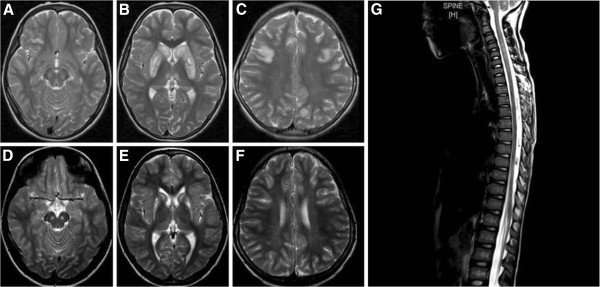
Eighteen children from 13 families seen over a period of nine years (2003-2012) were included. (Age range: 14month to 23 years, M: F: 1:1). The clinical features included sub acute encephalopathy, ataxia (n= 18), seizures (n= 13) dystonia (n=12) ,dysarthria (n= 9), quadriparesis and hyperreflexia (n=9). Magnetic resonance imaging demonstrated abnormal signal intensity with swelling in the basal ganglia during acute crises (n= 13/13) and atrophy of the basal ganglia and necrosis during follow up (n= 13/13). One-third of the present patients showed the recurrence of acute crises while on biotin therapy alone, but after the addition of thiamine, crises did not recur. All of the patients have a homozygous missense mutation in exon 5 of the SLC19A3 gene. The frequency of acute crises, delay in diagnosis and initiation of treatment significantly influenced the outcome. On follow up, four patients died, two had spastic quadriplegia, six had normal outcome and the rest had speech and motor dysfunctions.
Clinicians should suspect BBGD in any child presenting with sub acute encephalopathy, abnormal movement and MRI findings as described above. Both biotin and thiamine are essential for disease management. Since biotin alone could not prevent the recurrence of crises in some patients, a more appropriate term to describe the disease would be biotin-thiamine-responsive basal ganglia disease (BTBGD).
生物素反应性基底节疾病(BBGD)是一种常染色体隐性神经代谢疾病。其特征为急性脑病,表现为发热后出现意识模糊、癫痫发作、构音障碍和肌张力障碍。如果不接受生物素治疗,疾病会进展为严重的四肢瘫痪,甚至死亡。
对来自两家三级医疗机构的 18 名 BBGD 患者进行回顾性图表审查,描述他们的临床、磁共振成像和分子发现。
纳入 13 个家庭的 18 名儿童,随访时间为 9 年(2003-2012 年)。(年龄范围:14 个月至 23 岁,男女比例为 1:1)。临床特征包括亚急性脑病、共济失调(n=18)、癫痫发作(n=13)、肌张力障碍(n=12)、构音障碍(n=9)、四肢瘫痪和反射亢进(n=9)。磁共振成像显示急性危象时基底节异常信号强度伴肿胀(n=13/13),随访时基底节萎缩和坏死(n=13/13)。三分之一的患者在单独接受生物素治疗时出现急性危象复发,但在添加硫胺素后不再复发。所有患者均在 SLC19A3 基因外显子 5 中存在纯合错义突变。急性危象的频率、诊断和治疗开始的延迟显著影响了预后。随访时,4 名患者死亡,2 名患者患有痉挛性四肢瘫痪,6 名患者预后正常,其余患者存在言语和运动功能障碍。
临床医生应怀疑任何出现上述亚急性脑病、异常运动和 MRI 表现的儿童患有 BBGD。生物素和硫胺素都是疾病管理所必需的。由于单独使用生物素不能预防某些患者的危象复发,因此更恰当的疾病名称应为生物素-硫胺素反应性基底节疾病(BTBGD)。