Johns Hopkins University School of Medicine, The Bunting Blaustein Cancer Research Building, 1650 Orleans Street, Room 2M46, Baltimore, MD 21287.
Mol Cancer Res. 2013 Sep;11(9):1004-16. doi: 10.1158/1541-7786.MCR-13-0114. Epub 2013 Jun 10.
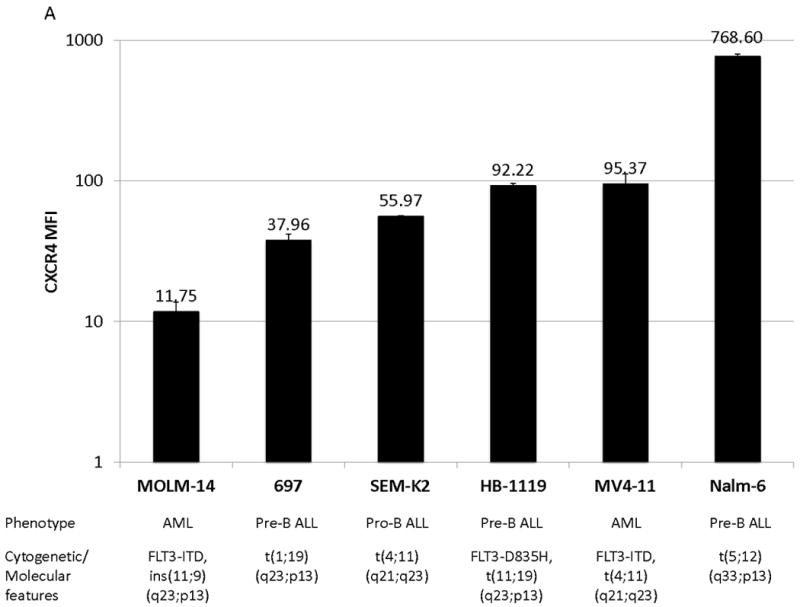
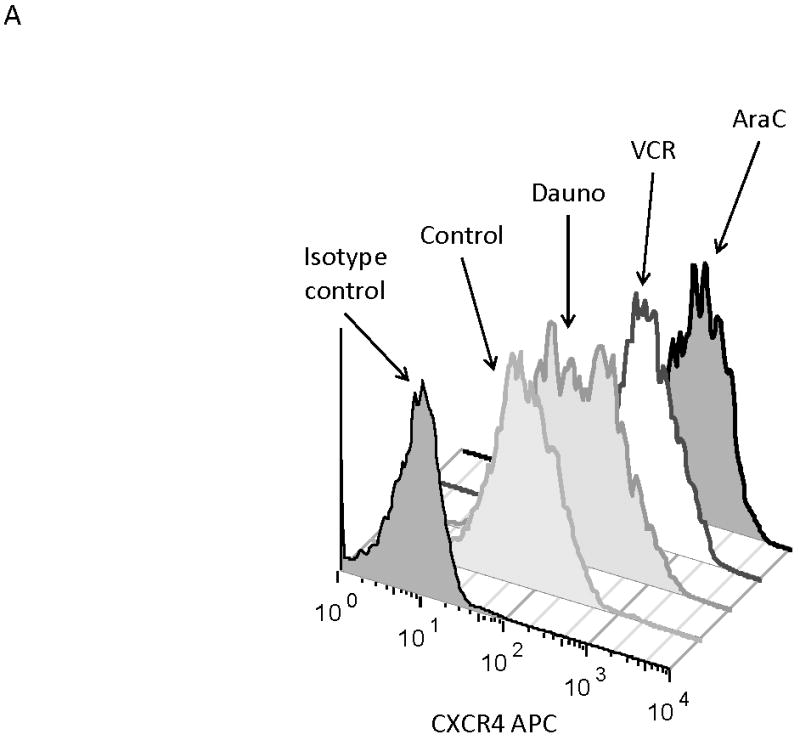
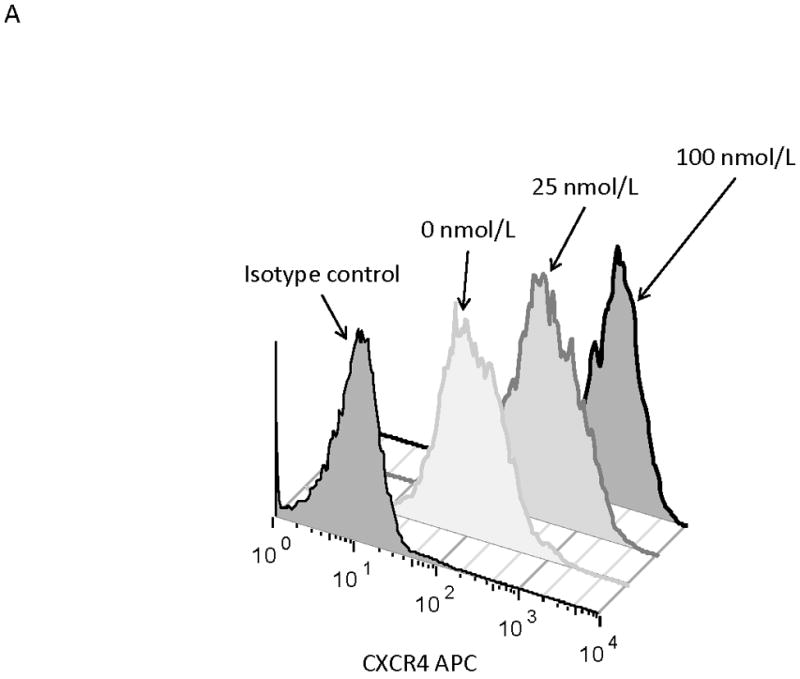
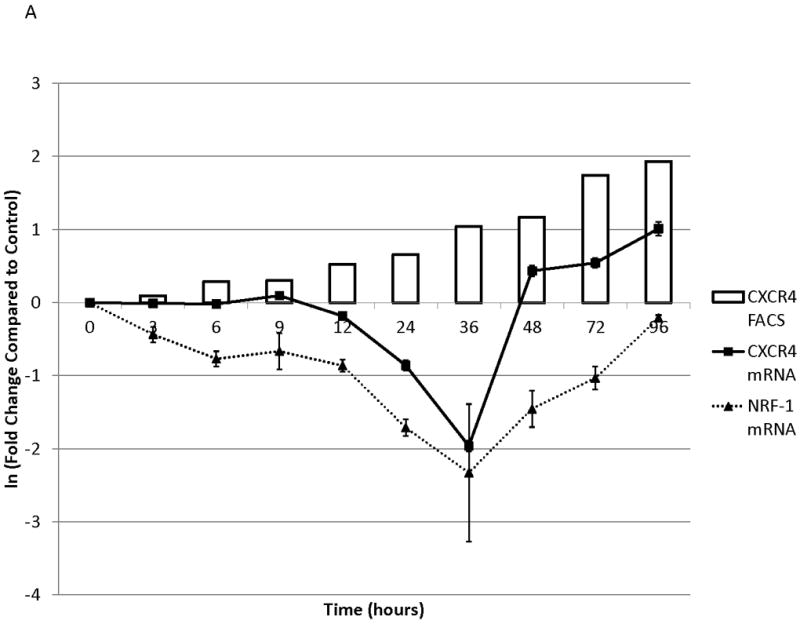
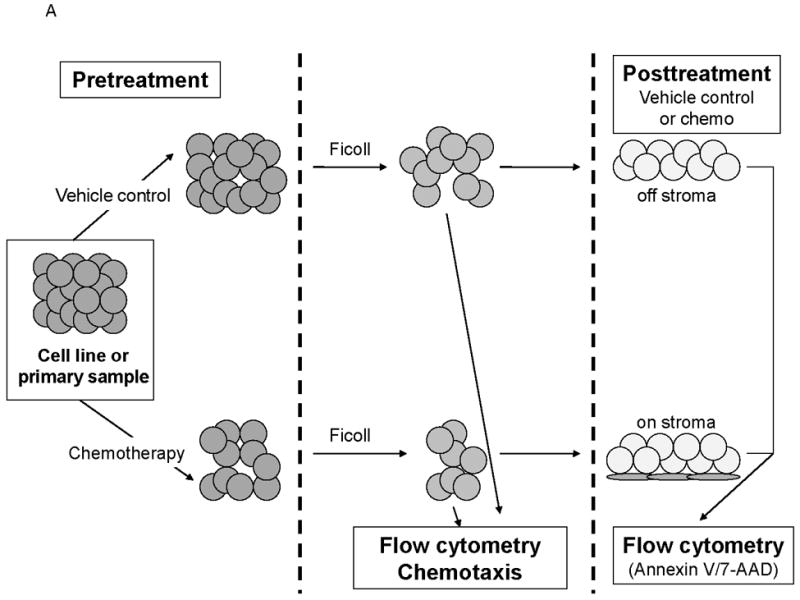
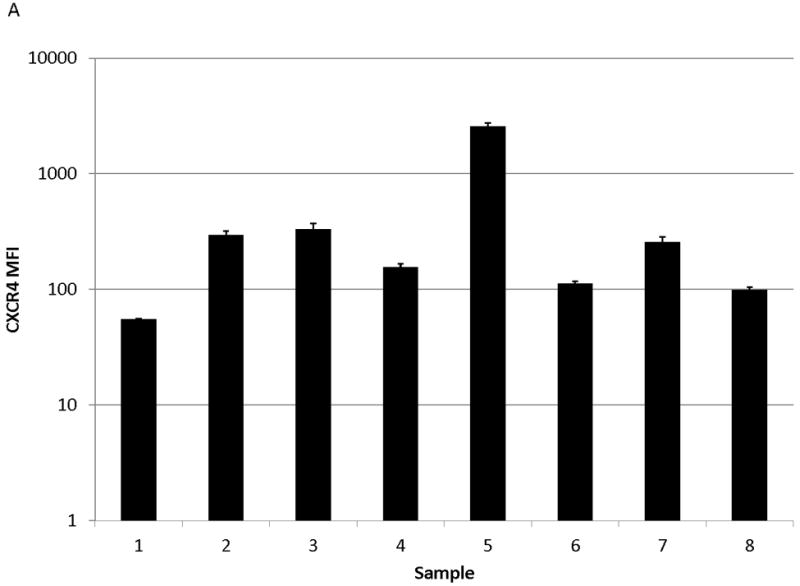
Cure rates in pediatric acute leukemias remain suboptimal. Overexpression of the cell-surface chemokine receptor CXCR4 is associated with poor outcome in acute lymphoblastic leukemia (ALL) and acute myeloid leukemia (AML). Certain nonchemotherapeutic agents have been shown to modulate CXCR4 expression and alter leukemia interactions with stromal cells in the bone marrow microenvironment. Because chemotherapy is the mainstay of AML treatment, it was hypothesized that standard cytotoxic chemotherapeutic agents induce dynamic changes in leukemia surface CXCR4 expression, and that chemotherapy-induced upregulation of CXCR4 represents a mechanism of acquired therapeutic resistance. Here, it was shown that cell lines variably upregulate CXCR4 with chemotherapy treatment. Those that showed upregulation were differentially protected from chemotherapy-induced apoptosis when cocultured with stroma. The functional effects of chemotherapy-induced CXCR4 upregulation in an AML cell line (MOLM-14, which harbors consistent upregulated CXCR4) and clinical specimens were explored. Importantly, enhanced stromal-cell derived factor-1α (SDF1A/CXCL12)-mediated chemotaxis and stromal protection from additional chemotherapy-induced apoptosis was found. Furthermore, treatment with plerixafor, a CXCR4 inhibitor, preferentially decreased stromal protection with higher chemotherapy-induced upregulation of surface CXCR4. Thus, increased chemokine receptor CXCR4 expression after treatment with conventional chemotherapy may represent a mechanism of therapeutic resistance in pediatric AML.
CXCR4 may be a biomarker for the stratification and optimal treatment of patients using CXCR4 inhibitors.
儿科急性白血病的治愈率仍然不理想。细胞表面趋化因子受体 CXCR4 的过度表达与急性淋巴细胞白血病 (ALL) 和急性髓细胞白血病 (AML) 的不良预后相关。某些非化疗药物已被证明可以调节 CXCR4 的表达,并改变白血病与骨髓微环境中基质细胞的相互作用。由于化疗是 AML 治疗的主要方法,因此假设标准细胞毒性化疗药物会导致白血病表面 CXCR4 表达发生动态变化,并且 CXCR4 的化疗诱导上调代表获得性治疗抵抗的一种机制。在这里,研究表明细胞系在用化疗治疗时会不同程度地上调 CXCR4。当与基质共培养时,那些上调的细胞系对化疗诱导的细胞凋亡有不同程度的保护作用。研究了在 AML 细胞系 (MOLM-14 中,其 CXCR4 持续上调) 和临床标本中化疗诱导的 CXCR4 上调的功能影响。重要的是,发现增强了基质细胞衍生因子-1α (SDF1A/CXCL12) 介导的趋化作用和对额外化疗诱导凋亡的基质保护。此外,用 CXCR4 抑制剂plerixafor 治疗时,发现随着表面 CXCR4 的化疗诱导上调增加,对基质的保护作用降低。因此,常规化疗后趋化因子受体 CXCR4 表达增加可能是儿科 AML 治疗抵抗的一种机制。
CXCR4 可能是使用 CXCR4 抑制剂分层和优化治疗患者的生物标志物。