Department of Biological Science, Florida State University, Tallahassee, FL 32306-4295, USA.
BMC Genomics. 2013 Jun 12;14:394. doi: 10.1186/1471-2164-14-394.
Snake venoms generally show sequence and quantitative variation within and between species, but some rattlesnakes have undergone exceptionally rapid, dramatic shifts in the composition, lethality, and pharmacological effects of their venoms. Such shifts have occurred within species, most notably in Mojave (Crotalus scutulatus), South American (C. durissus), and timber (C. horridus) rattlesnakes, resulting in some populations with extremely potent, neurotoxic venoms without the hemorrhagic effects typical of rattlesnake bites.
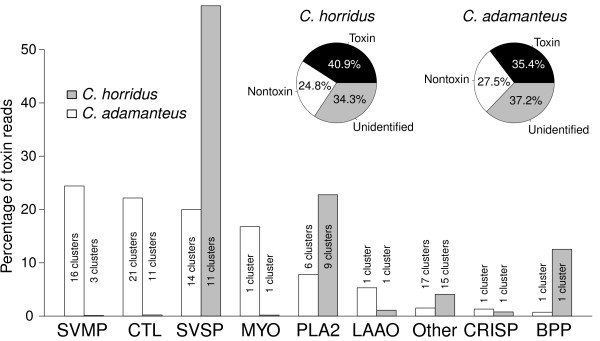
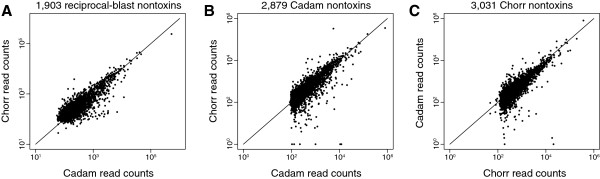
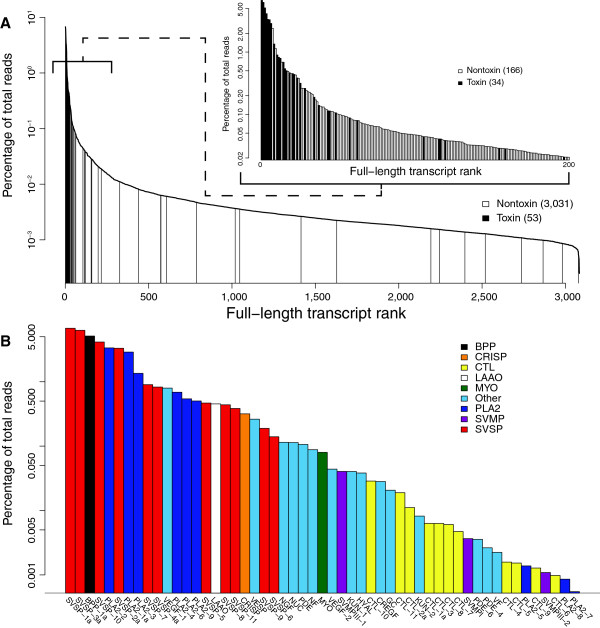
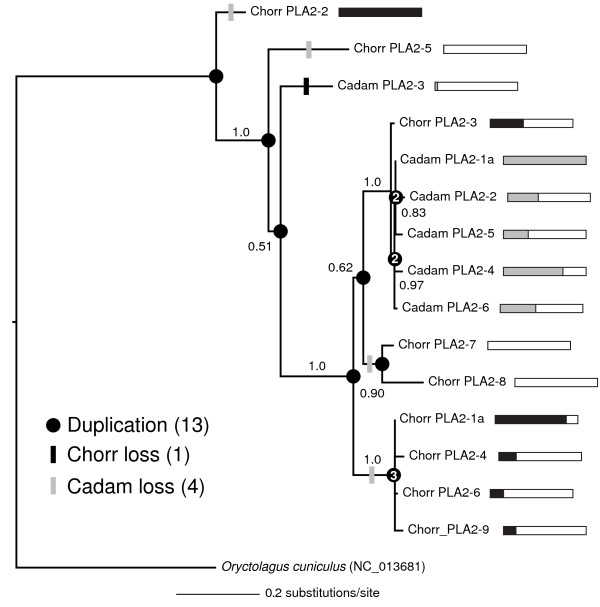
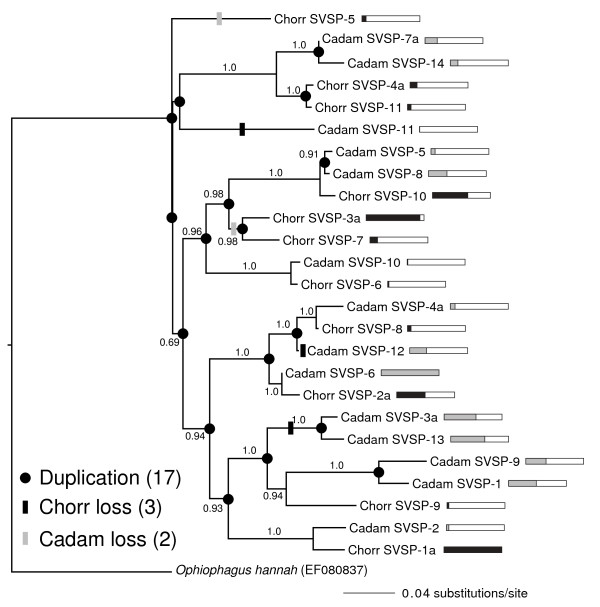
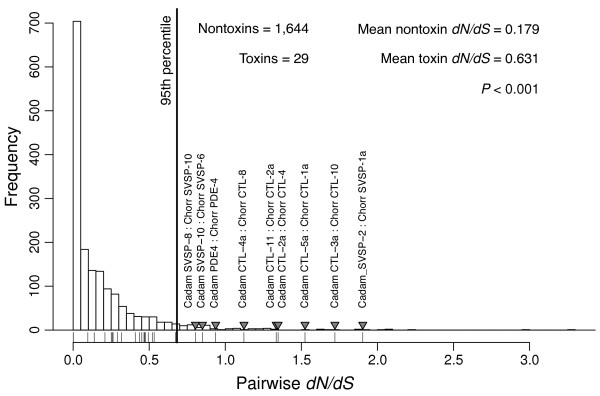
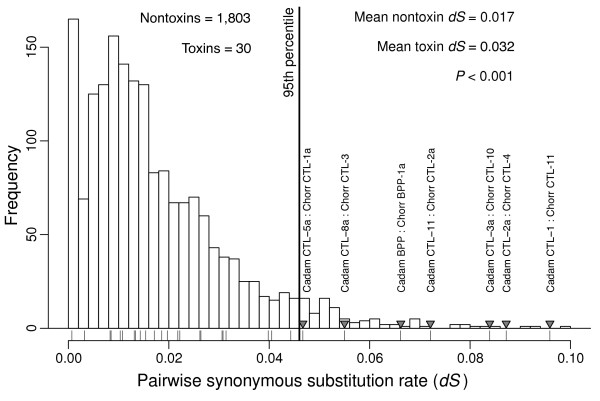
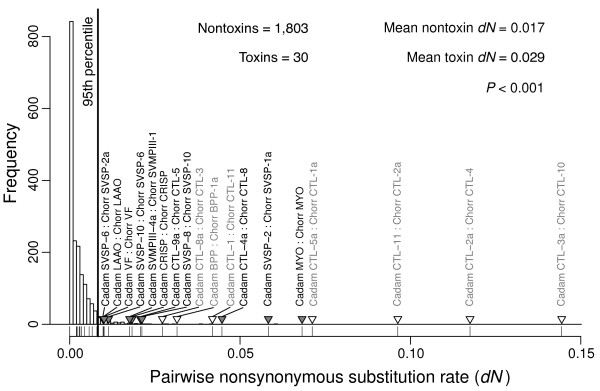
To better understand the evolutionary changes that resulted in the potent venom of a population of C. horridus from northern Florida, we sequenced the venom-gland transcriptome of an animal from this population for comparison with the previously described transcriptome of the eastern diamondback rattlesnake (C. adamanteus), a congener with a more typical rattlesnake venom. Relative to the toxin transcription of C. adamanteus, which consisted primarily of snake-venom metalloproteinases, C-type lectins, snake-venom serine proteinases, and myotoxin-A, the toxin transcription of C. horridus was far simpler in composition and consisted almost entirely of snake-venom serine proteinases, phospholipases A2, and bradykinin-potentiating and C-type natriuretic peptides. Crotalus horridus lacked significant expression of the hemorrhagic snake-venom metalloproteinases and C-type lectins. Evolution of shared toxin families involved differential expansion and loss of toxin clades within each species and pronounced differences in the highly expressed toxin paralogs. Toxin genes showed significantly higher rates of nonsynonymous substitution than nontoxin genes. The expression patterns of nontoxin genes were conserved between species, despite the vast differences in toxin expression.
Our results represent the first complete, sequence-based comparison between the venoms of closely related snake species and reveal in unprecedented detail the rapid evolution of snake venoms. We found that the difference in venom properties resulted from major changes in expression levels of toxin gene families, differential gene-family expansion and loss, changes in which paralogs within gene families were expressed at high levels, and higher nonsynonymous substitution rates in the toxin genes relative to nontoxins. These massive alterations in the genetics of the venom phenotype emphasize the evolutionary lability and flexibility of this ecologically critical trait.
蛇毒在种内和种间通常表现出序列和定量变化,但一些响尾蛇的毒液组成、致死性和药理学效应发生了异常迅速、显著的变化。这种变化发生在种内,最显著的是在莫哈韦响尾蛇(Crotalus scutulatus)、南美响尾蛇(C. durissus)和林响尾蛇(C. horridus)中,导致一些种群的毒液具有极强的神经毒性,而没有响尾蛇咬伤的典型出血效应。
为了更好地了解导致佛罗里达州北部响尾蛇种群产生强效毒液的进化变化,我们对该种群的一种动物的毒液腺转录组进行了测序,以便与之前描述的东部菱背响尾蛇(C. adamanteus)转录组进行比较,东部菱背响尾蛇具有更典型的响尾蛇毒液。与 C. adamanteus 的毒素转录物主要由蛇毒金属蛋白酶、C 型凝集素、蛇毒丝氨酸蛋白酶和肌毒素-A 组成相比,C. horridus 的毒素转录物在组成上要简单得多,几乎完全由蛇毒丝氨酸蛋白酶、磷脂酶 A2、缓激肽增效肽和 C 型利钠肽组成。Crotalus horridus 缺乏显著表达的出血性蛇毒金属蛋白酶和 C 型凝集素。共享毒素家族的进化涉及到每个物种中毒素进化枝的差异扩张和丢失,以及高度表达的毒素同源基因的显著差异。毒素基因的非同义替换率显著高于非毒素基因。尽管毒素表达存在巨大差异,但非毒素基因的表达模式在物种间是保守的。
我们的研究结果代表了密切相关蛇种的毒液之间的首次完整的、基于序列的比较,以前所未有的细节揭示了蛇毒的快速进化。我们发现,毒液性质的差异是由于毒素基因家族表达水平的重大变化、基因家族的差异扩张和丢失、基因家族内的同源基因表达水平的变化以及毒素基因相对于非毒素基因的非同义替换率较高所致。毒液表型遗传的这些巨大改变强调了这种生态关键特征的进化不稳定性和灵活性。