Horticultural Research Laboratory, United States Department of Agriculture-Agricultural Research Service, Fort Pierce, Florida, United States of America.
PLoS One. 2013 Jun 10;8(6):e64938. doi: 10.1371/journal.pone.0064938. Print 2013.
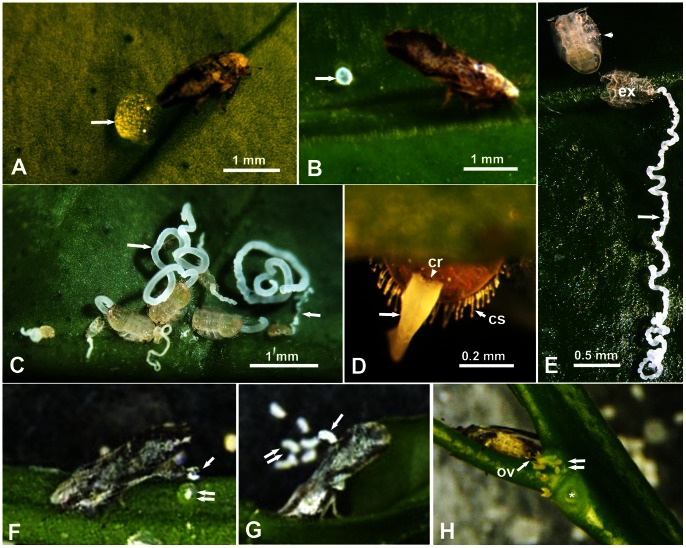
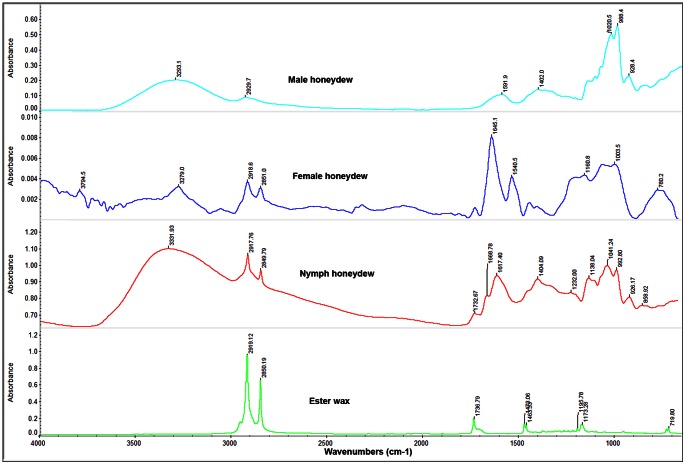
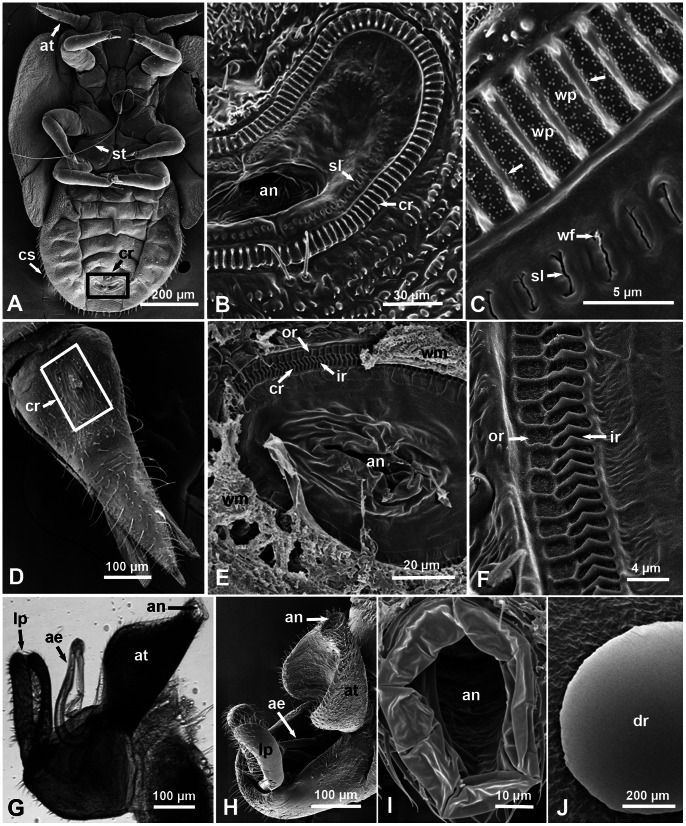
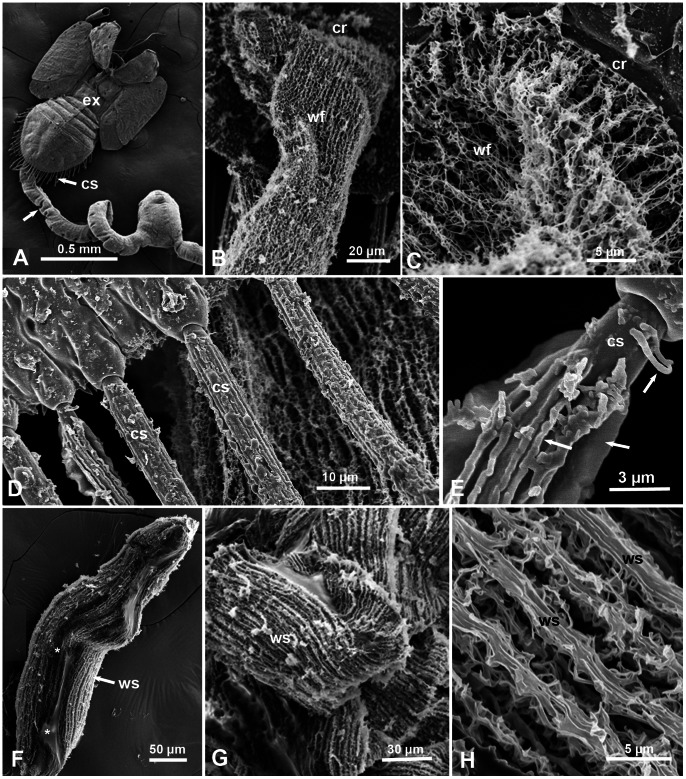
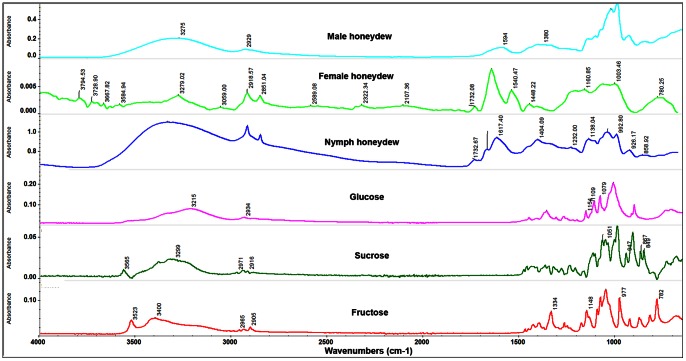
The Asian citrus psyllid (ACP), Diaphorina citri (Hemiptera: Psyllidae) is the primary vector of the bacterium causing citrus huanglongbing (citrus greening), the most serious disease of citrus worldwide. Psyllids and other hemipterans produce large amounts of honeydew, which has been used previously as an indicator of phloem sap composition and insect feeding or metabolism. Behavioral, ultrastructural and chemical studies on ACP, its honeydew and waxy secretions showed important differences between nymphs, males and females, and suggested some mechanisms by which the psyllids, especially nymphs and adult females, can minimize their contamination with honeydew excretions. The anal opening in ACP, near the posterior end of the abdomen, is on the ventral side in nymphs and on the dorsal side in adult males and females. Video recordings showed that adult males produce clear sticky droplets of honeydew gently deposited behind their body on the leaf surface, whereas adult females produce whitish honeydew pellets powerfully propelled away from the female body, probably to get their excretions away from eggs and newly hatched nymphs. ACP nymphs produce long ribbons or tubes of honeydew that frequently stay attached to the exuviae after molting, or drop when feeding on the lower side of citrus leaves. Furthermore, honeydew excretions of both nymphs and adult females are covered with a thin layer of whitish waxy material ultrastructurally composed of a convoluted network of long fine filaments or ribbons. This material is extruded from intricate arrays of wax pores in the circumanal ring (around the anus) that is found in nymphs and females but not in males of ACP or other psyllid species. Infrared microscopy and mass spectroscopy revealed that, in addition to various sugars, honeydew excretions of ACP nymphs and females are covered with a thin layer of wax similar in profile to ester waxes.
柑橘木虱(ACP),Diaphorina citri(半翅目:木虱科)是引起柑橘黄龙病(柑橘绿病)的细菌的主要载体,这是全球柑橘最严重的疾病。木虱和其他半翅目昆虫会产生大量的蜜露,以前曾用作韧皮部汁液成分、昆虫取食或代谢的指标。对柑橘木虱及其蜜露和蜡质分泌物的行为、超微结构和化学研究表明,若虫、雄性和雌性之间存在重要差异,并提出了一些机制,这些机制表明木虱,特别是若虫和成年雌性,可以最大限度地减少它们对蜜露排泄的污染。在 ACP 中,肛门开口位于腹部后端附近,在若虫时位于腹侧,在成年雄性和雌性时位于背侧。视频记录显示,成年雄性会产生清晰的粘性蜜露滴,轻轻沉积在身体后面的叶片表面上,而成年雌性则会产生白色的蜜露颗粒,有力地从雌性身体上喷出,可能是为了将排泄物远离卵和刚孵化的若虫。柑橘木虱若虫会产生长长的蜜露丝带或管,这些蜜露在蜕皮后经常附着在蜕皮上,或者在从柑橘叶片下侧取食时掉落。此外,若虫和成年雌性的蜜露排泄物都覆盖着一层薄薄的白色蜡质物质,超微结构上由长而细的细丝或丝带的卷曲网络组成。这种物质从环绕肛门的环(circumanal ring)上的复杂蜡孔阵列中挤出,在 ACP 或其他木虱物种的雄性中没有发现这种环或蜡孔。红外显微镜和质谱分析表明,除了各种糖之外,柑橘木虱若虫和雌性的蜜露排泄物还覆盖着一层薄薄的蜡质层,其轮廓与酯蜡相似。