Kamikawa Yurie, Ikeda Satoshi, Harada Katsuhiro, Ohwatashi Akihiko, Yoshida Akira
Department of Rehabilitation and Physical Medicine, Graduate School of Medical and Dental Sciences, Kagoshima University, Kagoshima, Kagoshima-shi, Kagoshima 890-8520, Japan.
ScientificWorldJournal. 2013 May 23;2013:493656. doi: 10.1155/2013/493656. Print 2013.
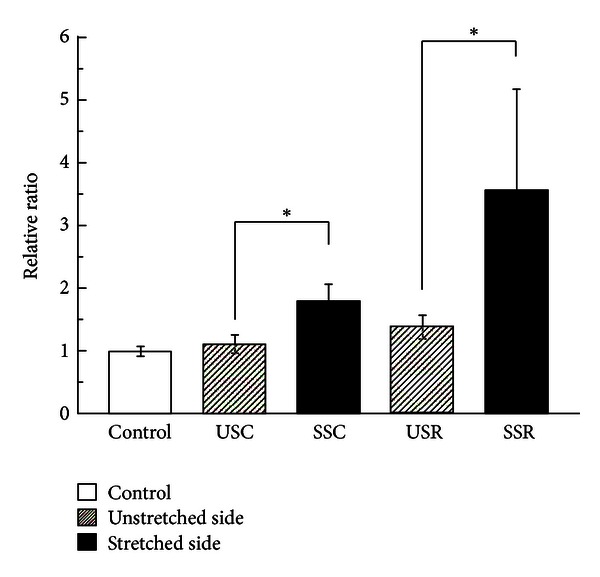
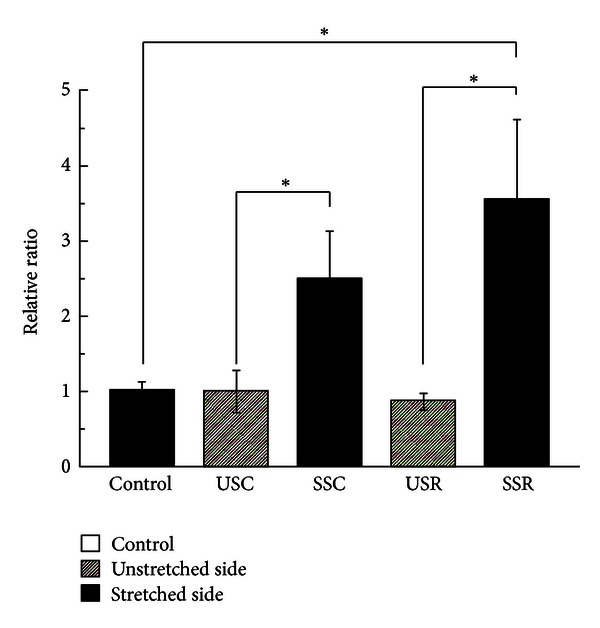
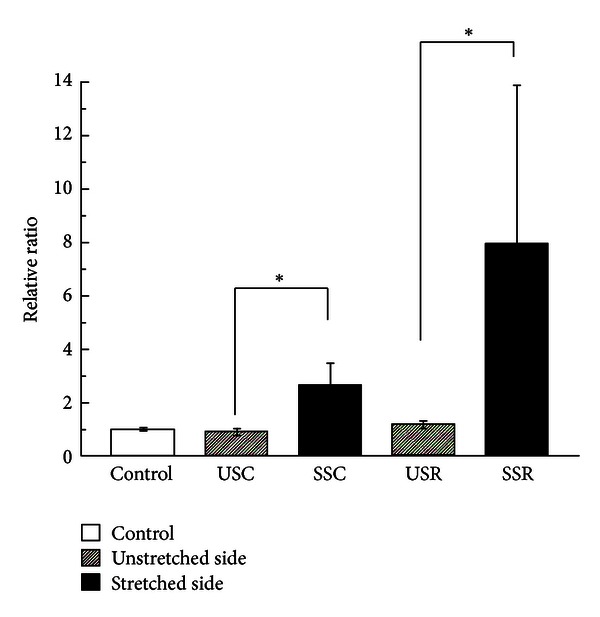
Stretching is a stimulation of muscle growth. Stretching for hours or days has an effect on muscle hypertrophy. However, differences of continuous stretching and repetitive stretching to affect muscle growth are not well known. To clarify the difference of continuous and repetitive stretching within a short duration, we investigated the gene expression of muscle-related genes on stretched skeletal muscles. We used 8-week-old male Wistar rats (N = 28) for this study. Animals medial gastrocnemius muscle was stretched continuously or repetitively for 15 min daily and 4 times/week under anesthesia. After stretching, muscles were removed and total RNA was extracted. Then, reverse transcriptional quantitative real-time PCR was done to evaluate the mRNA expression of MyoD, myogenin, and embryonic myosin heavy chain (MyHC). Muscles, either stretched continuously or repetitively, increased mRNA expression of MyoD, myogenin, and embryonic MyHC more than unstretched muscles. Notably, repetitive stretching resulted in more substantial effects on embryonic MyHC gene expression than continuous stretching. In conclusion, passive stretching for a short duration within a week is effective in increasing myogenic factor expression, and repetitive stretching had more effects than continuous stretching for skeletal muscle on muscle growth. These findings are applicable in clinical muscle-strengthening therapy.
拉伸是对肌肉生长的一种刺激。持续数小时或数天的拉伸对肌肉肥大有影响。然而,持续拉伸和重复拉伸对肌肉生长影响的差异尚不清楚。为了阐明短时间内持续拉伸和重复拉伸的差异,我们研究了拉伸骨骼肌上肌肉相关基因的表达。本研究使用8周龄雄性Wistar大鼠(N = 28)。在麻醉下,每天对动物的内侧腓肠肌进行持续或重复拉伸15分钟,每周4次。拉伸后,取出肌肉并提取总RNA。然后,进行逆转录定量实时PCR以评估肌分化抗原(MyoD)、生肌调节因子(myogenin)和胚胎型肌球蛋白重链(MyHC)的mRNA表达。无论是持续拉伸还是重复拉伸的肌肉,其MyoD、myogenin和胚胎型MyHC的mRNA表达均高于未拉伸的肌肉。值得注意的是,重复拉伸对胚胎型MyHC基因表达的影响比持续拉伸更显著。总之,一周内短时间的被动拉伸对增加生肌因子表达有效,且重复拉伸对骨骼肌生长的影响比持续拉伸更大。这些发现适用于临床肌肉强化治疗。