Laboratory of Eukaryotic Gene Expression & Signal Transduction (LEGEST), Department of Physiology, Ghent University, Ghent, Belgium,
Cell Mol Life Sci. 2014 Jan;71(1):143-63. doi: 10.1007/s00018-013-1367-4. Epub 2013 Jun 20.
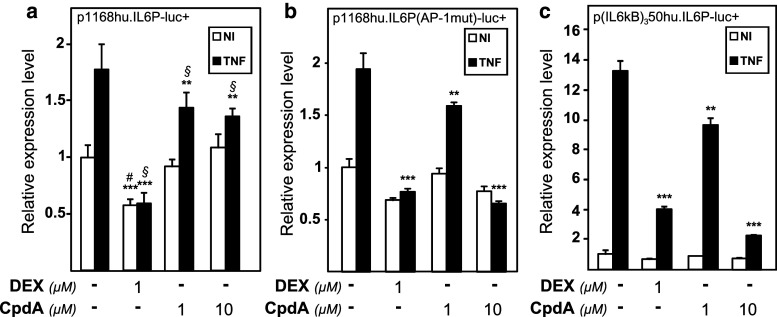
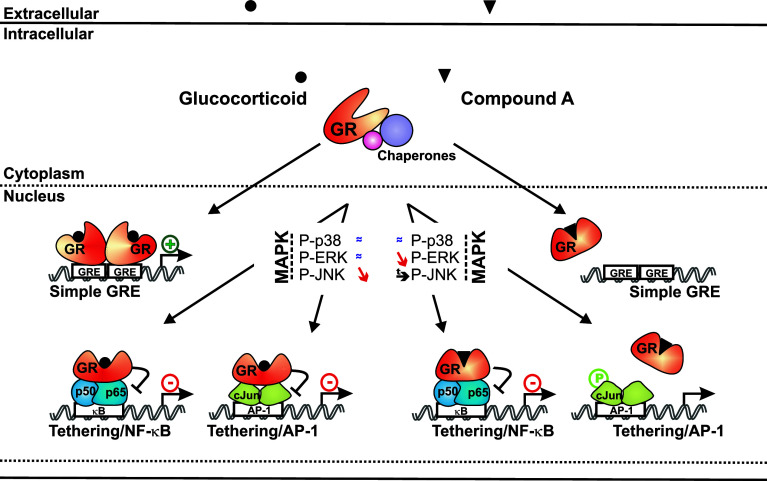
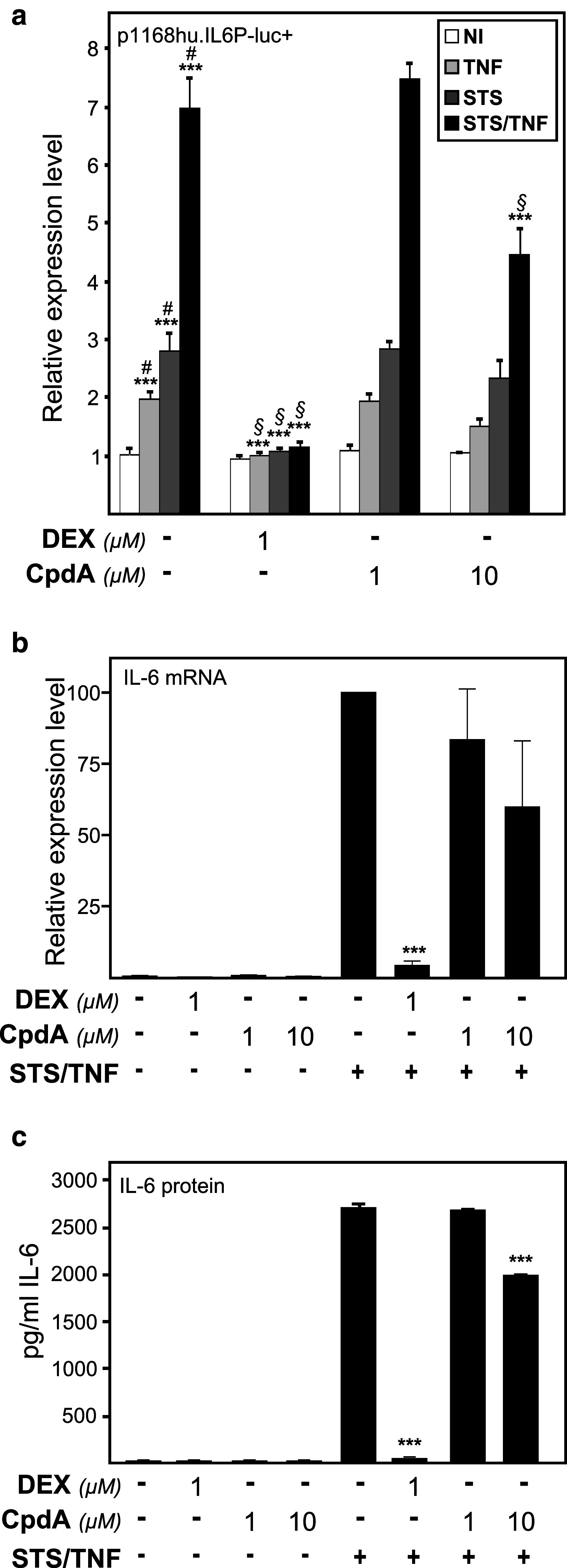
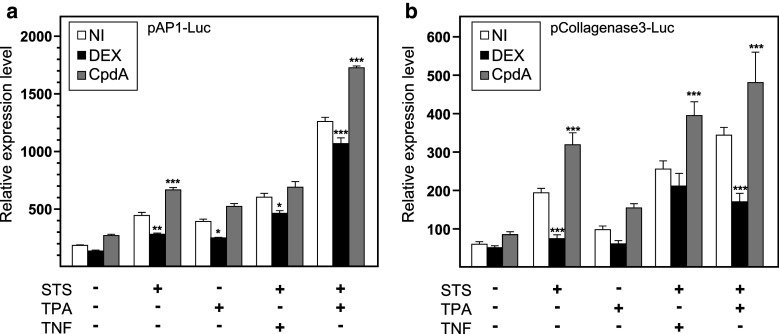
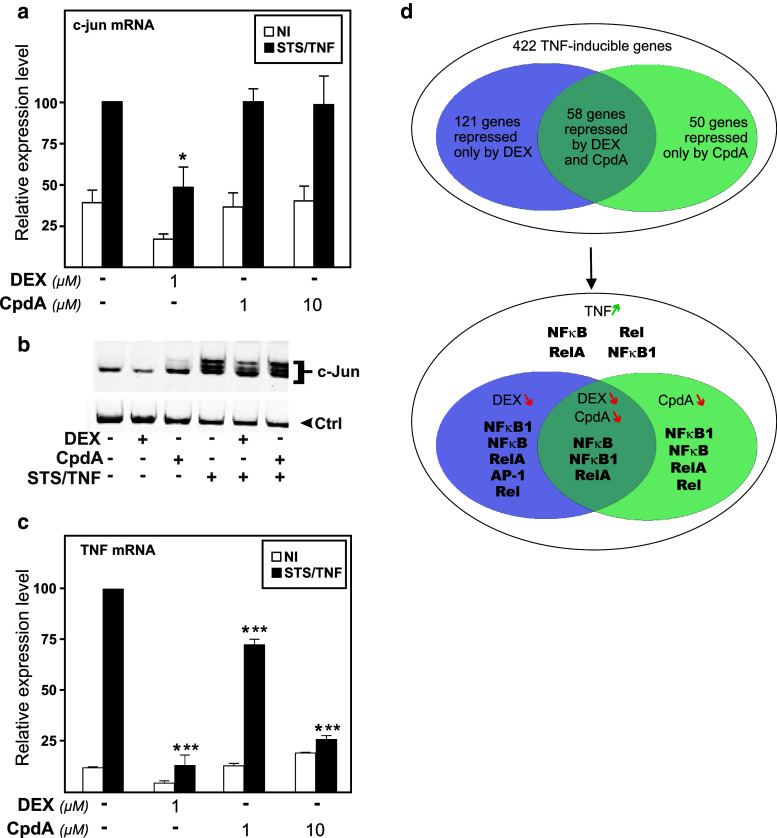
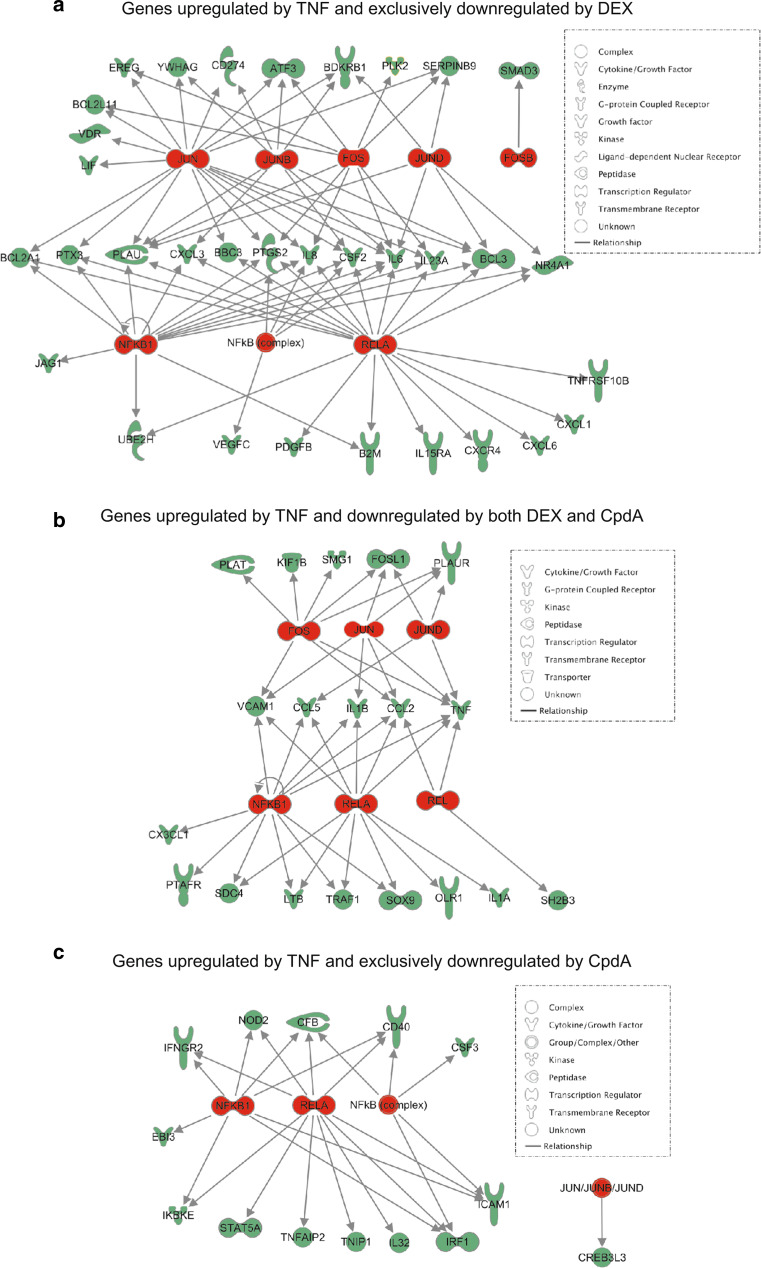
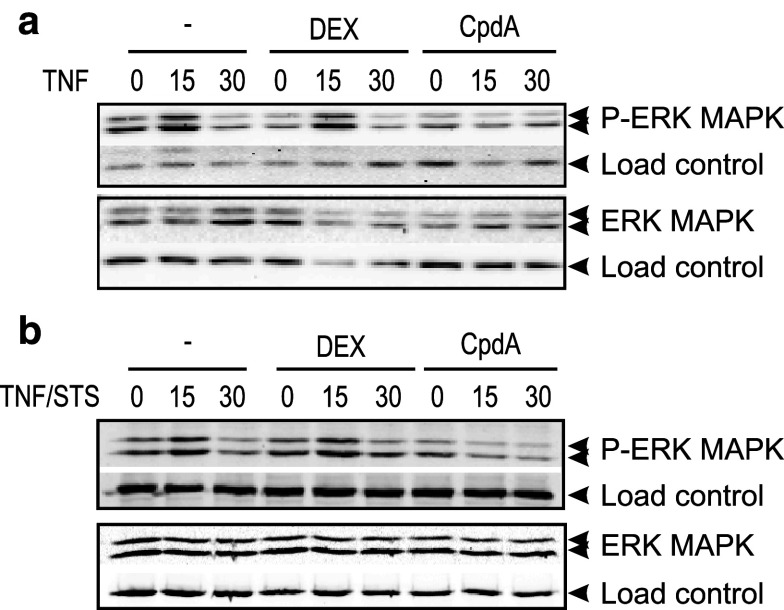
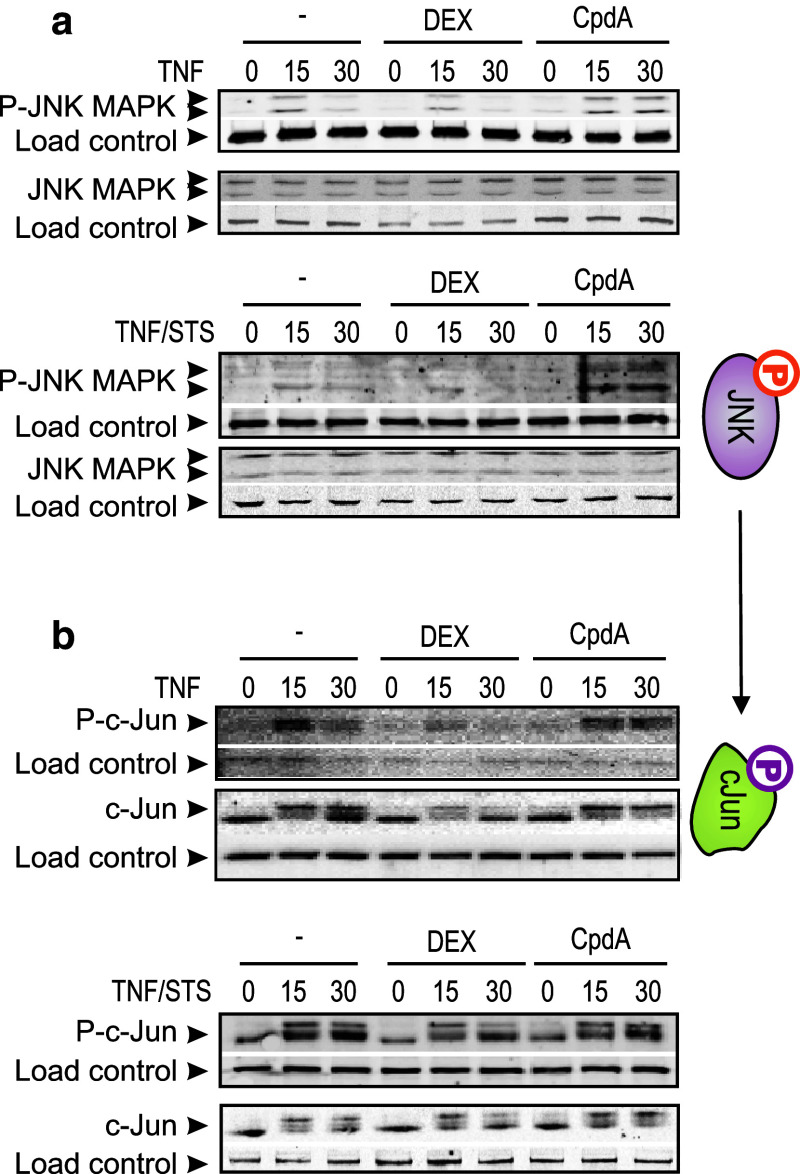
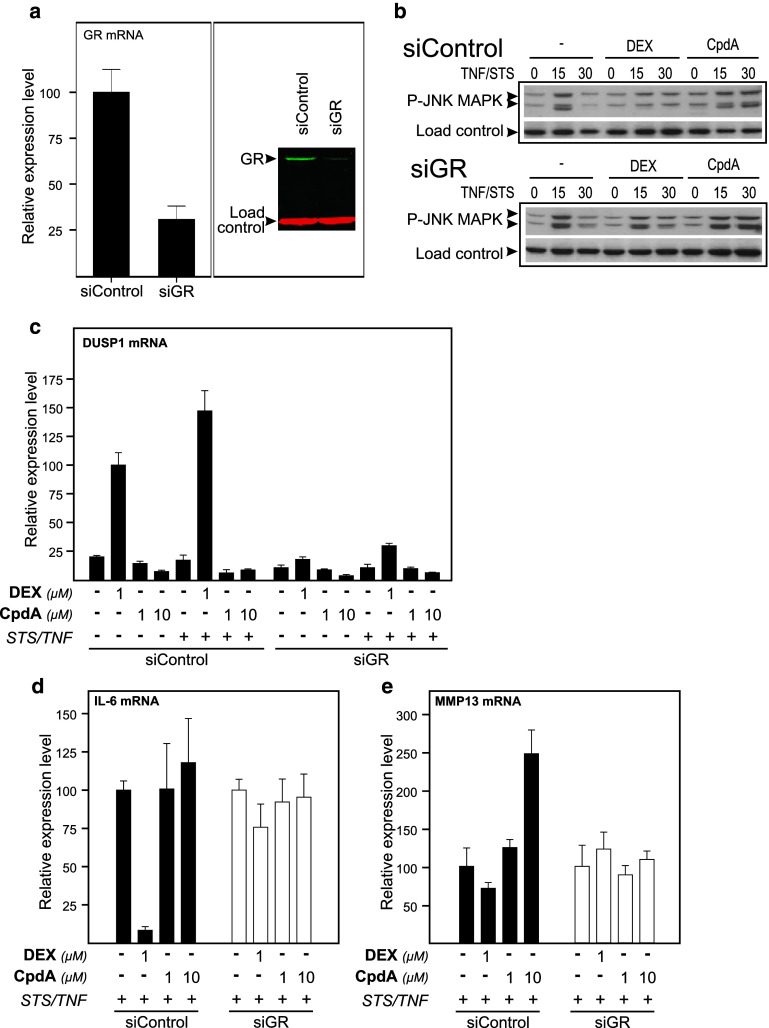
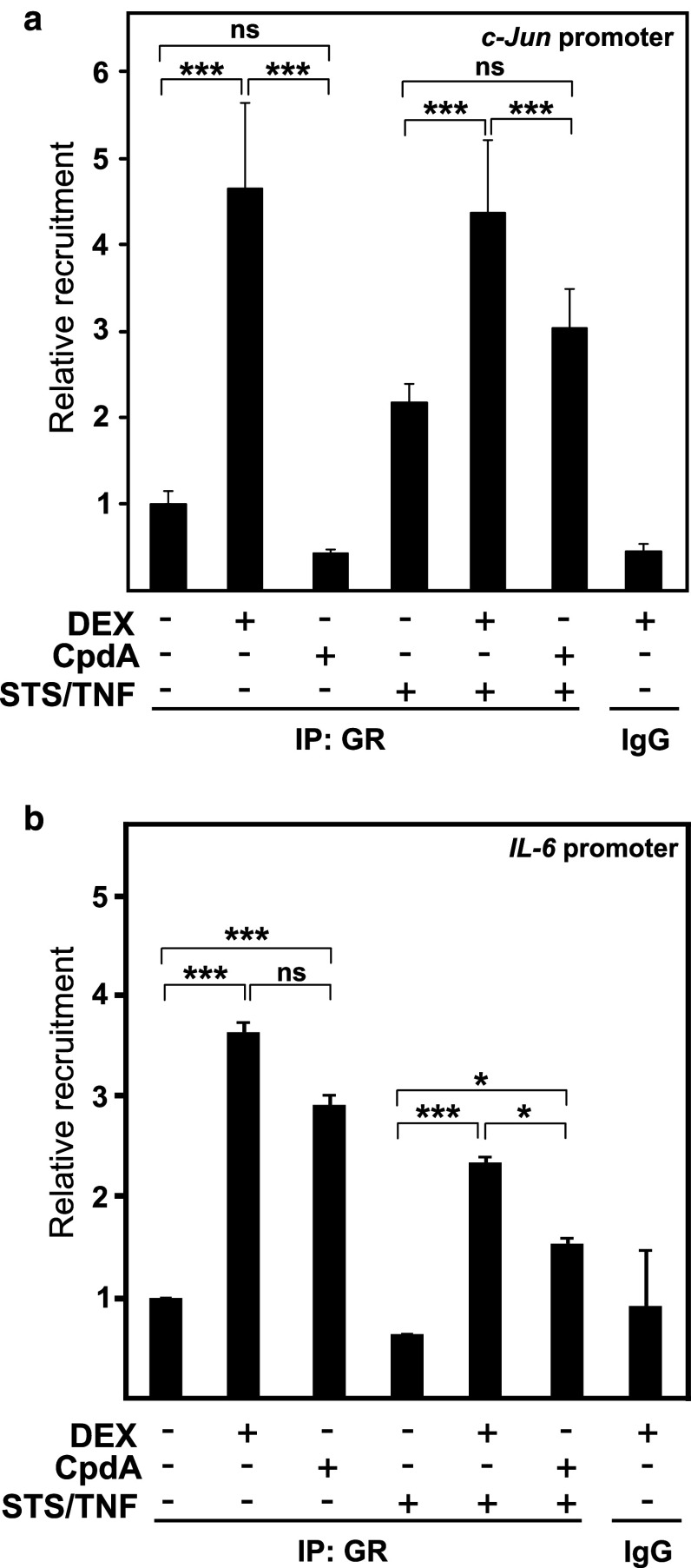
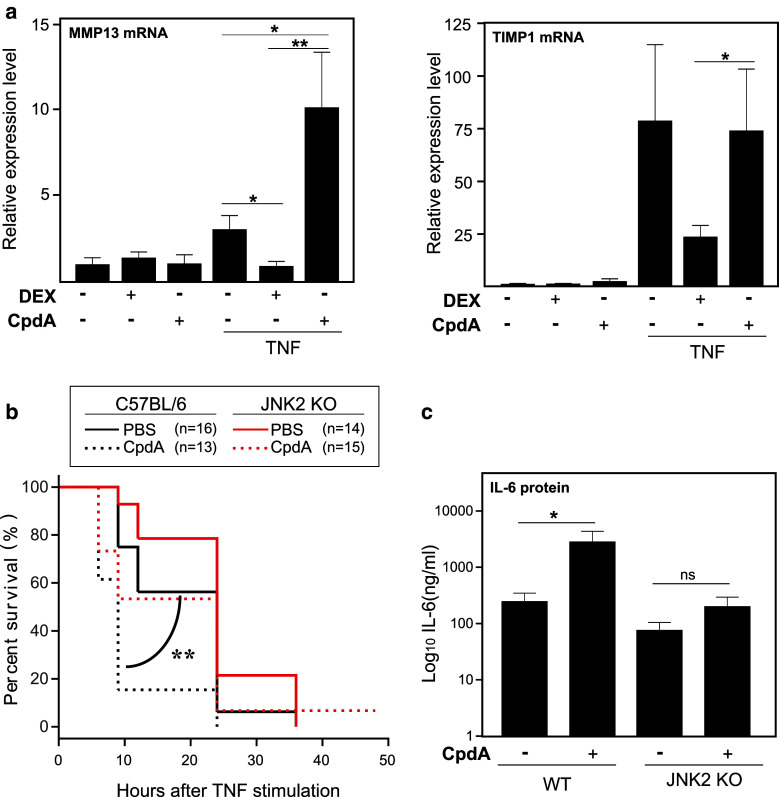
Glucocorticoids (GCs) block inflammation via interference of the liganded glucocorticoid receptor (GR) with the activity of pro-inflammatory transcription factors NF-κB and AP-1, a mechanism known as transrepression. This mechanism is believed to involve the activity of GR monomers. Here, we explored how the GR monomer-favoring Compound A (CpdA) affects AP-1 activation and activity. Our results demonstrate that non-steroidal CpdA, unlike classic steroidal GCs, blocks NF-κB- but not AP-1-driven gene expression. CpdA rather sustains AP-1-driven gene expression, a result which could mechanistically be explained by the failure of CpdA to block upstream JNK kinase activation and concomitantly also phosphorylation of c-Jun. In concordance and in contrast to DEX, CpdA maintained the expression of the activated AP-1 target gene c-jun, as well as the production of the c-Jun protein. As for the underlying mechanism, GR is a necessary intermediate in the CpdA-mediated gene expression of AP-1-regulated genes, but seems to be superfluous to CpdA-mediated JNK phosphorylation prolongation. The latter phenomenon concurs with the inability of CpdA to stimulate DUSP1 gene expression. ChIP analysis demonstrates that DEX-activated GR, but not CpdA-activated GR, is recruited to AP-1-driven promoters. Furthermore, in mice we observed that CpdA instigates a strong enhancement of TNF-induced AP-1-driven gene expression. Finally, we demonstrate that this phenomenon coincides with an increased sensitivity towards TNF lethality, and implicate again a role for JNK2. In conclusion, our data support the hypothesis that a ligand-induced differential conformation of GR yields a different transcription factor cross-talk profile.
糖皮质激素(GCs)通过配体结合的糖皮质激素受体(GR)与促炎转录因子 NF-κB 和 AP-1 的活性相互作用来阻断炎症,这种机制被称为转录抑制。该机制被认为涉及 GR 单体的活性。在这里,我们探讨了 GR 单体促进剂 A(CpdA)如何影响 AP-1 的激活和活性。我们的结果表明,非甾体 CpdA 与经典甾体 GCs 不同,它阻断了 NF-κB 而非 AP-1 驱动的基因表达。CpdA 反而维持了 AP-1 驱动的基因表达,这一结果可以通过 CpdA 无法阻断上游 JNK 激酶激活以及随之而来的 c-Jun 磷酸化来解释。与 DEX 一致且相反,CpdA 维持了激活的 AP-1 靶基因 c-jun 的表达,以及 c-Jun 蛋白的产生。至于潜在的机制,GR 是 CpdA 介导的 AP-1 调节基因表达的必要中间物,但对于 CpdA 介导的 JNK 磷酸化延长似乎是多余的。后一种现象与 CpdA 无法刺激 DUSP1 基因表达一致。ChIP 分析表明,DEX 激活的 GR,但不是 CpdA 激活的 GR,被募集到 AP-1 驱动的启动子上。此外,在小鼠中我们观察到,CpdA 引发了 TNF 诱导的 AP-1 驱动基因表达的强烈增强。最后,我们证明这种现象与对 TNF 致死性的敏感性增加同时发生,并再次暗示 JNK2 的作用。总之,我们的数据支持这样一种假设,即配体诱导的 GR 构象差异产生了不同的转录因子相互作用谱。