École de Psychologie, Université Laval Québec, QC, Canada ; Centre de Recherche de l'Institut Universitaire en Santé Mentale Québec, QC, Canada.
Front Hum Neurosci. 2013 Jun 19;7:274. doi: 10.3389/fnhum.2013.00274. eCollection 2013.
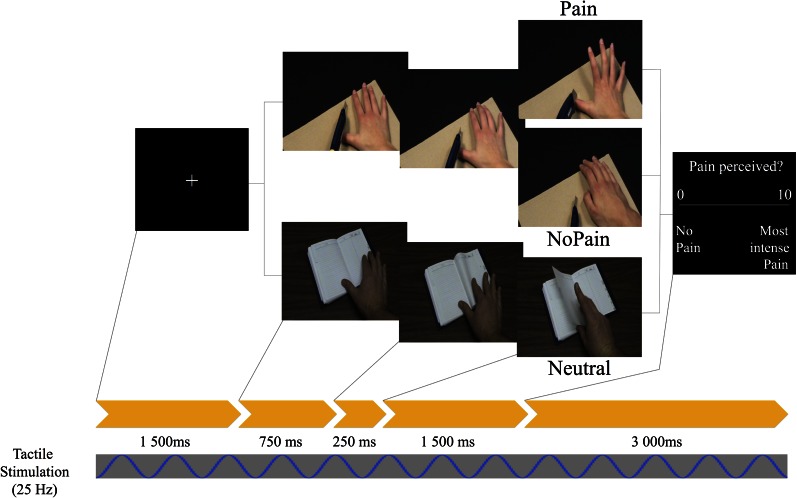
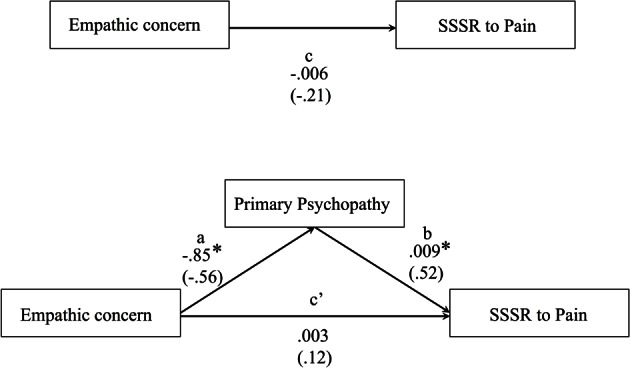
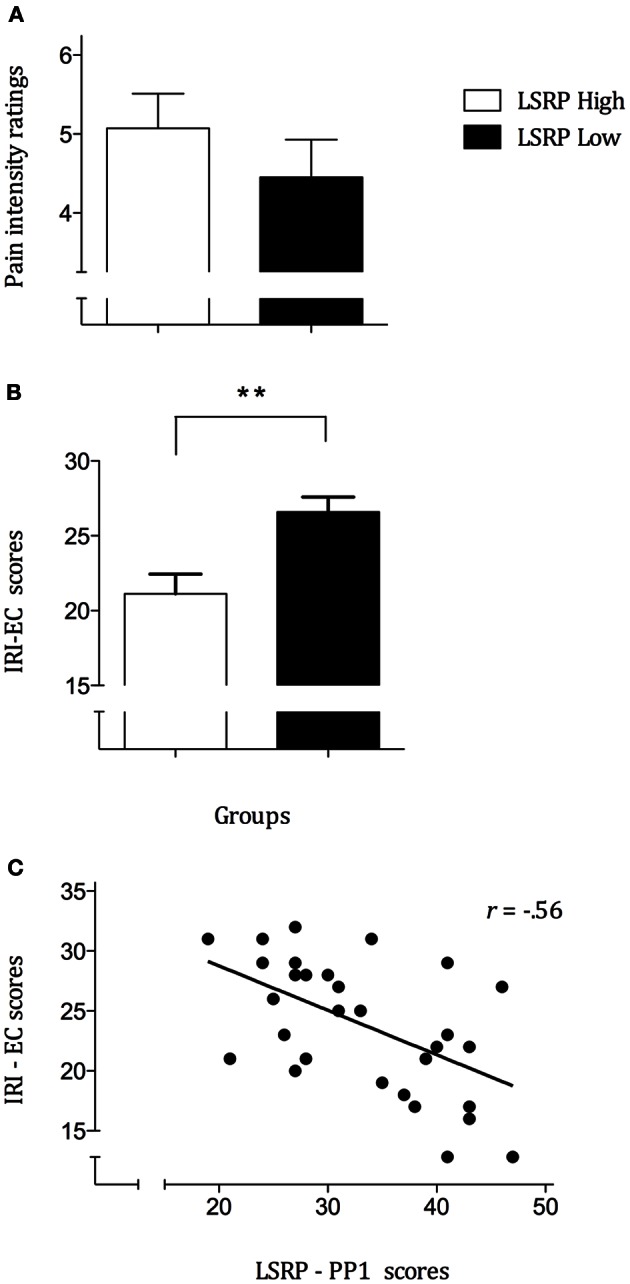
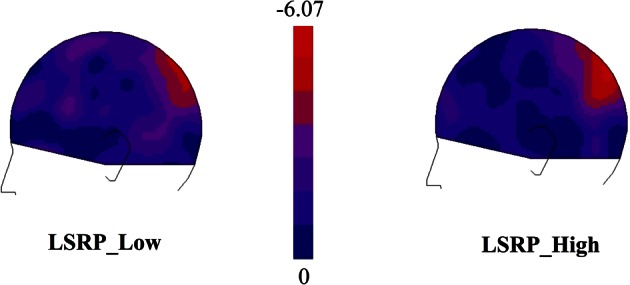
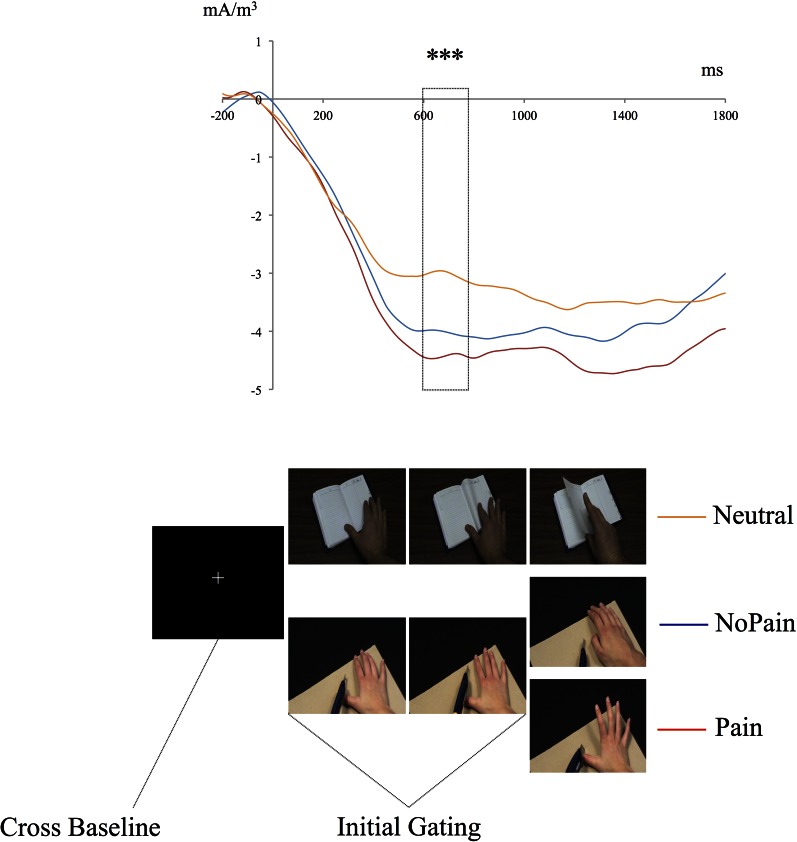
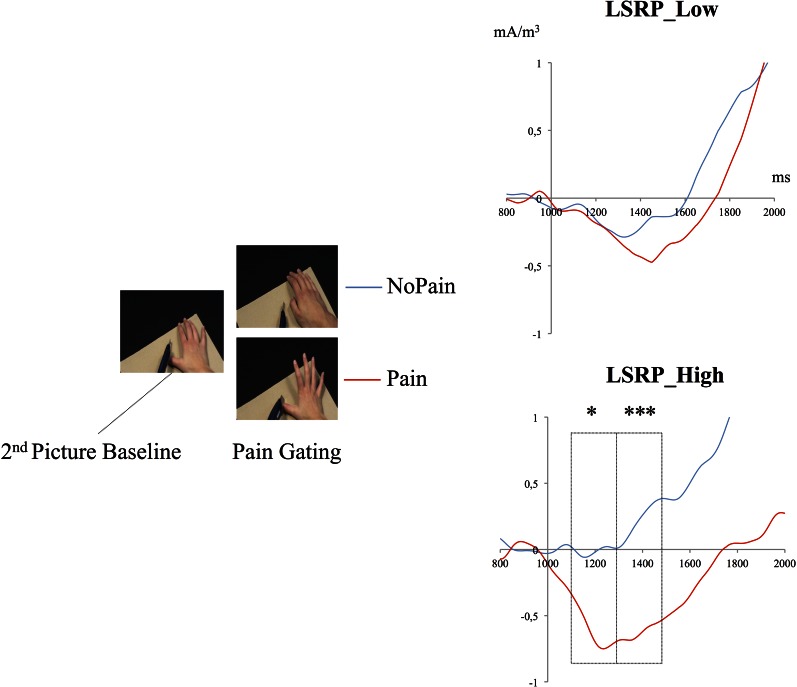
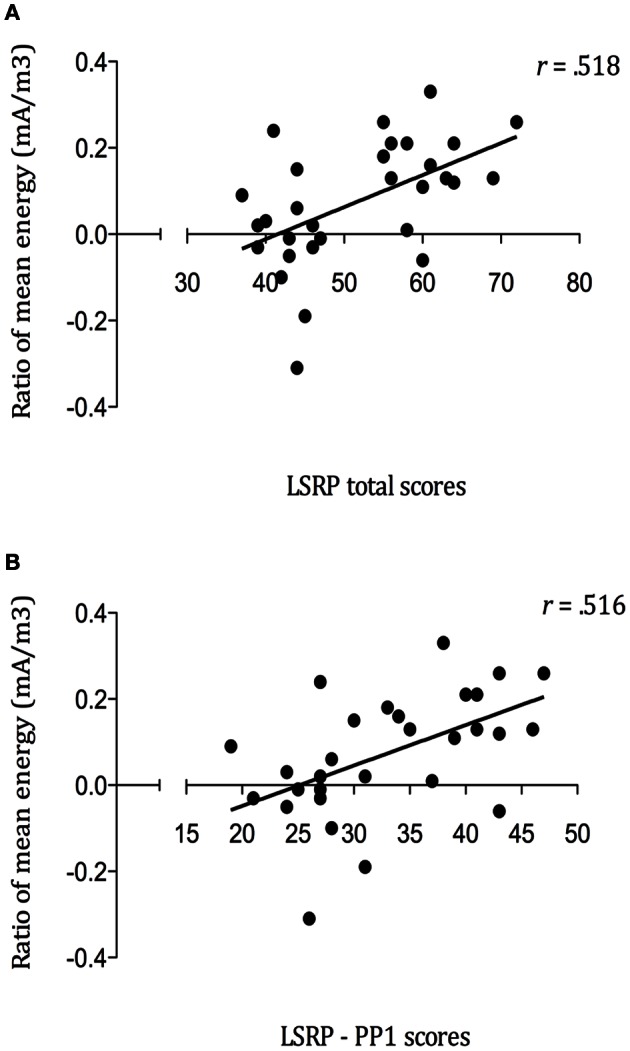
A large number of neuroimaging studies have shown neural overlaps between first-hand experiences of pain and the perception of pain in others. This shared neural representation of vicarious pain is thought to involve both affective and sensorimotor systems. A number of individual factors are thought to modulate the cerebral response to other's pain. The goal of this study was to investigate the impact of psychopathic traits on the relation between sensorimotor resonance to other's pain and self-reported empathy. Our group has previously shown that a steady-state response to non-painful stimulation is modulated by the observation of other people's bodily pain. This change in somatosensory response was interpreted as a form of somatosensory gating (SG). Here, using the same technique, SG was compared between two groups of 15 young adult males: one scoring very high on a self-reported measure of psychopathic traits [60.8 ± 4.98; Levenson's Self-Report Psychopathy Scale (LSRP)] and one scoring very low (42.7 ± 2.94). The results showed a significantly greater reduction of SG to pain observation for the high psychopathic traits group compared to the low psychopathic traits group. SG to pain observation was positively correlated with affective and interpersonal facet of psychopathy in the whole sample. The high psychopathic traits group also reported lower empathic concern (EC) scores than the low psychopathic traits group. Importantly, primary psychopathy, as assessed by the LSRP, mediated the relation between EC and SG to pain observation. Together, these results suggest that increase somatosensory resonance to other's pain is not exclusively explained by trait empathy and may be linked to other personality dimensions, such as psychopathic traits.
大量神经影像学研究表明,个体亲身经历疼痛和感知他人疼痛之间存在神经重叠。这种替代性疼痛的共同神经表示被认为涉及情感和感觉运动系统。许多个体因素被认为可以调节对他人疼痛的大脑反应。本研究旨在探讨精神病特质对他人疼痛感知与自我报告同理心之间的关系的影响。我们的研究小组之前已经表明,对非疼痛刺激的稳态反应会受到他人身体疼痛观察的调节。这种体感反应的变化被解释为一种体感门控(SG)形式。在这里,我们使用相同的技术,在两组 15 名年轻成年男性之间比较了 SG:一组在自我报告的精神病特质量表上得分非常高(60.8 ± 4.98;Levenson 自我报告精神病量表(LSRP)),另一组得分非常低(42.7 ± 2.94)。结果表明,高精神病特质组的 SG 对疼痛观察的降低幅度明显大于低精神病特质组。SG 对疼痛观察与整个样本的情感和人际方面的精神病特质呈正相关。高精神病特质组的同理心关怀(EC)评分也低于低精神病特质组。重要的是,LSRP 评估的原发性精神病特质在 EC 和 SG 对疼痛观察之间的关系中起中介作用。综上所述,这些结果表明,对他人疼痛的体感共鸣增加不仅仅可以用特质同理心来解释,还可能与其他人格维度相关,例如精神病特质。