Department of Oncology, Georgetown University School of Medicine Washington, DC, USA ; Department of Biochemistry, Molecular and Cellular Biology, Georgetown University School of Medicine Washington, DC, USA ; Department of Radiation Medicine, Georgetown University School of Medicine Washington, DC, USA.
Front Genet. 2013 Jun 21;4:85. doi: 10.3389/fgene.2013.00085. eCollection 2013.
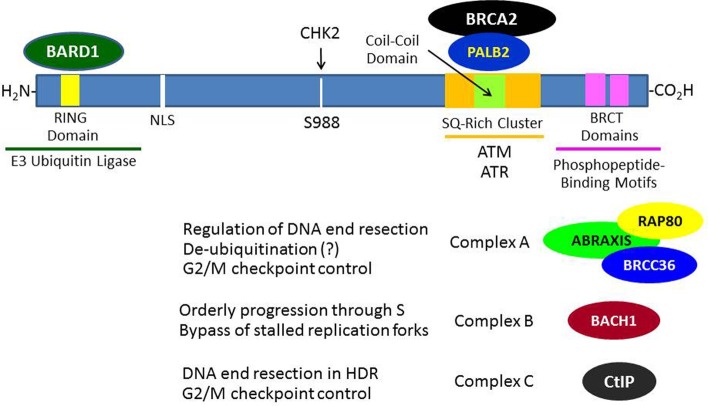
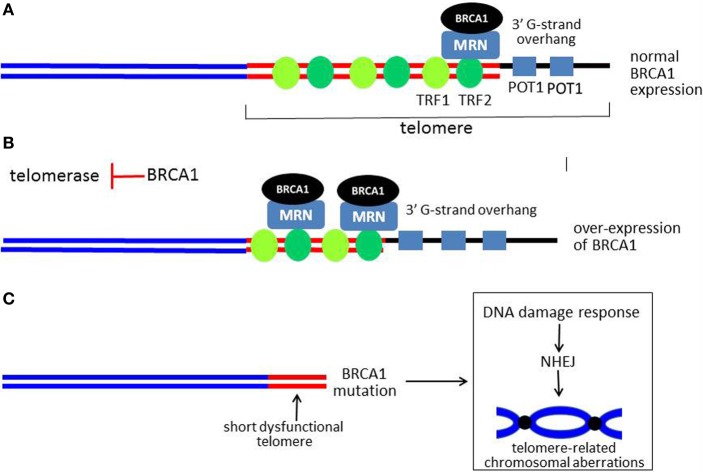
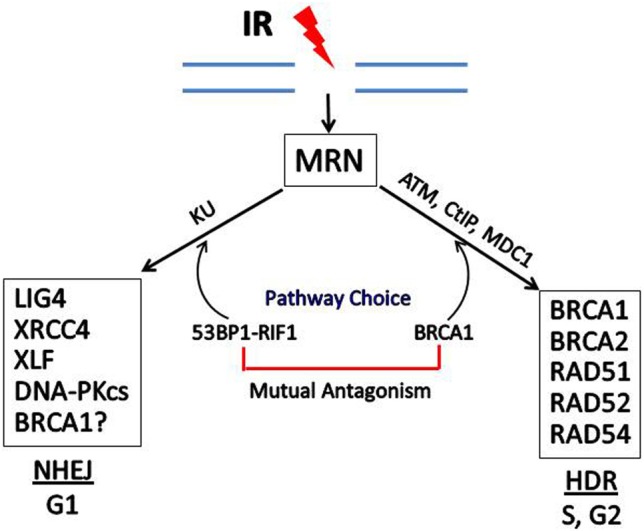
Mutations of the breast and ovarian cancer susceptibility gene 1 (BRCA1) account for about 40-45% of hereditary breast cancer cases. Moreover, a significant fraction of sporadic (non-hereditary) breast and ovarian cancers exhibit reduced or absent expression of the BRCA1 protein, suggesting an additional role for BRCA1 in sporadic cancers. BRCA1 follows the classic pattern of a highly penetrant Knudsen-type tumor suppressor gene in which one allele is inactivated through a germ-line mutation and the other is mutated or deleted within the tumor. BRCA1 is a multi-functional protein but it is not fully understood which function(s) is (are) most important for tumor suppression, nor is it clear why BRCA1-mutations confer a high risk for breast and ovarian cancers and not a broad spectrum of tumor types. Here, we will review BRCA1 functions in the DNA damage response (DDR), which are likely to contribute to tumor suppression. In the process, we will highlight some of the controversies and unresolved issues in the field. We will also describe a recently identified and under-investigated role for BRCA1 in the regulation of telomeres and the implications of this role in the DDR and cancer suppression.
乳腺癌和卵巢癌易感基因 1(BRCA1)的突变约占遗传性乳腺癌病例的 40-45%。此外,相当一部分散发性(非遗传性)乳腺癌和卵巢癌表现出 BRCA1 蛋白表达减少或缺失,这表明 BRCA1 在散发性癌症中具有额外的作用。BRCA1 遵循经典的高外显率 Knudsen 型肿瘤抑制基因模式,其中一个等位基因通过种系突变失活,另一个等位基因在肿瘤中发生突变或缺失。BRCA1 是一种多功能蛋白,但尚不清楚哪种(些)功能对肿瘤抑制最重要,也不清楚为什么 BRCA1 突变会导致乳腺癌和卵巢癌的高风险,而不是广泛的肿瘤类型。在这里,我们将回顾 BRCA1 在 DNA 损伤反应(DDR)中的功能,这些功能可能有助于肿瘤抑制。在此过程中,我们将强调该领域的一些争议和未解决的问题。我们还将描述 BRCA1 在端粒调控中的一个新发现且研究不足的作用,以及该作用在 DDR 和癌症抑制中的意义。