Aging, Disability, and Long-Term Care Program, RTI International, Research Triangle Park, North Carolina, USA.
Obesity (Silver Spring). 2013 Dec;21(12):E798-804. doi: 10.1002/oby.20531. Epub 2013 Sep 5.
This study estimates additional average health care expenditures for overweight and obesity for adults with disabilities vs. without.
Descriptive and multivariate methods were used to estimate additional health expenditures by service type, age group, and payer using 2004-2007 Medical Expenditure Panel Survey data.
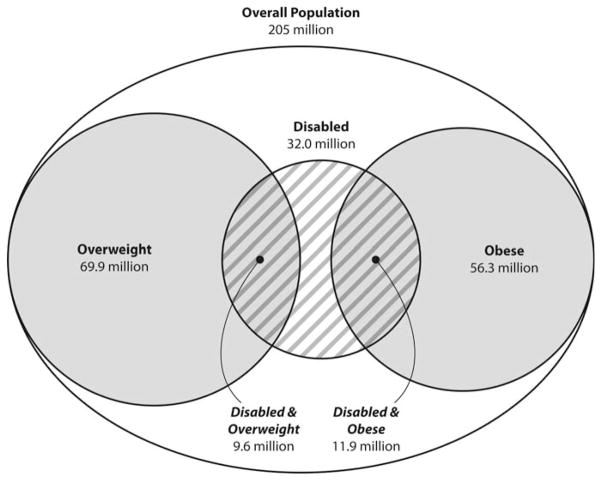
In 2007, 37% of community-dwelling Americans with disabilities were obese vs. 27% of the total population. People with disabilities had almost three times ($2,459) the additional average obesity cost of people without disabilities ($889). Prescription drug expenditures for obese people with disabilities were three times as high and outpatient expenditures were 74% higher. People with disabilities in the 45- to 64-year age group had the highest obesity expenditures. Medicare had the highest additional average obesity expenditures among payers. Among people with prescription drug expenditures, obese people with disabilities had nine times the prevalence of diabetes as normal weight people with disabilities. Overweight people with and without disabilities had lower expenditures than normal-weight people with and without disabilities.
Obesity results in substantial additional health care expenditures for people with disabilities. These additional expenditures pose a serious current and future problem, given the potential for higher obesity prevalence in the coming decade.
本研究旨在估算残疾成年人超重和肥胖相对于非残疾成年人的额外平均医疗保健支出。
采用描述性和多变量方法,利用 2004-2007 年医疗支出面板调查数据,按服务类型、年龄组和支付方估算额外的健康支出。
2007 年,37%的社区居住的残疾美国成年人肥胖,而总人口的肥胖率为 27%。与没有残疾的人相比,残疾人士的额外平均肥胖成本几乎高出三倍(2459 美元)(889 美元)。残疾肥胖者的处方药支出高出三倍,门诊支出高出 74%。45 至 64 岁年龄组的残疾人士肥胖支出最高。在支付方中,医疗保险的额外平均肥胖支出最高。在有处方药支出的人群中,残疾肥胖者患糖尿病的比例是残疾正常体重者的九倍。超重的残疾人和非残疾人士的支出低于体重正常的残疾人和非残疾人士。
肥胖会导致残疾人士产生大量额外的医疗保健支出。鉴于未来十年肥胖症患病率可能上升,这些额外支出构成了当前和未来的严重问题。