Nguyen-Vu Trang, Vedin Lise-Lotte, Liu Ka, Jonsson Philip, Lin Jean Z, Candelaria Nicholes R, Candelaria Lindsay P, Addanki Sridevi, Williams Cecilia, Gustafsson Jan-Åke, Steffensen Knut R, Lin Chin-Yo
Breast Cancer Res. 2013 Jun 20;15(3):R51. doi: 10.1186/bcr3443.
Liver × receptors (LXRs) are members of the nuclear receptor family of ligand-dependent transcription factors and have established functions as regulators of cholesterol, glucose, and fatty acid metabolism and inflammatory responses. Published reports of anti-proliferative effects of synthetic LXR ligands on breast, prostate, ovarian, lung, skin, and colorectal cancer cells suggest that LXRs are potential targets in cancer prevention and treatment.
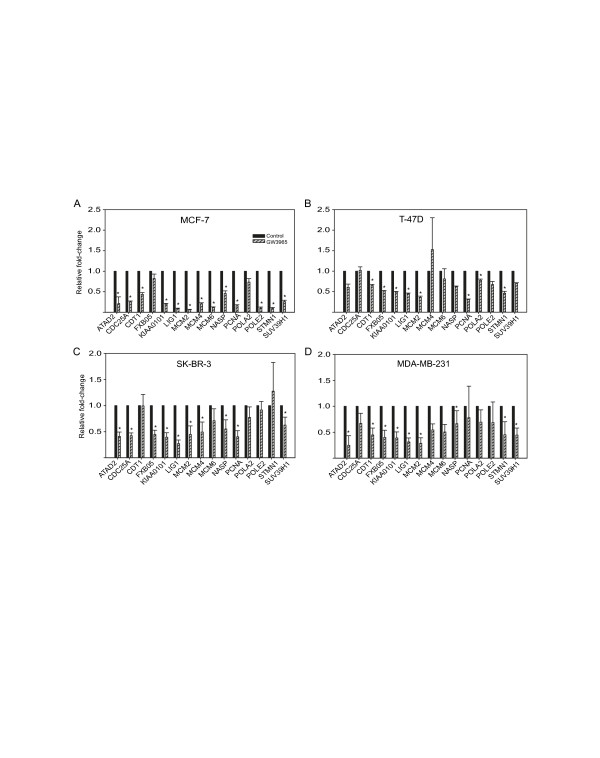
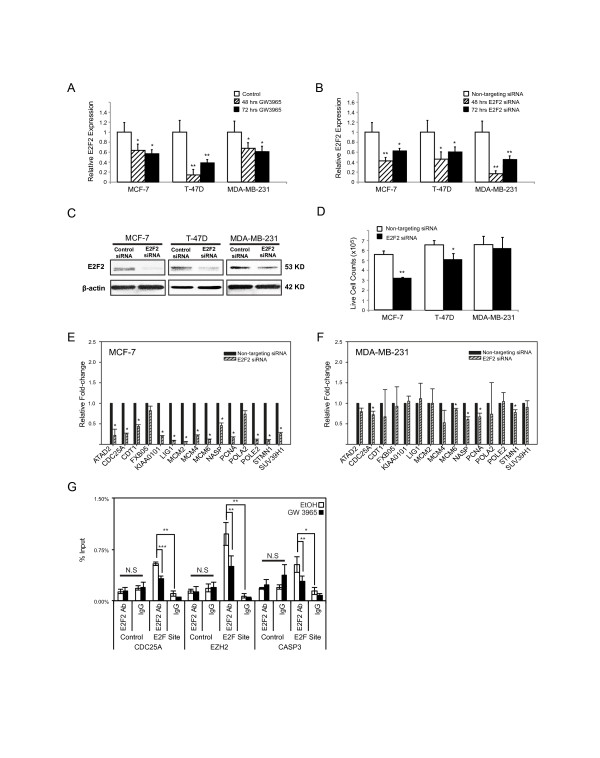
To further determine the effects of LXR ligands and identify their potential mechanisms of action in breast cancer cells, we carried out microarray analysis of gene expression in four breast cancer cell lines following treatments with the synthetic LXR ligand GW3965. Differentially expressed genes were further subjected to gene ontology and pathway analyses, and their expression profiles and associations with disease parameters and outcomes were examined in clinical samples. Response of E2F target genes were validated by real-time PCR, and the posited role of E2F2 in breast cancer cell proliferation was tested by RNA interference experiments.
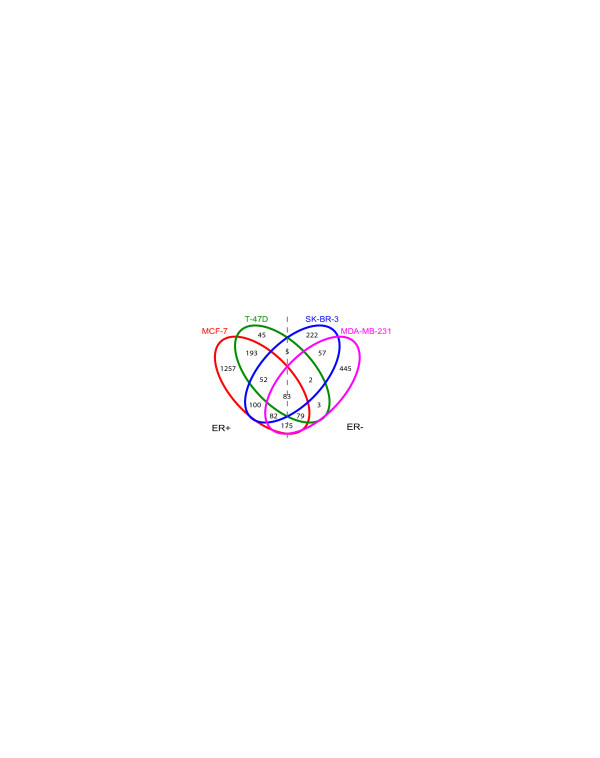
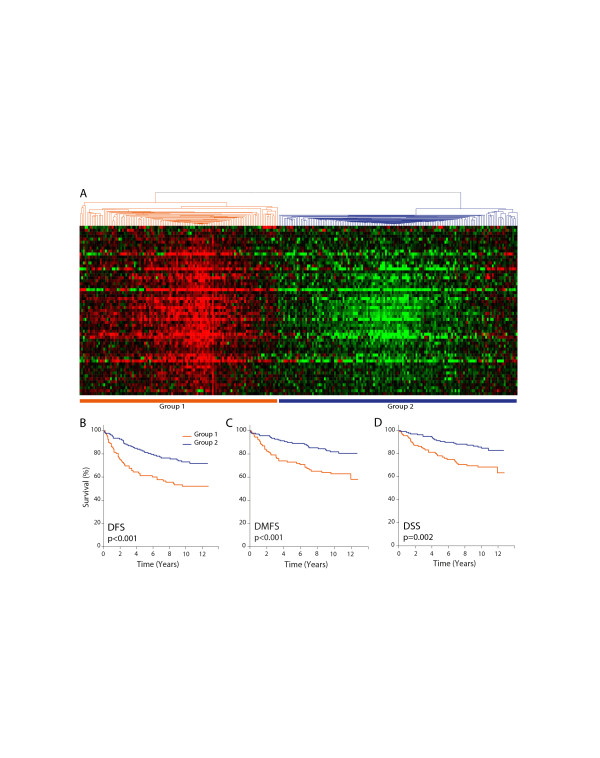
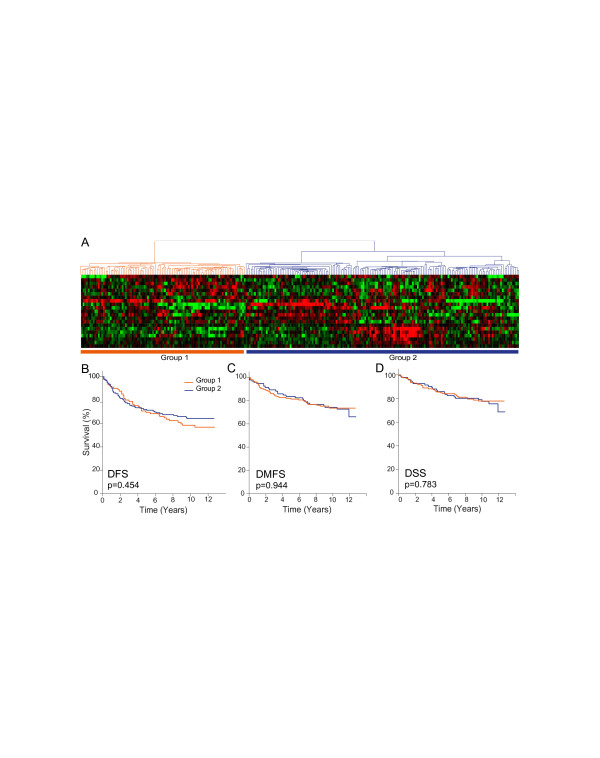
We observed cell line-specific transcriptional responses as well as a set of common responsive genes. In the common responsive gene set, upregulated genes tend to function in the known metabolic effects of LXR ligands and LXRs whereas the downregulated genes mostly include those which function in cell cycle regulation, DNA replication, and other cell proliferation-related processes. Transcription factor binding site analysis of the downregulated genes revealed an enrichment of E2F binding site sequence motifs. Correspondingly, E2F2 transcript levels are downregulated following LXR ligand treatment. Knockdown of E2F2 expression, similar to LXR ligand treatment, resulted in a significant disruption of estrogen receptor positive breast cancer cell proliferation. Ligand treatment also decreased E2F2 binding to cis-regulatory regions of target genes. Hierarchical clustering of breast cancer patients based on the expression profiles of the commonly downregulated LXR ligand-responsive genes showed a strong association of these genes with patient survival.
Taken together, these results indicate that LXR ligands target gene networks, including those regulated by E2F family members, are critical for tumor biology and disease progression and merit further consideration as potential agents in the prevention and treatment of breast cancers.
肝脏X受体(LXRs)是核受体家族中依赖配体的转录因子成员,在胆固醇、葡萄糖和脂肪酸代谢以及炎症反应的调节中具有既定功能。关于合成LXR配体对乳腺癌、前列腺癌、卵巢癌、肺癌、皮肤癌和结肠直肠癌细胞的抗增殖作用的已发表报告表明,LXRs是癌症预防和治疗的潜在靶点。
为了进一步确定LXR配体的作用并确定其在乳腺癌细胞中的潜在作用机制,我们在用合成LXR配体GW3965处理后的四种乳腺癌细胞系中进行了基因表达的微阵列分析。对差异表达基因进一步进行基因本体论和通路分析,并在临床样本中检查它们的表达谱以及与疾病参数和结果的关联。通过实时PCR验证E2F靶基因的反应,并通过RNA干扰实验测试E2F2在乳腺癌细胞增殖中的假定作用。
我们观察到细胞系特异性转录反应以及一组共同的反应基因。在共同的反应基因集中,上调的基因倾向于在LXR配体和LXRs的已知代谢作用中发挥作用,而下调的基因大多包括那些在细胞周期调节、DNA复制和其他细胞增殖相关过程中发挥作用的基因。对下调基因的转录因子结合位点分析显示E2F结合位点序列基序富集。相应地,LXR配体处理后E2F2转录水平下调。敲低E2F2表达,与LXR配体处理类似,导致雌激素受体阳性乳腺癌细胞增殖显著破坏。配体处理还降低了E2F2与靶基因顺式调节区域的结合。基于共同下调的LXR配体反应基因的表达谱对乳腺癌患者进行层次聚类分析,结果显示这些基因与患者生存率密切相关。
综上所述,这些结果表明LXR配体靶向的基因网络,包括那些受E2F家族成员调控的基因网络,对肿瘤生物学和疾病进展至关重要,值得进一步考虑作为预防和治疗乳腺癌的潜在药物。