Duke Human Vaccine Institute, Duke University Medical Center, Durham, NC 27710, USA.
J Immunol. 2013 Aug 1;191(3):1260-75. doi: 10.4049/jimmunol.1300770. Epub 2013 Jul 3.
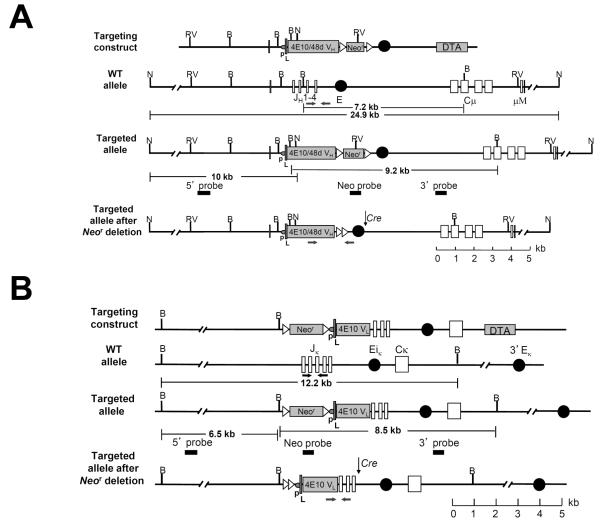
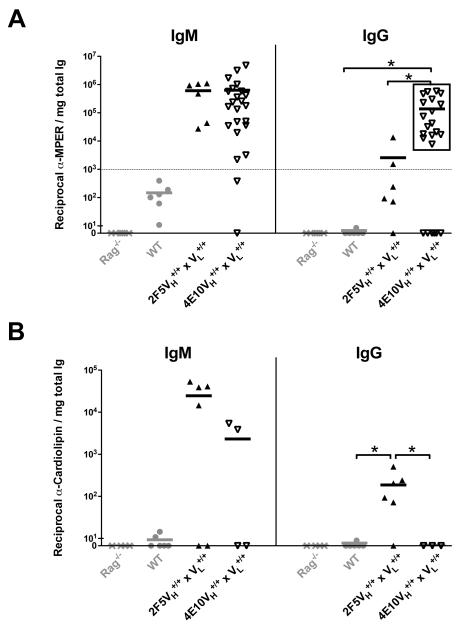
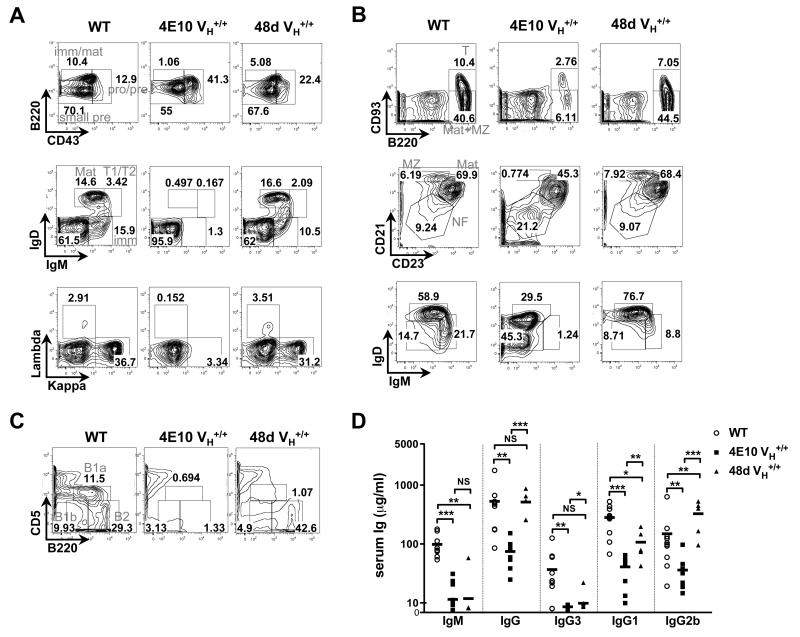
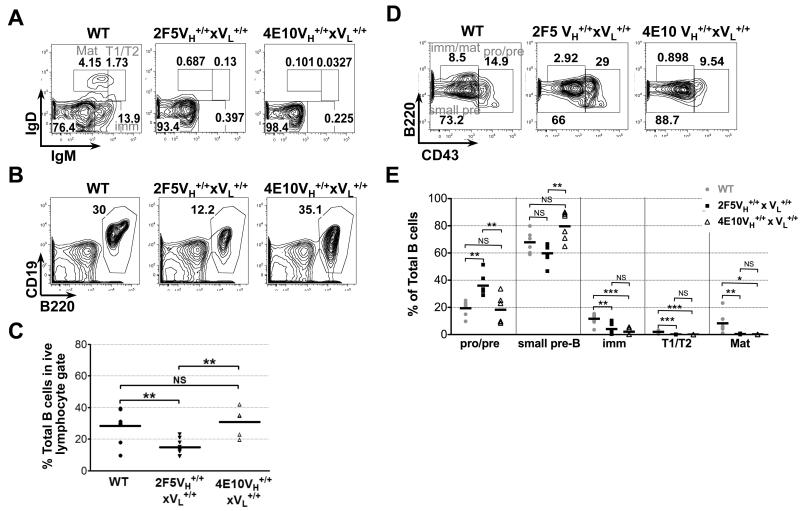
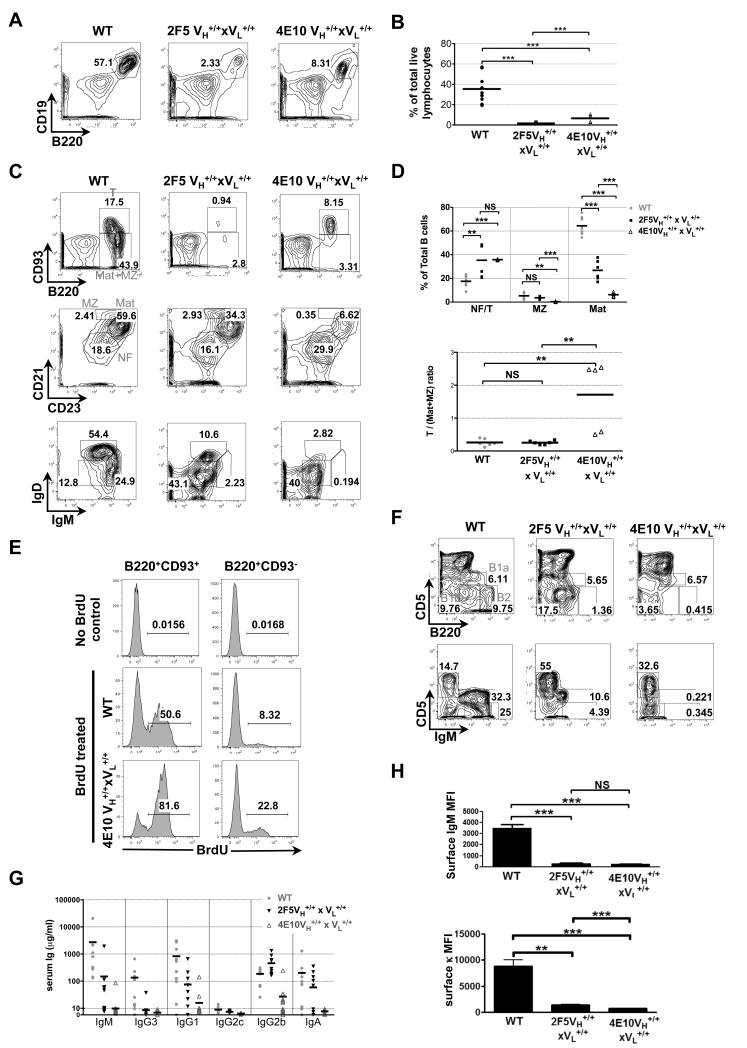
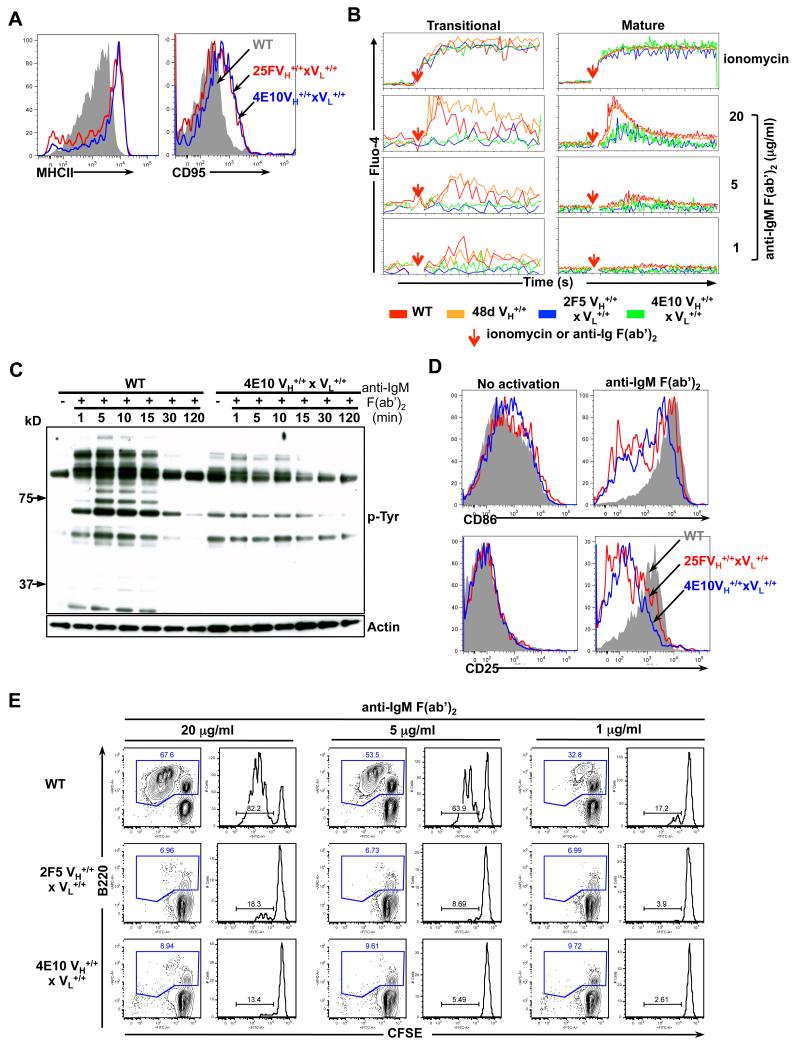
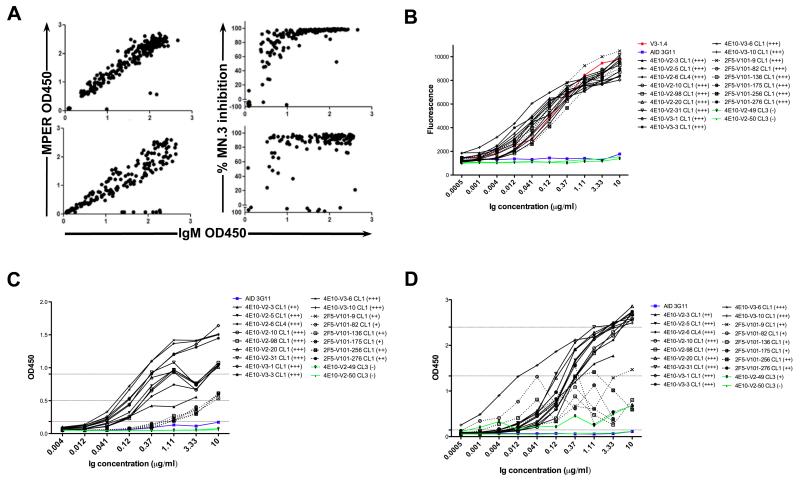
Developing an HIV-1 vaccine has been hampered by the inability of immunogens to induce broadly neutralizing Abs (BnAbs) that protect against infection. Previously, we used knockin (KI) mice expressing a prototypical gp41-specific BnAb, 2F5, to demonstrate that immunological tolerance triggered by self-reactivity of the 2F5 H chain impedes BnAb induction. In this study, we generate KI models expressing H chains from two other HIV-1 Abs, 4E10 (another self-/polyreactive, anti-gp41 BnAb) and 48d (an anti-CD4 inducible, nonpolyreactive Ab), and find a similar developmental blockade consistent with central B cell deletion in 4E10, but not in 48d VH KI mice. Furthermore, in KI strains expressing the complete 2F5 and 4E10 Abs as BCRs, we find that residual splenic B cells arrest at distinct developmental stages, yet exhibit uniformly low BCR densities, elevated basal activation, and profoundly muted responses to BCR ligation and, when captured as hybridoma mAb lines, maintain their dual (gp41/lipid) affinities and capacities to neutralize HIV-1, establishing a key role for anergy in suppressing residual 2F5- or 4E10-expressing B cells. Importantly, serum IgGs from naive 2F5 and 4E10 KI strains selectively eliminate gp41 and lipid binding, respectively, suggesting B cells expressing 2F5 or 4E10 as BCRs exhibit specificity for a distinct spectrum of host Ags, including selective interactions by 2F5 BCR(+) B cells (i.e., and not 4E10 BCR(+) B cells) with those mimicked by its gp41 neutralization epitope.
开发 HIV-1 疫苗一直受到免疫原不能诱导广泛中和抗体(BnAbs)的阻碍,而这些抗体可以预防感染。此前,我们使用表达原型 gp41 特异性 BnAb 2F5 的基因敲入(KI)小鼠证明,2F5 H 链的自身反应引发的免疫耐受会阻碍 BnAb 的诱导。在这项研究中,我们生成了表达来自两种其他 HIV-1 Abs(4E10 和 48d)的 H 链的 KI 模型,发现存在类似的发育阻断,与 4E10 中的中枢 B 细胞删除一致,但在 48d VH KI 小鼠中不存在。此外,在表达完整 2F5 和 4E10 Abs 作为 BCR 的 KI 株中,我们发现残留的脾脏 B 细胞停滞在不同的发育阶段,但表现出均匀低的 BCR 密度、基础激活升高以及对 BCR 交联的反应明显减弱,并且当被捕获为杂交瘤 mAb 系时,它们保持双重(gp41/脂质)亲和力和中和 HIV-1 的能力,确立了无反应性在抑制残留 2F5 或 4E10 表达 B 细胞中的关键作用。重要的是,来自 naive 2F5 和 4E10 KI 株的血清 IgG 选择性地消除 gp41 和脂质结合,分别表明表达 2F5 或 4E10 作为 BCR 的 B 细胞对宿主抗原的一个独特谱具有特异性,包括 2F5 BCR(+) B 细胞(即,而不是 4E10 BCR(+) B 细胞)与 gp41 中和表位模拟物的选择性相互作用。