Huang Chukai, Cen Ling-Ping, Liu Lifang, Leaver Simone G, Harvey Alan R, Cui Qi, Pang Chi Pui, Zhang Mingzhi
Joint Shantou International Eye Center of Shantou University and The Chinese University of Hong Kong, Shantou, P. R. China.
Mol Vis. 2013 Jun 27;19:1422-32. Print 2013.
To examine whether adeno-associated virus (AAV) vector-mediated overexpression of growth-associated protein-43 (GAP-43) has protective or deleterious effects on retinal ganglion cell (RGC) survival in laser-induced chronic intraocular pressure (IOP) elevation injury.
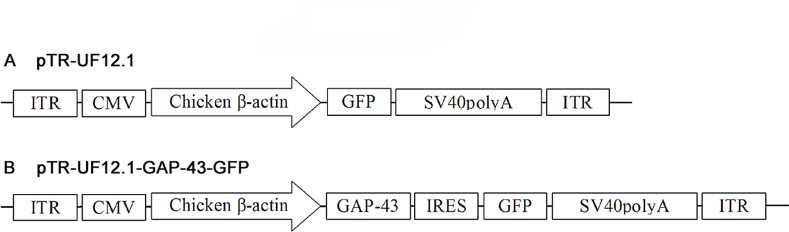
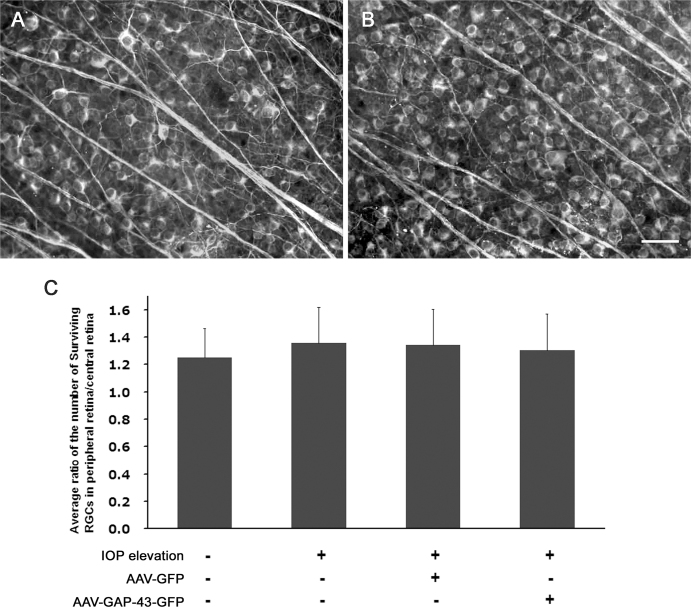
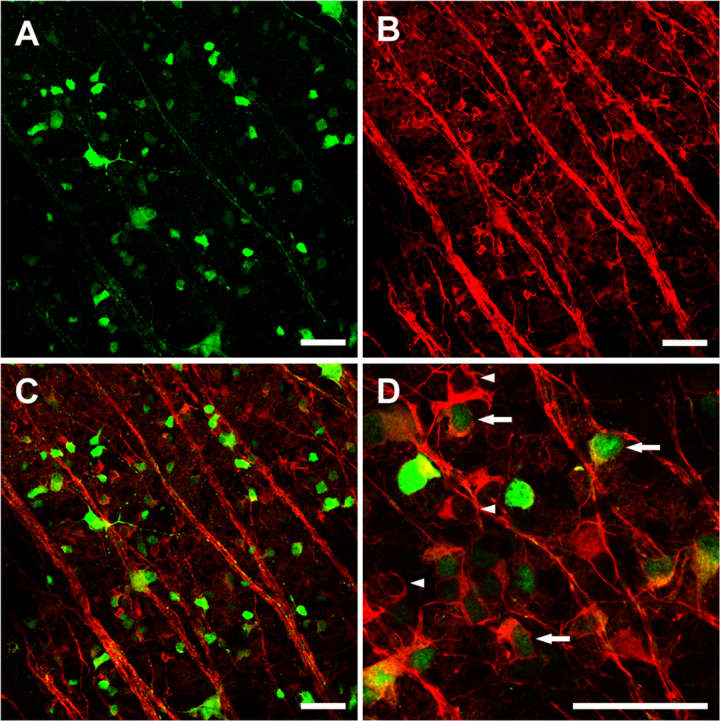
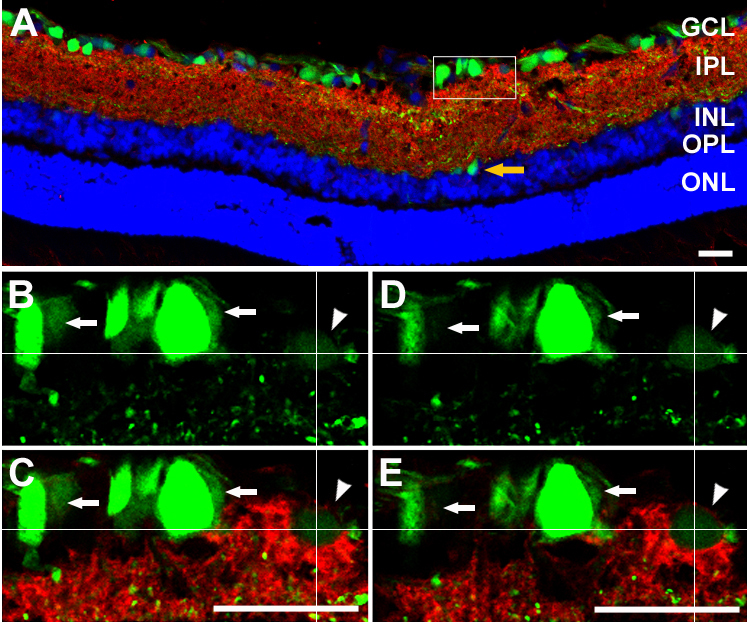
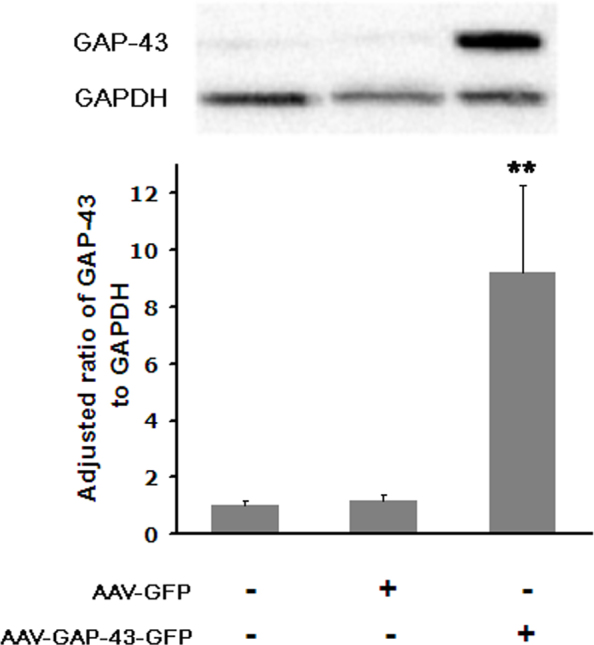
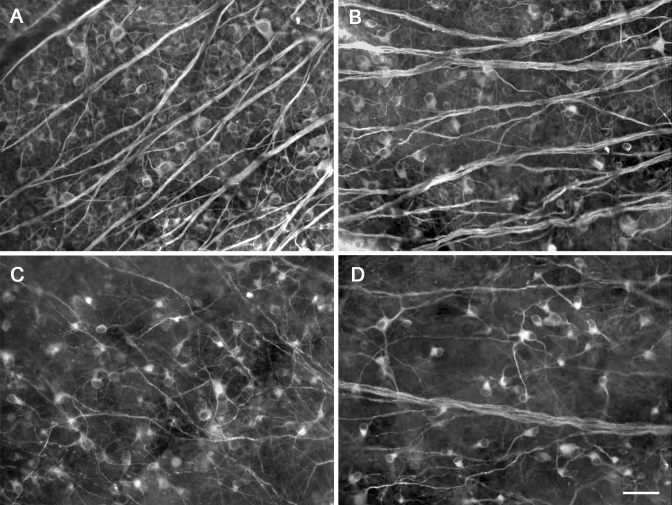
Adult Fischer 344 rats received unilateral intravitreal injection of either normal saline, AAV-green fluorescent protein (AAV-GFP), or a bicistronic AAV vector encoding GAP-43 and GFP (AAV-GAP-43). Two weeks later, experimental chronic glaucoma was induced in the injected eyes by scarring the trabecular meshwork with a diode laser. IOP was measured with an impact (rebound) tonometer. Survival of RGCs was estimated after 3 weeks of IOP elevation by quantifying β-III tubulin⁺ neurons in retinal whole mounts. The transfection efficiency of target genes was assessed with direct view of GFP and western blot analysis of GAP-43.
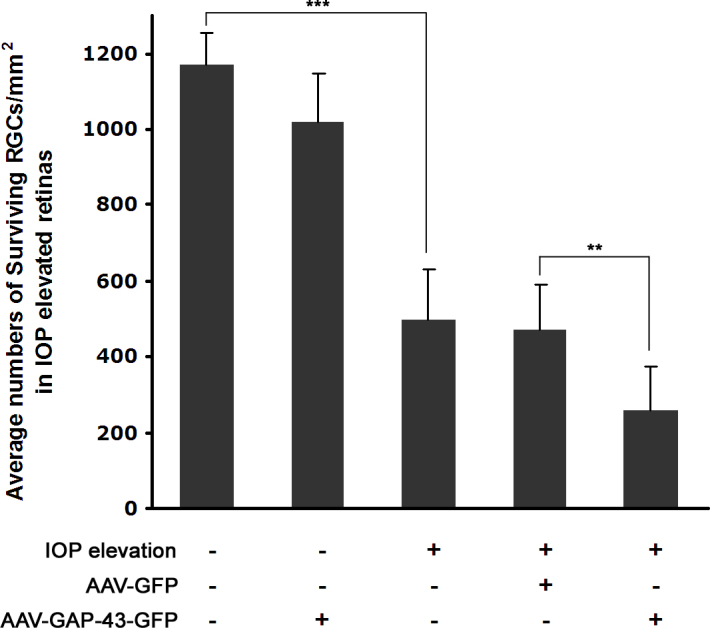
Quantification of β-III tubulin⁺ immunostaining revealed that, compared to uninjured eyes (1,172±80 cells/mm²), 3 weeks of laser-induced IOP elevation led to a 60% decline in RGC survival (496±136 cells/mm²). Transfection with control vector AAV-GFP by itself did not have a significant effect on RGC viability (468±124 cells/mm²). Overexpression of GAP-43 in RGC cell bodies and axons via bicistronic AAV-GAP-43 led to more severe RGC death (260±112 cells/mm²) in IOP elevated eyes, an 80% loss of the total RGC population.
Overexpression of GAP-43 aggravated RGC death in experimental chronic IOP elevation injury. GAP-43 was upregulated in RGCs regenerating after optic nerve injury. Thus, the finding that this same protein is deleterious to RGC viability after chronic IOP elevation may aid in understanding the mechanisms involved in RGC loss in glaucoma and how best to treat this condition.
研究腺相关病毒(AAV)载体介导的生长相关蛋白43(GAP - 43)过表达对激光诱导的慢性眼压(IOP)升高损伤中视网膜神经节细胞(RGC)存活是具有保护作用还是有害作用。
成年Fischer 344大鼠单侧玻璃体内注射生理盐水、AAV - 绿色荧光蛋白(AAV - GFP)或编码GAP - 43和GFP的双顺反子AAV载体(AAV - GAP - 43)。两周后,用二极管激光对小梁网进行瘢痕形成,在注射眼诱导实验性慢性青光眼。用冲击式(回弹式)眼压计测量眼压。在眼压升高3周后,通过对视网膜全层铺片中β - III微管蛋白⁺神经元进行定量来评估RGC的存活情况。通过直接观察GFP和对GAP - 43进行蛋白质印迹分析来评估靶基因的转染效率。
β - III微管蛋白⁺免疫染色定量显示,与未受伤的眼睛(1172±80个细胞/mm²)相比,激光诱导的眼压升高3周导致RGC存活率下降60%(496±136个细胞/mm²)。单独用对照载体AAV - GFP转染对RGC活力没有显著影响(468±124个细胞/mm²)。通过双顺反子AAV - GAP - 43在RGC细胞体和轴突中过表达GAP - 43导致眼压升高的眼中RGC死亡更严重(260±112个细胞/mm²),RGC总数损失80%。
在实验性慢性眼压升高损伤中,GAP - 43过表达加剧了RGC死亡。GAP - 43在视神经损伤后再生的RGC中上调。因此,这同一蛋白在慢性眼压升高后对RGC活力有害这一发现可能有助于理解青光眼中RGC丢失所涉及的机制以及如何最好地治疗这种疾病。