Neuroscience Graduate Group, University of Pennsylvania, Philadelphia, PA, United States.
Neurobiol Learn Mem. 2013 Oct;105:151-8. doi: 10.1016/j.nlm.2013.06.020. Epub 2013 Jul 5.
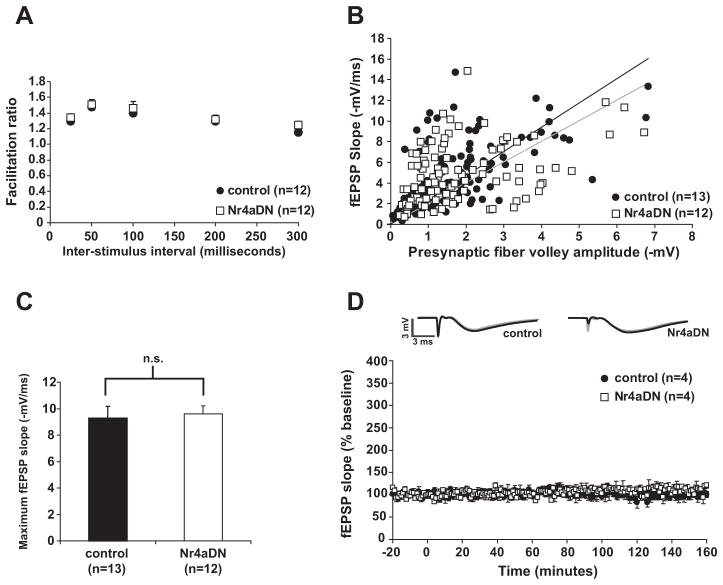
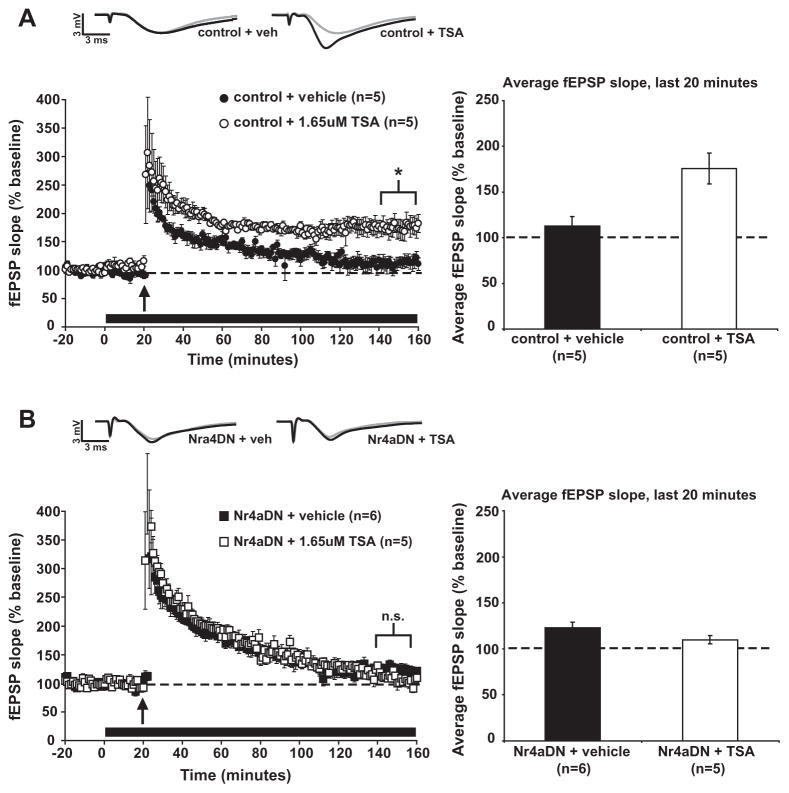
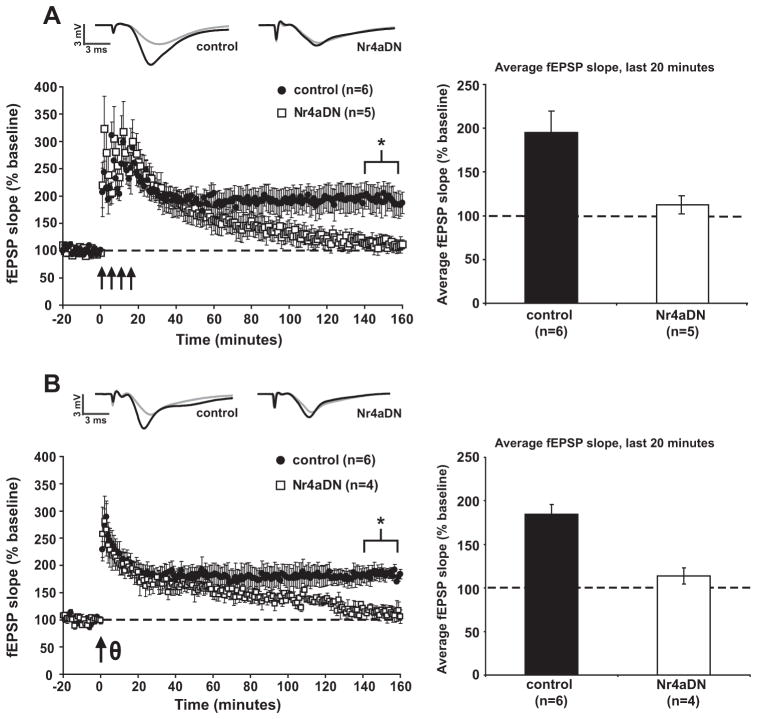
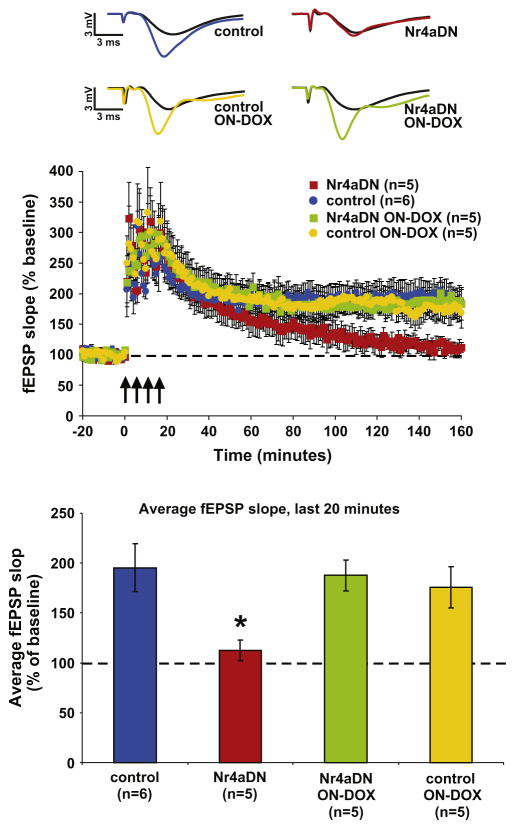
Memory consolidation and long-term potentiation require activity-dependent gene transcription, coordinated by an array of transcription factors. Many members of the nuclear receptor superfamily of transcription factors are expressed in the hippocampus immediately after learning, including the Nr4a family of orphan receptors. These activity-dependent transcription factors are critical for hippocampus-dependent contextual fear and object recognition memory, but their role in hippocampal synaptic function is unknown. In this study, we hypothesized that Nr4a transcription factor function is also necessary for hippocampal long-term potentiation. We used a strain of mice expressing a dominant-negative Nr4a transgene. Hippocampal slices from Nr4aDN mutant mice exhibited impairments in transcription-dependent long-term potentiation and were not sensitive to LTP enhancement by the HDAC inhibitor TSA. These results demonstrate that NR4A transcription factor function mediates mechanisms of synaptic plasticity in the hippocampus.
记忆巩固和长期增强需要活性依赖的基因转录,由一系列转录因子协调。许多核受体超家族的转录因子在学习后立即在海马体中表达,包括孤儿受体 Nr4a 家族。这些活性依赖性转录因子对于海马体依赖性情境性恐惧和物体识别记忆至关重要,但它们在海马体突触功能中的作用尚不清楚。在这项研究中,我们假设 Nr4a 转录因子功能对于海马体的长期增强也是必需的。我们使用表达显性负 Nr4a 转基因的小鼠品系。Nr4aDN 突变小鼠的海马切片显示转录依赖性长期增强受损,并且对组蛋白去乙酰化酶抑制剂 TSA 增强 LTP 不敏感。这些结果表明 NR4A 转录因子功能介导了海马体中的突触可塑性机制。