Mouritsen Henrik, Atema Jelle, Kingsford Michael J, Gerlach Gabriele
Institut für Biologie und Umweltwissenschaften, Carl-von-Ossietzky Universität Oldenburg, Oldenburg, Germany ; Forschungszentrum Neurosensorik, University of Oldenburg, Oldenburg, Germany.
PLoS One. 2013 Jun 26;8(6):e66039. doi: 10.1371/journal.pone.0066039. Print 2013.
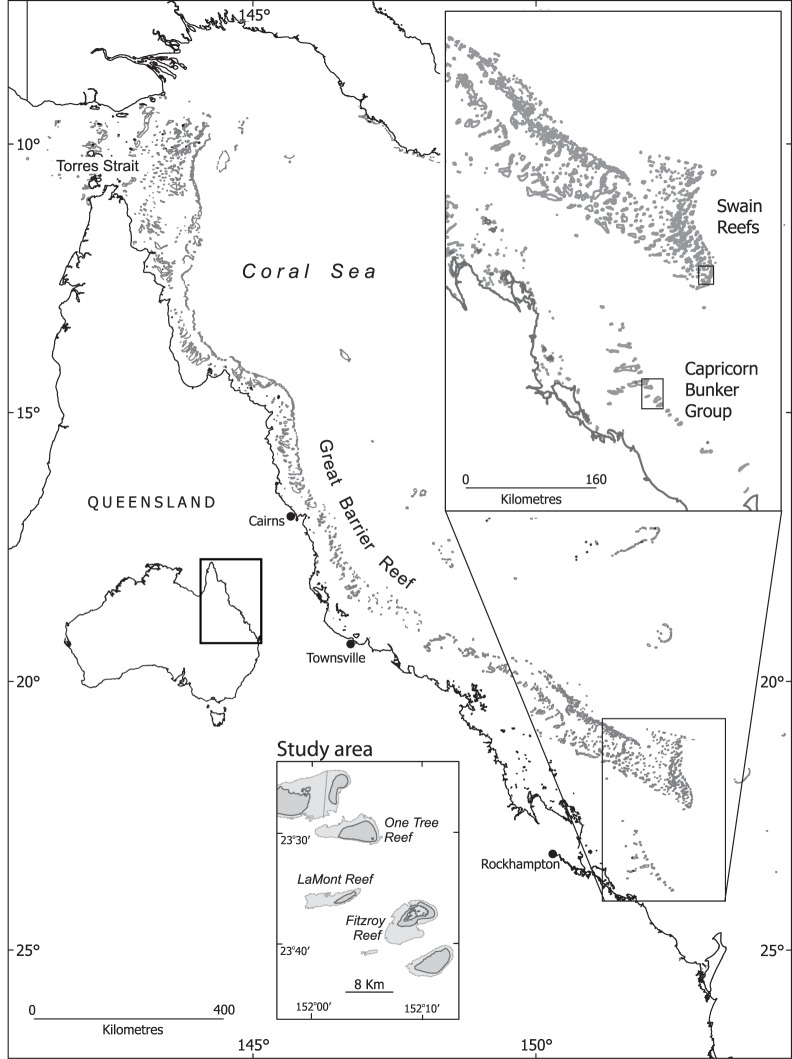
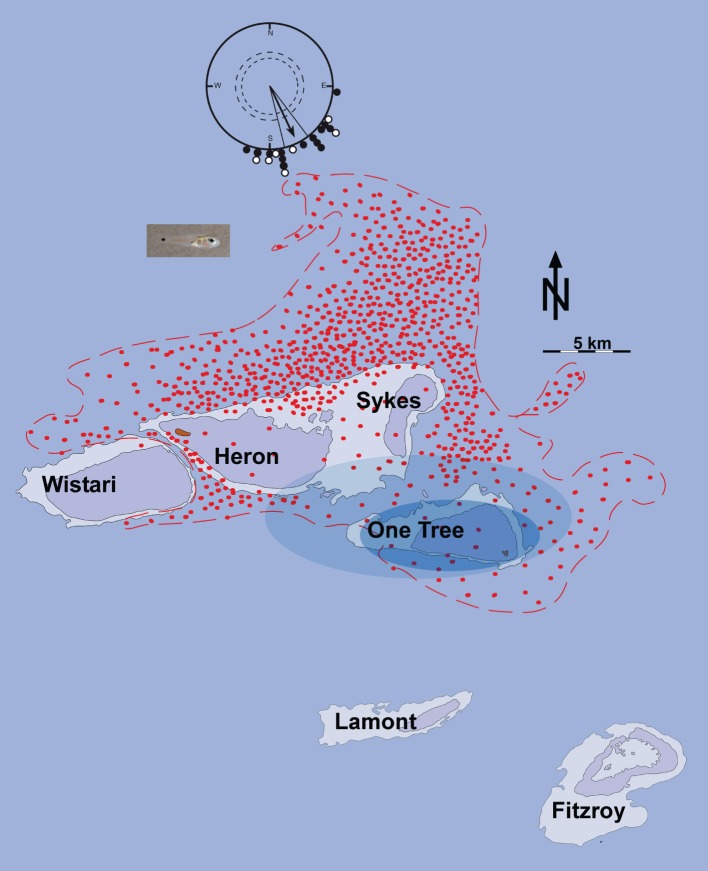
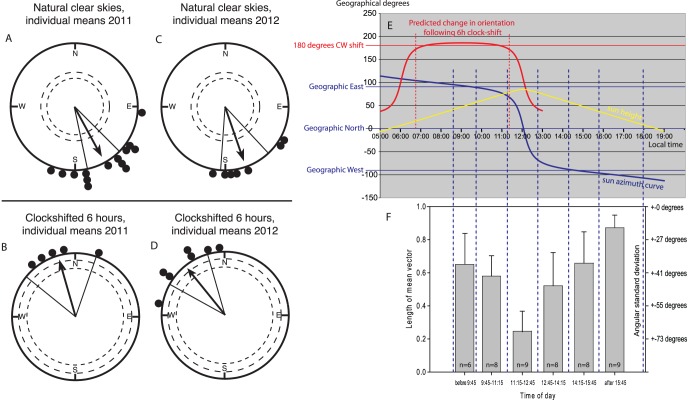
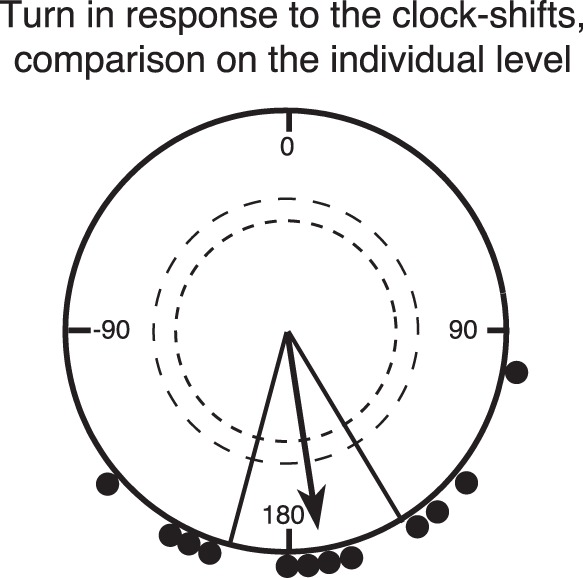
Reef fish sustain populations on isolated reefs and show genetic diversity between nearby reefs even though larvae of many species are swept away from the natal site during pelagic dispersal. Retention or recruitment to natal reefs requires orientation capabilities that enable larvae to find their way. Although olfactory and acoustically based orientation has been implicated in homing when larvae are in the reef's vicinity, it is still unclear how they cope with greater distances. Here we show evidence for a sun compass mechanism that can bring the larvae to the vicinity of their natal reef. In a circular arena, pre-settlement larvae and early settlers (<24 hours) of the cardinal fish, Ostorhinchus doederleini, showed a strong SSE directional swimming response, which most likely has evolved to compensate for the locally prevailing large scale NNW current drift. When fish were clock-shifted 6 hours, they changed their orientation by ca. 180° as predicted by the tropical sun curve at One Tree Island, i.e. they used a time-compensated sun compass. Furthermore, the fish oriented most consistently at times of the day when the sun azimuth is easy to determine. Microsatellite markers showed that the larvae that had just arrived at One Tree Island genetically belonged to either the local reef population or to Fitzroy Reef located 12 kilometers to the SSE. The use of a sun compass adds a missing long-distance link to the hierarchy of other sensory abilities that can direct larvae to the region of origin, including their natal reef. Predominant local recruitment, in turn, can contribute to genetic isolation and potential speciation.
珊瑚礁鱼类在孤立的珊瑚礁上维持种群数量,并且即使许多物种的幼体在远洋扩散期间被带离出生地,附近珊瑚礁之间仍显示出遗传多样性。回到出生地珊瑚礁或在那里补充种群需要定向能力,使幼体能够找到路。虽然当幼体在珊瑚礁附近时,基于嗅觉和声音的定向与归巢有关,但它们如何应对更远的距离仍不清楚。在这里,我们展示了一种太阳罗盘机制的证据,该机制可以将幼体带到其出生地珊瑚礁附近。在一个圆形场地中,基数鱼(杜氏天竺鲷)的定居前幼体和早期定居者(<24小时)表现出强烈的东南偏南方向游泳反应,这很可能是为了补偿当地普遍存在的大规模西北偏北方向的海流漂移而进化出来的。当鱼的生物钟被调快6小时时,它们的方向改变了约180°,正如在一树岛的热带太阳曲线所预测的那样,即它们使用了时间补偿太阳罗盘。此外,鱼在一天中太阳方位容易确定的时候定向最为一致。微卫星标记显示,刚到达一树岛的幼体在基因上要么属于当地珊瑚礁种群,要么属于位于东南偏南12公里处的菲茨罗伊珊瑚礁种群。太阳罗盘的使用为其他感官能力的层级结构增加了一个缺失的远距离联系,这些感官能力可以引导幼体回到其起源区域,包括它们的出生地珊瑚礁。反过来,主要的本地补充种群可以导致遗传隔离和潜在的物种形成。