Anthony Nolan Research Institute, London, United Kingdom.
PLoS One. 2013 Jun 28;8(6):e67968. doi: 10.1371/journal.pone.0067968. Print 2013.
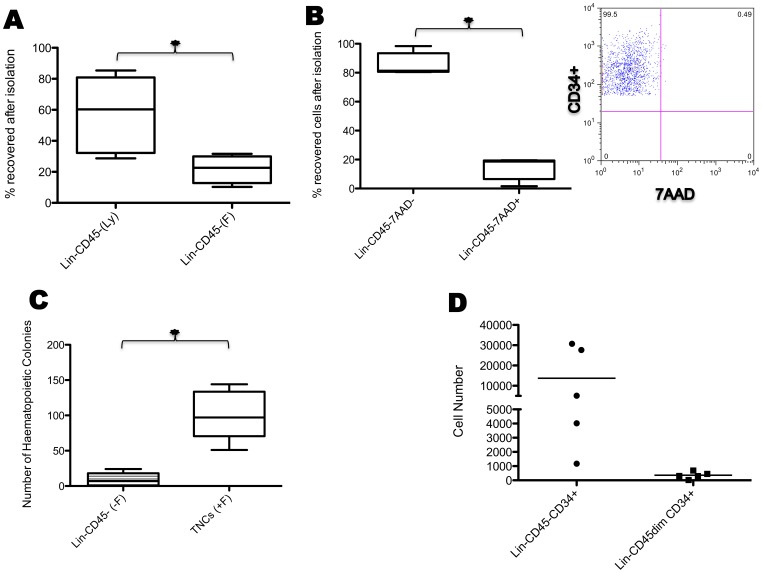
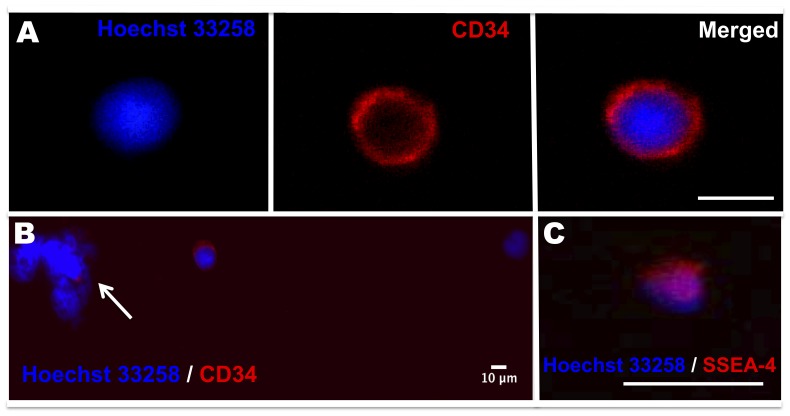
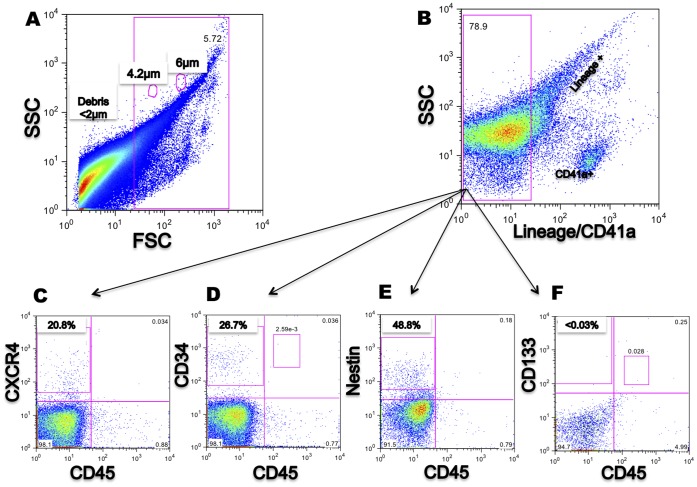
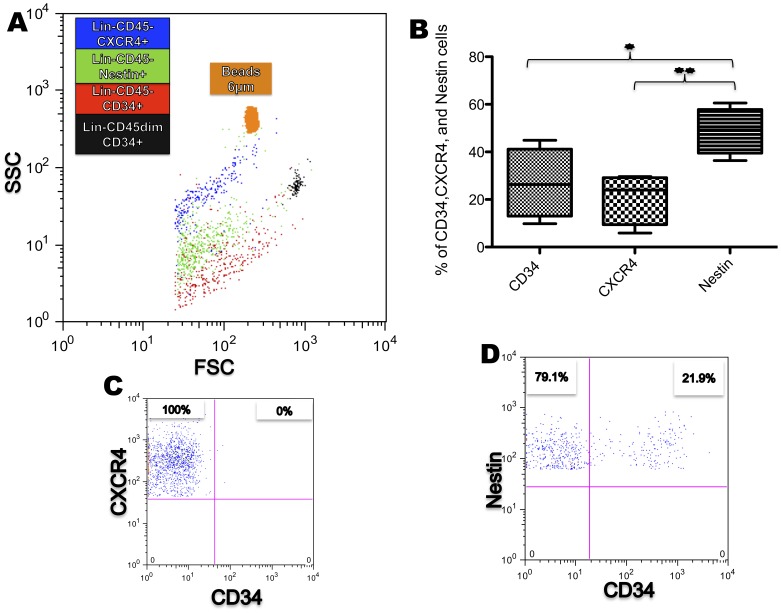
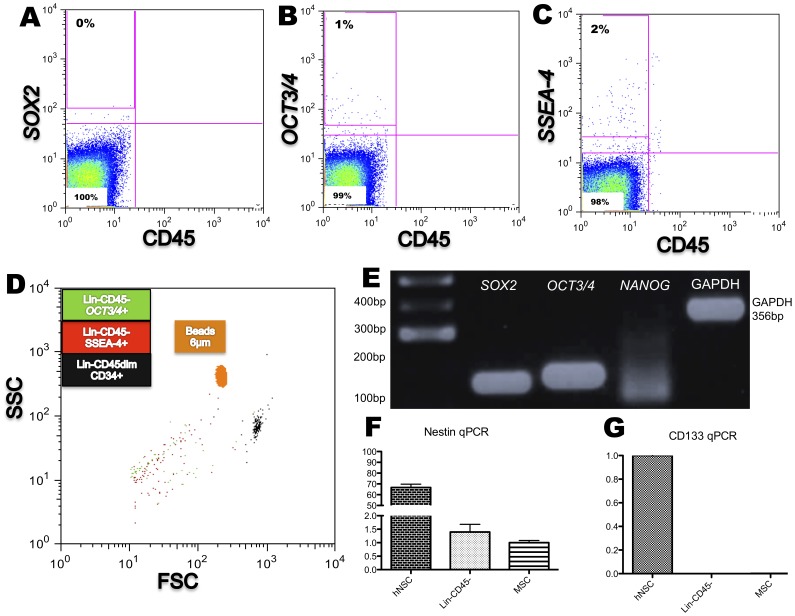
Human umbilical cord blood (hUCB) has been proposed to contain not only haematopoietic stem cells, but also a rare pluripotent embryonic-like stem cell (ELSc) population that is negative for hematopoietic markers (Lin(-)CD45(-)) and expresses markers typical of pluripotent cells. The aim of this work was to isolate, characterise and expand this ELSc fraction from hUCB, as it may provide a valuable cell source for regenerative medicine applications. We found that we could indeed isolate a Lin(-)CD45(-) population of small cells (3-10 µm diameter) with a high nucleus to cytoplasm ratio that expressed the stem cell markers CD34 and CXCR4. However, in contrast to some previous reports, this fraction was not positive for CD133. Furthermore, although these cells expressed transcripts typical of pluripotent cells, such as SOX2, OCT3/4, and NANOG, they were not able to proliferate in any of the culture media known to support stem cell growth that we tested. Further analysis of the Lin(-)CD45(-) population by flow cytometry showed the presence of a Lin(-)CD45(-)Nestin(+) population that were also positive for CD34 (20%) but negative for CXCR4. These data suggest that the Lin(-)CD45(-) stem cell fraction present in the cord blood represents a small heterogeneous population with phenotypic characteristics of stem cells, including a Lin(-)CD45(-)Nestin(+) population not previously described. This study also suggests that heterogeneity within the Lin(-)CD45(-) cell fraction is the likely explanation for differences in the hUCB cell populations described by different groups that were isolated using different methods. These populations have been widely called "embryonic-like stem cell" on the basis of their phenotypical similarity to embryonic stem cells. However, the fact they do not seem to be able to self-renew casts some doubt on their identity, and warns against defining them as "embryonic-like stem cell" at this stage.
人类脐带血(hUCB)不仅被认为含有造血干细胞,还含有一种罕见的多能胚胎样干细胞(ELSc)群体,该群体对造血标志物(Lin(-)CD45(-))呈阴性,并表达多能细胞的典型标志物。本工作的目的是从 hUCB 中分离、鉴定和扩增这种 ELSc 细胞群,因为它可能为再生医学应用提供有价值的细胞来源。我们发现,我们确实可以分离出一种 Lin(-)CD45(-)的小细胞(直径 3-10 µm)群体,其细胞核与细胞质的比例较高,表达干细胞标志物 CD34 和 CXCR4。然而,与一些先前的报道相反,该群体对 CD133 呈阳性。此外,尽管这些细胞表达了多能细胞的典型转录物,如 SOX2、OCT3/4 和 NANOG,但它们在我们测试的所有已知支持干细胞生长的培养基中都不能增殖。通过流式细胞术对 Lin(-)CD45(-)群体的进一步分析表明,Lin(-)CD45(-)Nestin(+)群体的存在,该群体也对 CD34(20%)呈阳性,但对 CXCR4 呈阴性。这些数据表明,脐带血中存在的 Lin(-)CD45(-)干细胞群体是一个小的异质群体,具有干细胞的表型特征,包括一个先前未描述的 Lin(-)CD45(-)Nestin(+)群体。本研究还表明,Lin(-)CD45(-)细胞群体的异质性可能是不同群体之间差异的原因,这些群体是使用不同方法分离的。这些群体因其与胚胎干细胞的表型相似而被广泛称为“胚胎样干细胞”。然而,事实上,它们似乎无法自我更新,这对它们的身份提出了一些质疑,并告诫人们不要在现阶段将它们定义为“胚胎样干细胞”。