Ross Tilley Burn Centre, Sunnybrook Health Science Centre, Sunnybrook Research Institute, Division of Plastic Surgery, Department of Surgery, University of Toronto, Toronto, Ontario, Canada.
PLoS One. 2013 Jul 2;8(7):e69167. doi: 10.1371/journal.pone.0069167. Print 2013.
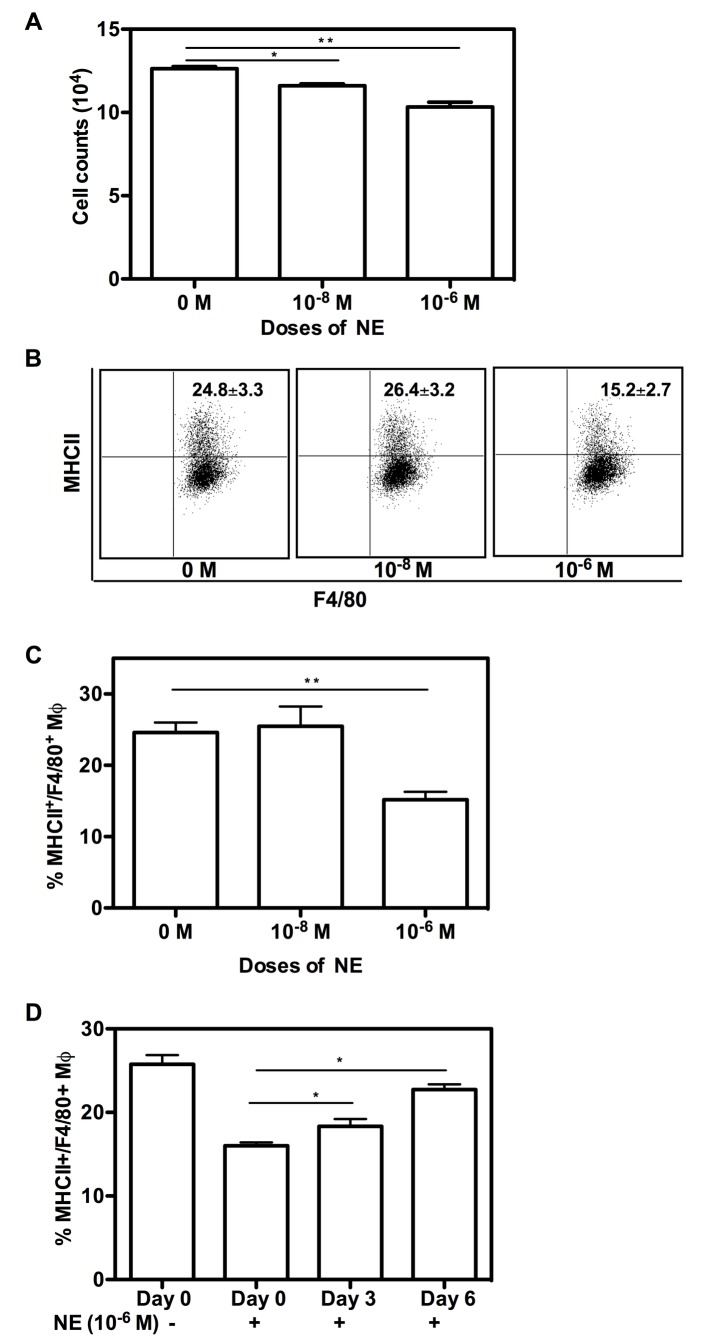
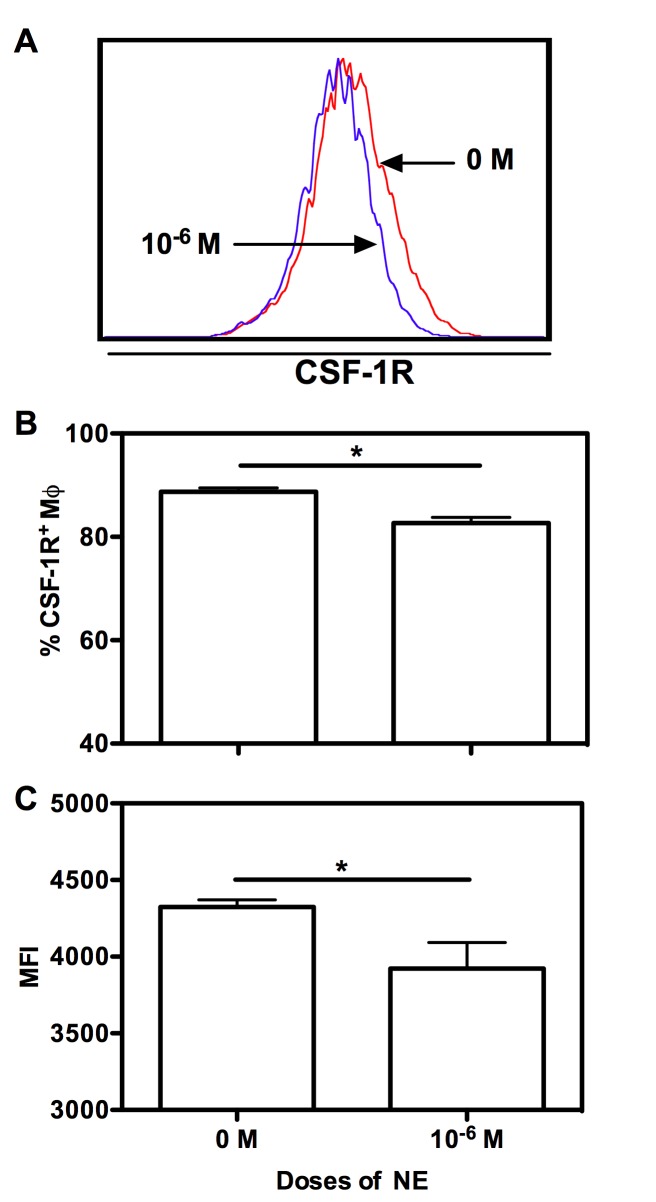
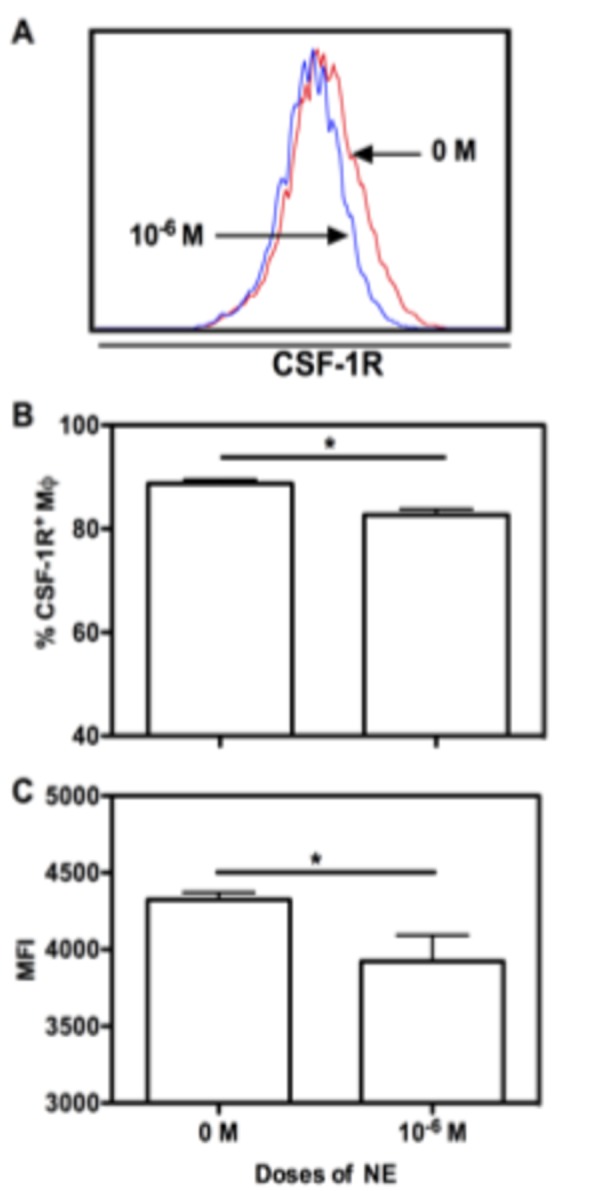
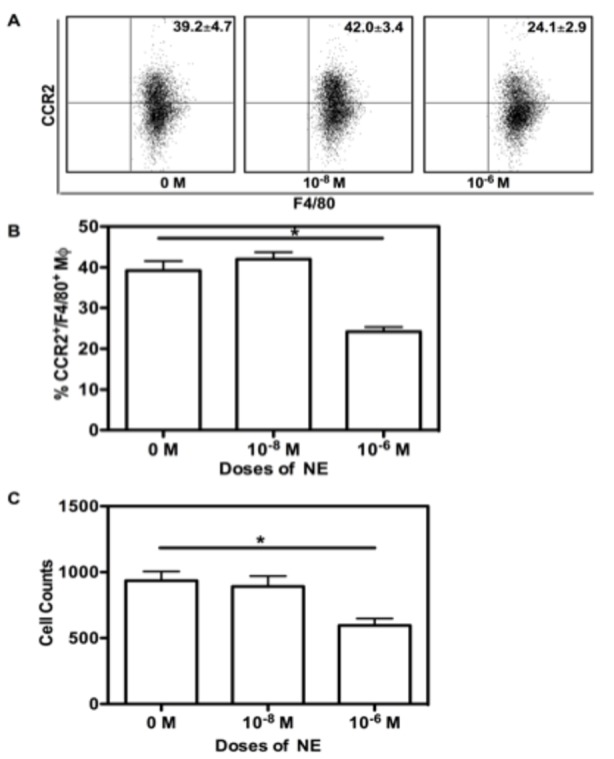
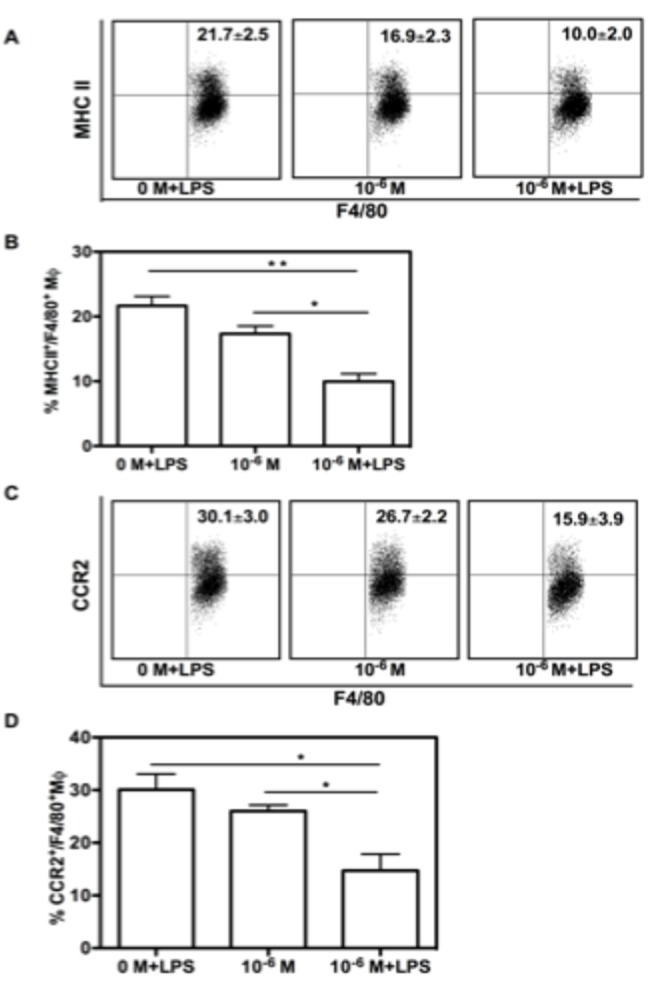
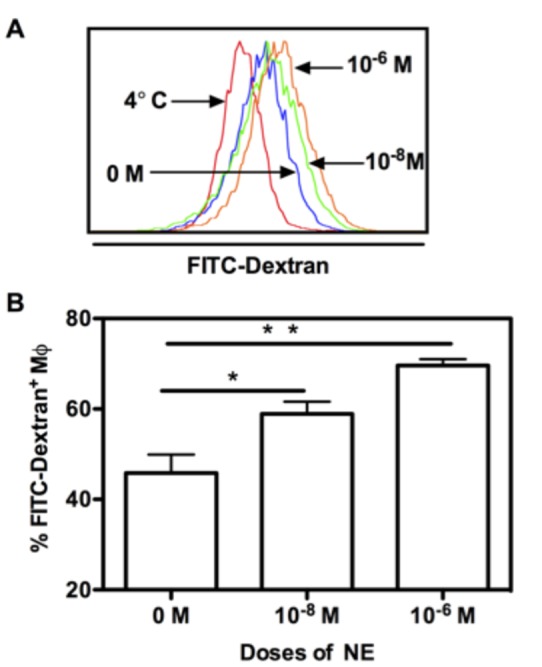
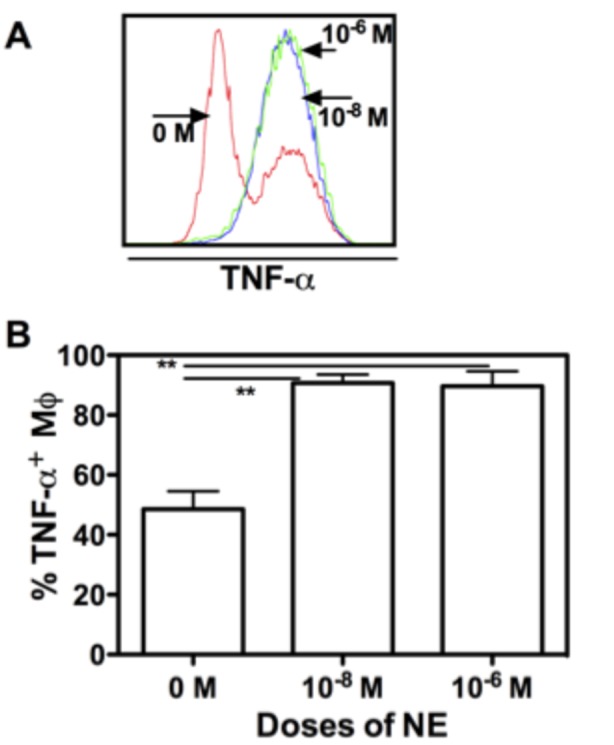
Increased incidences of infectious and septic complications during post-burn courses represent the main contributor to burn injury mortality. Sustained increases in catecholamine levels, especially norepinephrine (NE), contribute to immune disturbances in severely burned patients. The precise mechanisms underlying NE-mediated immunoregulation are not fully understood. Here we hypothesize that persistently elevated NE levels are associated with immunodysfunctions. We examined the effects of NE on the phenotype and functions of bone marrow-derived macrophages (BMMs). Whole mouse bone marrow cells were treated in vitro with 40 ng/mL of M-CSF and with 1 x 10(-6) M or 1 x 10(-8) M of NE or without NE for 7 days; cells were collected and stained with antibodies for CD11b, F4/80, MHC II and the inflammatory CC chemokine receptor 2 (CCR2). We found 1 x 10(-6) M of NE inhibited MHC II and CCR2 expression on CD11b(+)/F4/80(+) BMM cells. It also inhibited BMM proliferation by inhibiting CSF-1R expression. On the contrary, 1 x 10(-8) M of NE slightly increased both MHC II and CCR2 expression on CD11b(+)/F4/80(+) BMM cells but inhibited CD11b(+)/F4/80(+) BMM proliferation. MCP-1 based migration assay showed that the migration of 1 x 10(-6) M of NE-treated BMM toward MCP-1 was significantly decreased compared to BMM without NE treatment. Both 1 x 10(-8) M and 1 x 10(-6) M of NE enhanced TNF-α production and phagocytosis of FITC-Dextran. Intracellular staining of transcriptional factor MafB showed that 1 x 10(-6) M of NE treatment enhanced its expression, whereas 1 x 10(-8) M of NE decreased expression. Stimulation with LPS in the last 24-hours of BMM culture further decreased CCR2 and MHC II expression of these BMM, suggesting the synergistic effect of LPS and NE on macrophage. Our results demonstrate that NE regulates macrophage differentiation, proliferation and function, and may play a critical role in the dysfunctional immune response post-burn.
烧伤后感染和脓毒症发生率的增加是烧伤患者死亡的主要原因。儿茶酚胺水平,尤其是去甲肾上腺素(NE)的持续升高,导致严重烧伤患者的免疫紊乱。NE 介导的免疫调节的确切机制尚不完全清楚。在这里,我们假设持续升高的 NE 水平与免疫功能障碍有关。我们研究了 NE 对骨髓来源的巨噬细胞(BMM)表型和功能的影响。将整个小鼠骨髓细胞在体外用 40ng/ml 的 M-CSF 和 1×10(-6)M 或 1×10(-8)M 的 NE 或无 NE 处理 7 天;收集细胞并用 CD11b、F4/80、MHC II 和炎症性 CC 趋化因子受体 2(CCR2)抗体染色。我们发现 1×10(-6)M 的 NE 抑制了 CD11b(+)/F4/80(+)BMM 细胞上 MHC II 和 CCR2 的表达。它还通过抑制 CSF-1R 表达来抑制 BMM 的增殖。相反,1×10(-8)M 的 NE 略微增加了 CD11b(+)/F4/80(+)BMM 细胞上的 MHC II 和 CCR2 的表达,但抑制了 CD11b(+)/F4/80(+)BMM 的增殖。基于 MCP-1 的迁移测定显示,与未经 NE 处理的 BMM 相比,用 1×10(-6)M 的 NE 处理的 BMM 向 MCP-1 的迁移明显减少。1×10(-8)M 和 1×10(-6)M 的 NE 均增强了 TNF-α的产生和 FITC-Dextran 的吞噬作用。转录因子 MafB 的细胞内染色显示,1×10(-6)M 的 NE 处理增强了其表达,而 1×10(-8)M 的 NE 降低了其表达。在 BMM 培养的最后 24 小时用 LPS 刺激进一步降低了这些 BMM 的 CCR2 和 MHC II 的表达,表明 LPS 和 NE 对巨噬细胞具有协同作用。我们的结果表明,NE 调节巨噬细胞分化、增殖和功能,并可能在烧伤后免疫功能障碍中发挥关键作用。