Centre National de la Recherche Scientifique, Institut des Sciences du Végétal Gif-sur-Yvette Cedex, France.
Front Plant Sci. 2013 Jul 10;4:236. doi: 10.3389/fpls.2013.00236. eCollection 2013.
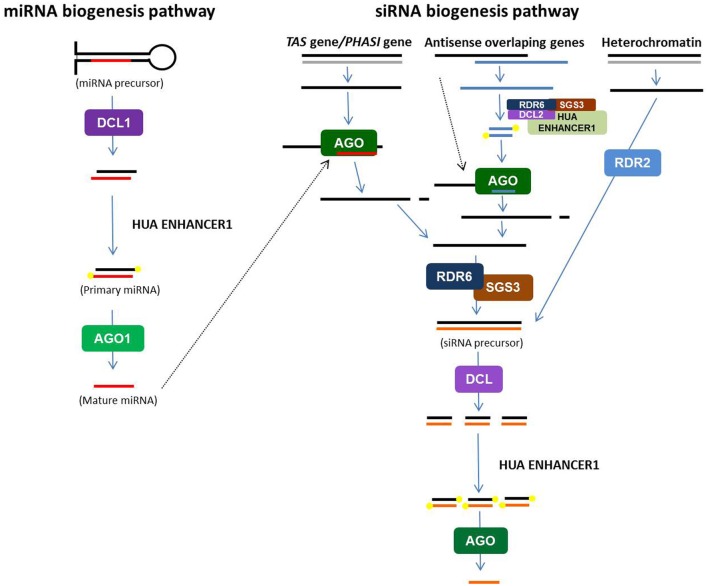
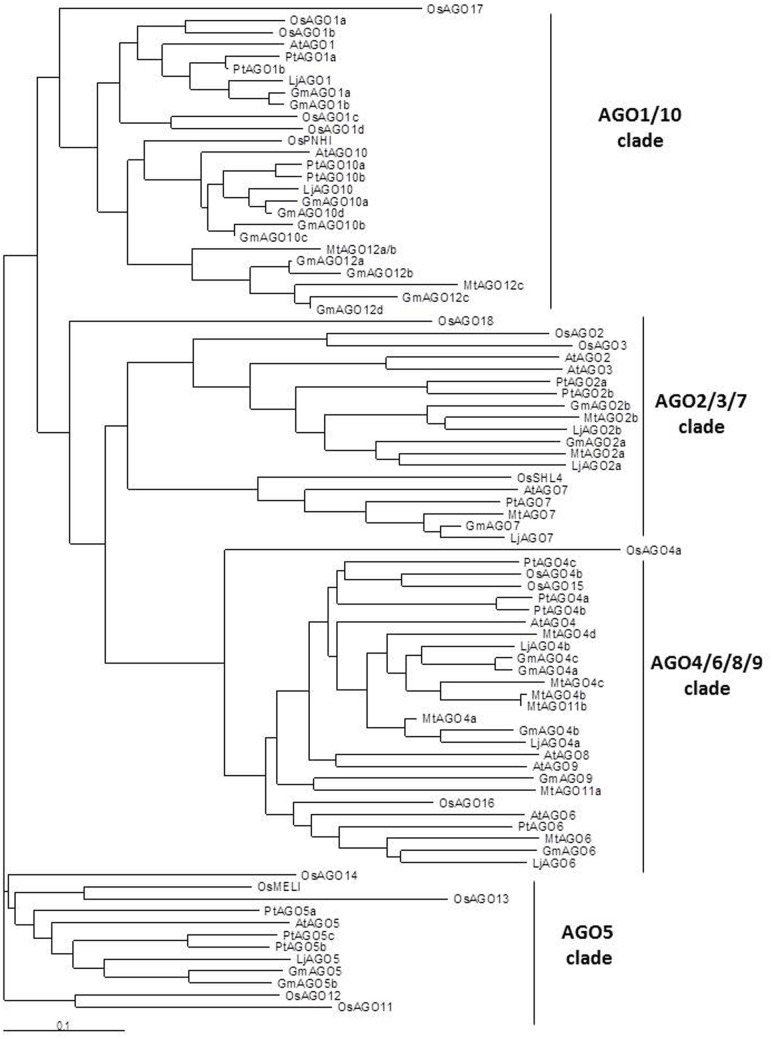
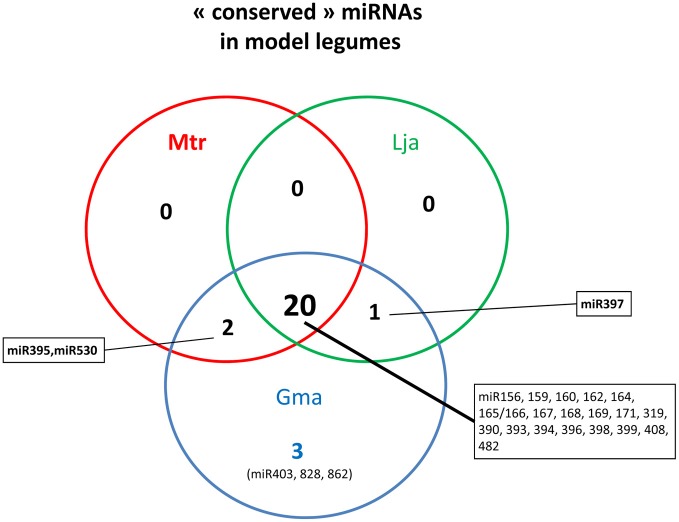
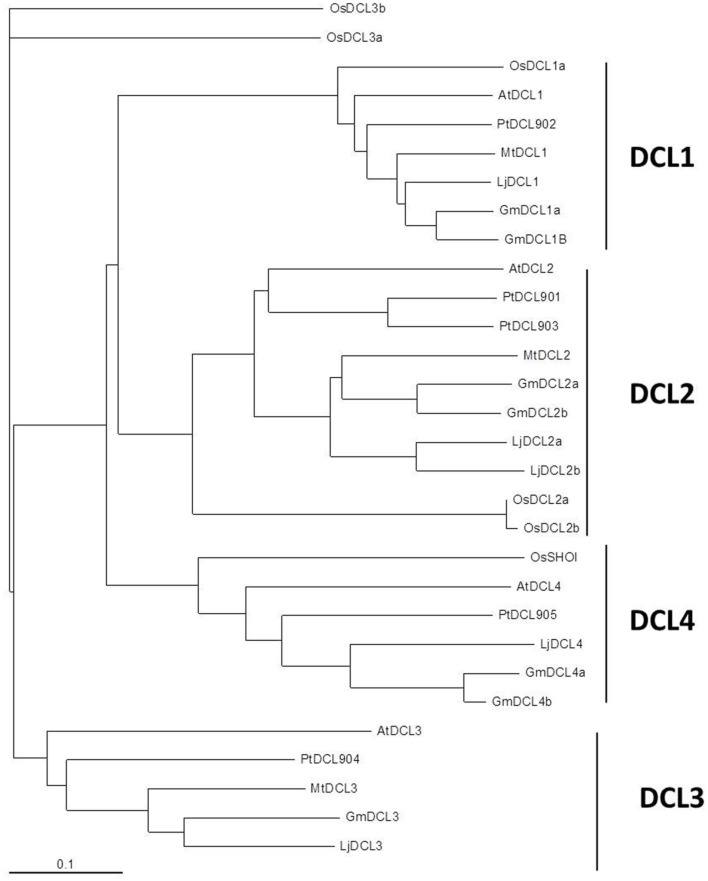
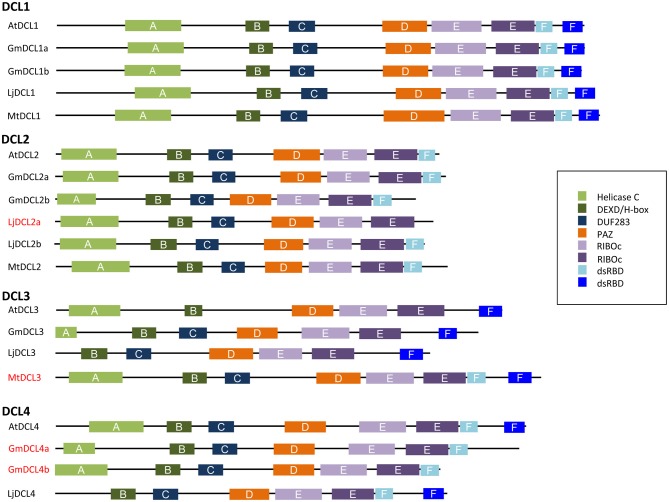
Small non-coding RNAs (smRNA) participate in the regulation of development, cell differentiation, adaptation to environmental constraints and defense responses in plants. They negatively regulate gene expression by degrading specific mRNA targets, repressing their translation or modifying chromatin conformation through homologous interaction with target loci. MicroRNAs (miRNA) and short-interfering RNAs (siRNA) are generated from long double stranded RNA (dsRNA) that are cleaved into 20-24-nucleotide dsRNAs by RNase III proteins called DICERs (DCL). One strand of the duplex is then loaded onto effective complexes containing different ARGONAUTE (AGO) proteins. In this review, we explored smRNA diversity in model legumes and compiled available data from miRBAse, the miRNA database, and from 22 reports of smRNA deep sequencing or miRNA identification genome-wide in three legumes: Medicago truncatula, soybean (Glycine max) and Lotus japonicus. In addition to conserved miRNAs present in other plant species, 229, 179, and 35 novel miRNA families were identified respectively in these 3 legumes, among which several seems legume-specific. New potential functions of several miRNAs in the legume-specific nodulation process are discussed. Furthermore, a new category of siRNA, the phased siRNAs, which seems to mainly regulate disease-resistance genes, was recently discovered in legumes. Despite that the genome sequence of model legumes are not yet fully completed, further analysis was performed by database mining of gene families and protein characteristics of DCLs and AGOs in these genomes. Although most components of the smRNA pathways are conserved, identifiable homologs of key smRNA players from non-legumes, like AGO10 or DCL4, could not yet be detected in M. truncatula available genomic and expressed sequence (EST) databases. In contrast to Arabidopsis, an important gene diversification was observed in the three legume models (for DCL2, AGO4, AGO2, and AGO10) or specifically in soybean for DCL1 and DCL4. Functional significance of these variant isoforms may reflect peculiarities of smRNA biogenesis and functions in legumes.
小非编码 RNA(smRNA)参与植物发育、细胞分化、适应环境限制和防御反应的调节。它们通过降解特定的 mRNA 靶标、抑制其翻译或通过与靶标基因座的同源相互作用来改变染色质构象,从而负调控基因表达。microRNAs(miRNA)和短干扰 RNA(siRNA)是由长双链 RNA(dsRNA)产生的,dsRNA 由称为 DICERs(DCL)的 RNase III 蛋白切割成 20-24 个核苷酸的 dsRNA。双链体的一条链随后装载到包含不同 ARGONAUTE(AGO)蛋白的有效复合物上。在本综述中,我们探讨了模式豆科植物中的 smRNA 多样性,并从 miRBAse、miRNA 数据库以及 Medicago truncatula、大豆(Glycine max)和 Lotus japonicus 三种豆科植物的 22 份 smRNA 深度测序或 miRNA 全基因组鉴定报告中编译了可用数据。除了在其他植物物种中存在的保守 miRNA 外,在这 3 种豆科植物中分别鉴定出 229、179 和 35 个新的 miRNA 家族,其中一些似乎是豆科植物特有的。讨论了几种 miRNA 在豆科植物特有的结瘤过程中的新潜在功能。此外,最近在豆科植物中发现了一种新的 siRNA 类别,即相移 siRNA,它似乎主要调节抗病基因。尽管模式豆科植物的基因组序列尚未完全完成,但仍通过对这些基因组中 DCLs 和 AGOs 的基因家族和蛋白质特征进行数据库挖掘进行了进一步分析。尽管 smRNA 途径的大多数成分是保守的,但在 M. truncatula 可用的基因组和表达序列 (EST) 数据库中,仍无法检测到非豆科植物的关键 smRNA 成员(如 AGO10 或 DCL4)的可识别同源物。与拟南芥不同,在三种豆科植物模型(DCL2、AGO4、AGO2 和 AGO10)或特定于大豆的 DCL1 和 DCL4 中观察到重要的基因多样化。这些变体同工型的功能意义可能反映了 smRNA 生物发生和功能在豆科植物中的特殊性。