New York State Psychiatric Institute, 1051 Riverside Drive #32, New York, NY 10032, USA; Nutrition and Integrative Neurobiology, INRA UMR 1286, F-33076 Bordeaux, France; University of Bordeaux, F-33076 Bordeaux, France.
Neuropharmacology. 2014 Jan;76 Pt B(0 0):498-509. doi: 10.1016/j.neuropharm.2013.06.031. Epub 2013 Jul 10.
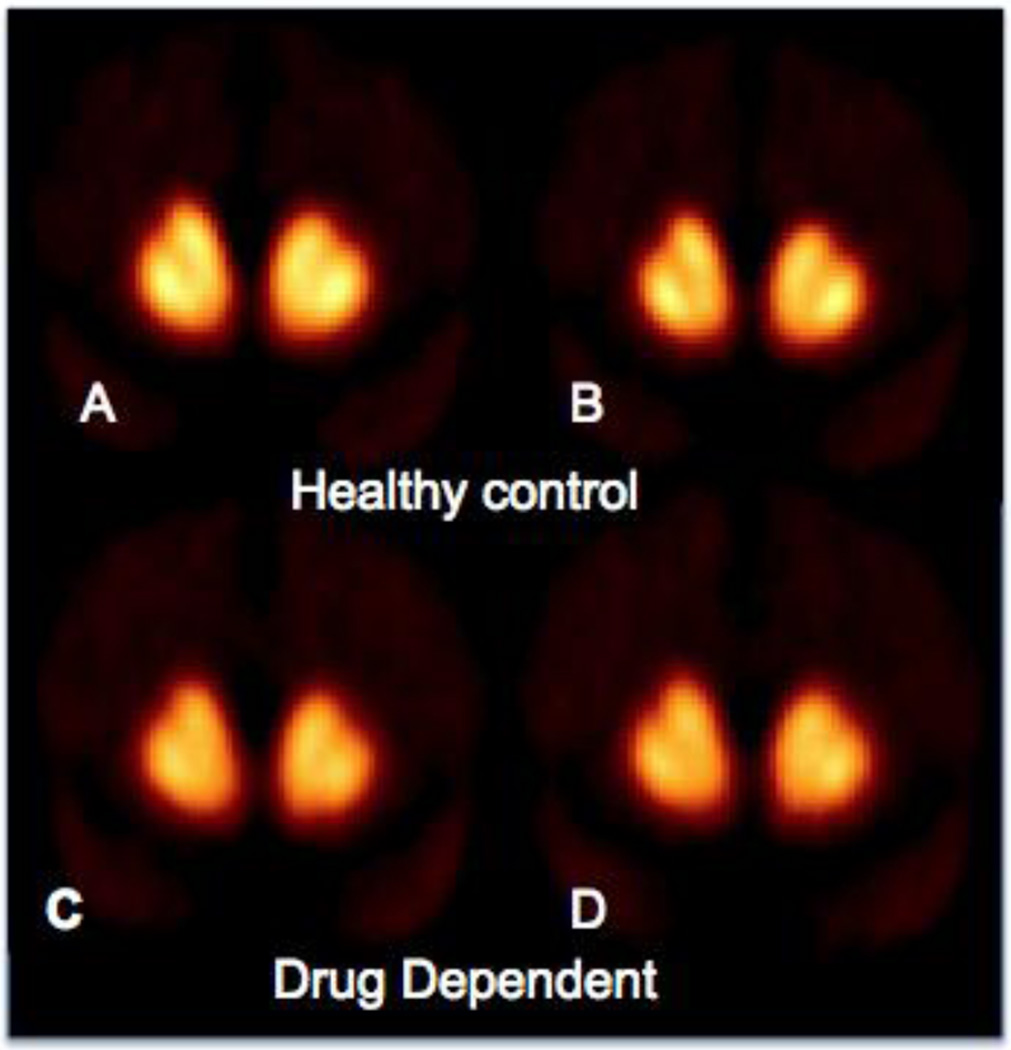
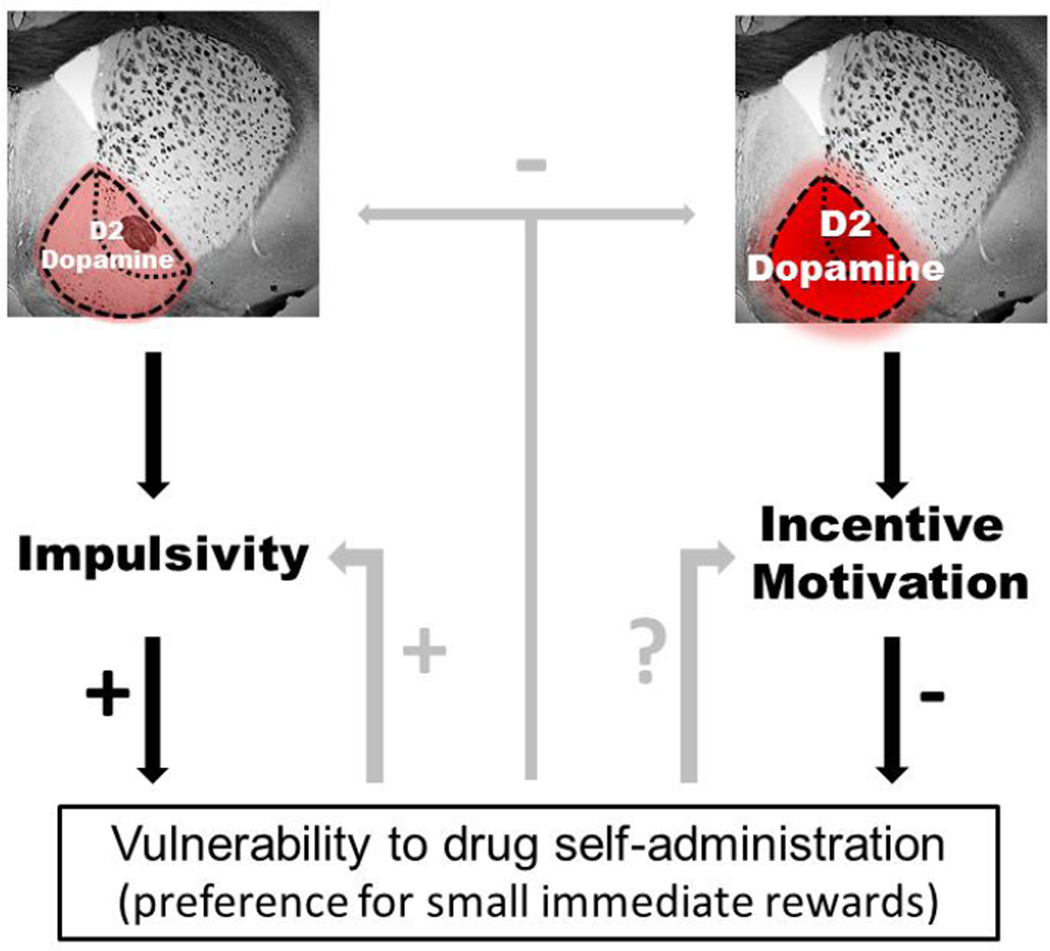
Dependence to drugs of abuse is closely associated with impulsivity, or the propensity to choose a lower, but immediate, reward over a delayed, but more valuable outcome. Here, we review clinical and preclinical studies showing that striatal dopamine signaling and D2 receptor levels - which have been shown to be decreased in addiction - directly impact impulsivity, which is itself predictive of drug self-administration. Based on these studies, we propose that the alterations in D2 receptor binding and dopamine release seen in imaging studies of addiction constitute neurobiological markers of impulsivity. Recent studies in animals also show that higher striatal dopamine signaling at the D2 receptor is associated with a greater willingness to expend effort to reach goals, and we propose that this same relationship applies to humans, particularly with respect to recovery from addiction. This article is part of a Special Issue entitled 'NIDA 40th Anniversary Issue'.
药物依赖与冲动密切相关,或者说,与选择即时但低价值的奖励,而不是延迟但更有价值的结果的倾向有关。在这里,我们回顾了临床和临床前研究,这些研究表明纹状体多巴胺信号和 D2 受体水平(在成瘾中被证明降低)直接影响冲动性,而冲动性本身可以预测药物自我给药。基于这些研究,我们提出,成瘾影像学研究中观察到的 D2 受体结合和多巴胺释放的改变构成了冲动性的神经生物学标志物。最近的动物研究还表明,D2 受体上更高的纹状体多巴胺信号与更愿意付出努力实现目标有关,我们提出,这种关系同样适用于人类,特别是在从成瘾中恢复方面。本文是一个特刊的一部分,题为“NIDA 40 周年特刊”。