Department of Drug Discovery and Biomedical Sciences, South Carolina College of Pharmacy, University of South Carolina, Columbia.
Int J Womens Health. 2013 Jul 2;5:379-88. doi: 10.2147/IJWH.S45590. Print 2013.
Cervical cancer, a rare outcome of high-risk human papillomavirus (HPV) infection, disproportionately affects African American women, who are about twice more likely than European American women to die of the disease. Most cervical HPV infections clear in about one year. However, in some women HPV persists, posing a greater risk for cervical dysplasia and cancer. The Carolina Women's Care Study (CWCS) was conducted to explore the biological, genetic, and lifestyle determinants of persistent HPV infection in college-aged European American and African American women. This paper presents the initial results of the CWCS, based upon data obtained at enrollment.
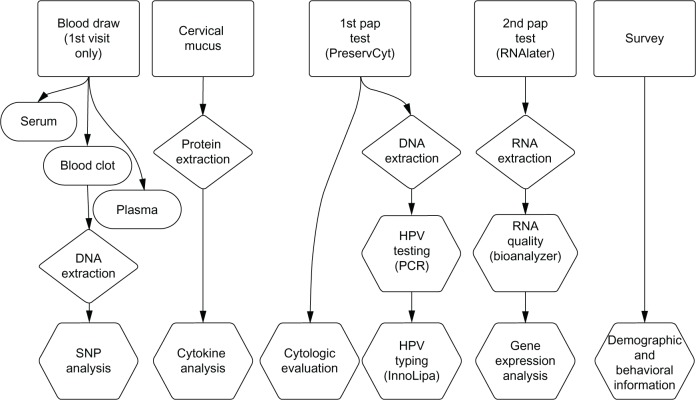
Freshman female students attending the University of South Carolina were enrolled in the CWCS and followed until graduation with biannual visits, including two Papanicolaou tests, cervical mucus collection, and a questionnaire assessing lifestyle factors. We recruited 467 women, 293 of whom completed four or more visits for a total of 2274 visits.
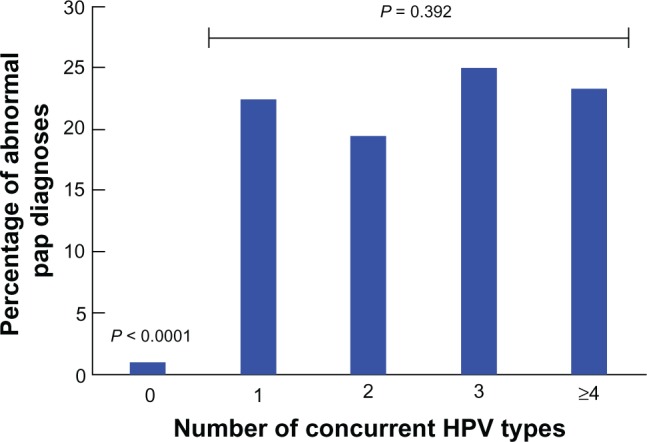
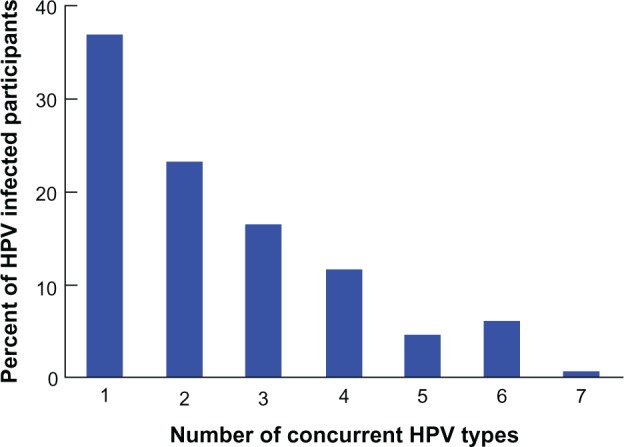
CWCS participants were 70% European American, 24% African American, 3% Latina/Hispanic, and 3% Asian. At enrollment, 32% tested positive for any HPV. HPV16 infection was the most common (18% of infections). Together, HPV16, 66, 51, 52, and 18 accounted for 58% of all HPV infections. Sixty-four percent of all HPV-positive samples contained more than one HPV type, with an average of 2.2 HPV types per HPV-positive participant. We found differences between African American and European American women in the prevalence of HPV infection (38.1% African American, 30.7% European American) and abnormal Papanicolaou test results (9.8% African-American, 5.8% European American). While these differences did not reach statistical significance at enrollment, as the longitudinal data of this cohort are analyzed, the sample size will allow us to confirm these results and compare the natural history of HPV infection in college-aged African American and European American women.
宫颈癌是高危型人乳头瘤病毒(HPV)感染的罕见后果, disproportionately affects African American women,这些女性死于宫颈癌的可能性比欧洲裔美国女性高出约两倍。大多数 HPV 感染会在一年内清除。然而,在一些女性中,HPV 持续存在,增加了宫颈癌前病变和癌症的风险。卡罗来纳妇女保健研究(CWCS)旨在探讨 HPV 持续感染的生物学、遗传和生活方式决定因素,研究对象为大学年龄的欧洲裔美国和非裔美国女性。本文介绍了基于 CWCS 入组时获得的数据得出的初步研究结果。
南卡罗来纳大学的一年级女学生参加了 CWCS 研究,并在毕业前每两年接受一次随访,包括两次巴氏涂片检查、宫颈黏液采集和一份评估生活方式因素的问卷。共招募了 467 名女性,其中 293 名完成了 4 次或更多次随访,总共进行了 2274 次随访。
CWCS 参与者中 70%为欧洲裔美国人,24%为非裔美国人,3%为拉丁裔/西班牙裔,3%为亚裔。入组时,32%的人 HPV 检测呈阳性。HPV16 感染最为常见(占感染人数的 18%)。HPV16、66、51、52 和 18 共同占所有 HPV 感染的 58%。所有 HPV 阳性样本中,64%含有一种以上 HPV 类型,每个 HPV 阳性参与者平均含有 2.2 种 HPV 类型。研究发现,非裔美国人和欧洲裔美国女性在 HPV 感染率(38.1%非裔美国人,30.7%欧洲裔美国人)和巴氏涂片异常结果(9.8%非裔美国人,5.8%欧洲裔美国人)方面存在差异。尽管这些差异在入组时未达到统计学意义,但随着该队列的纵向数据分析,样本量将使我们能够确认这些结果,并比较大学年龄的非裔美国和欧洲裔美国女性 HPV 感染的自然史。