Department of Pediatrics, Division of Pediatric Endocrinology and Diabetology, University Children's Hospital, Berne, Switzerland.
PLoS One. 2013 Jul 9;8(7):e68691. doi: 10.1371/journal.pone.0068691. Print 2013.
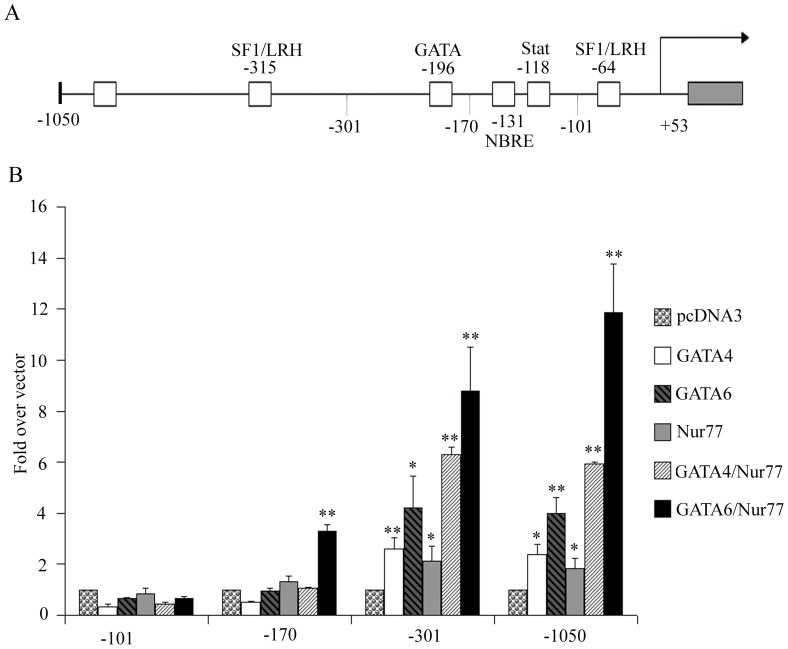
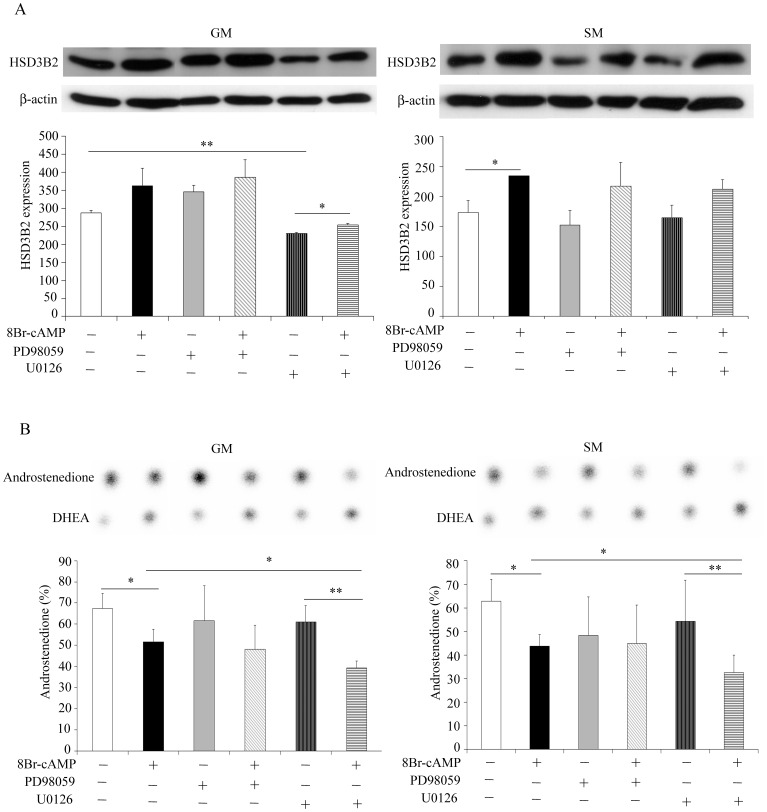
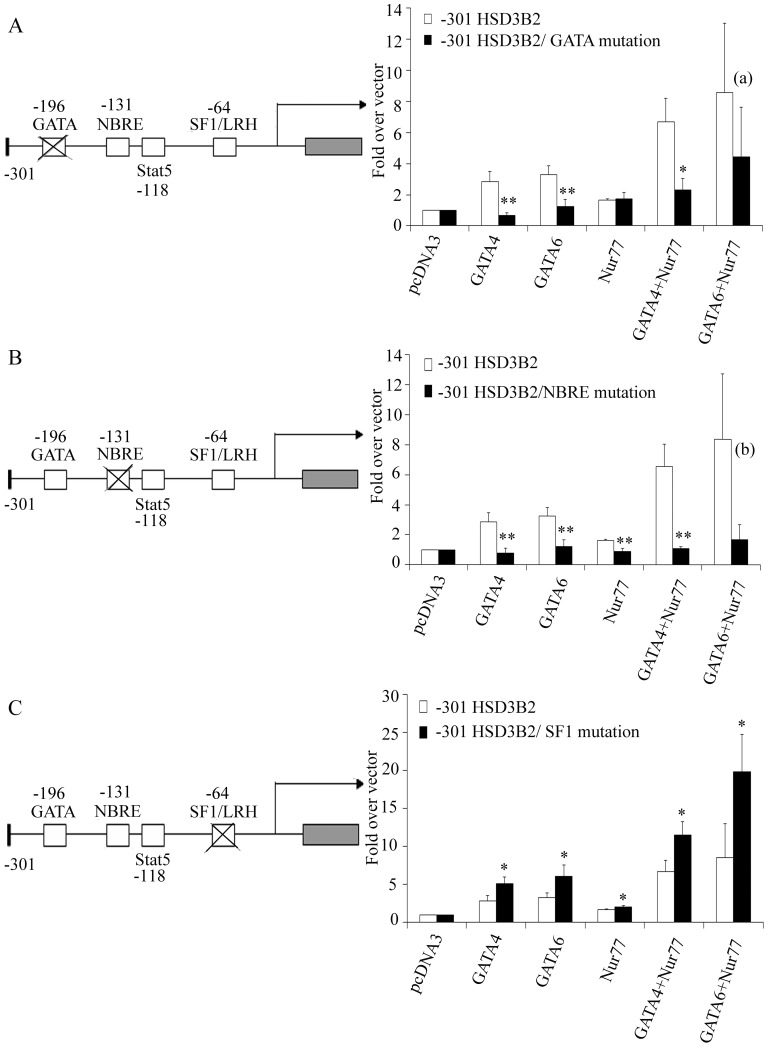
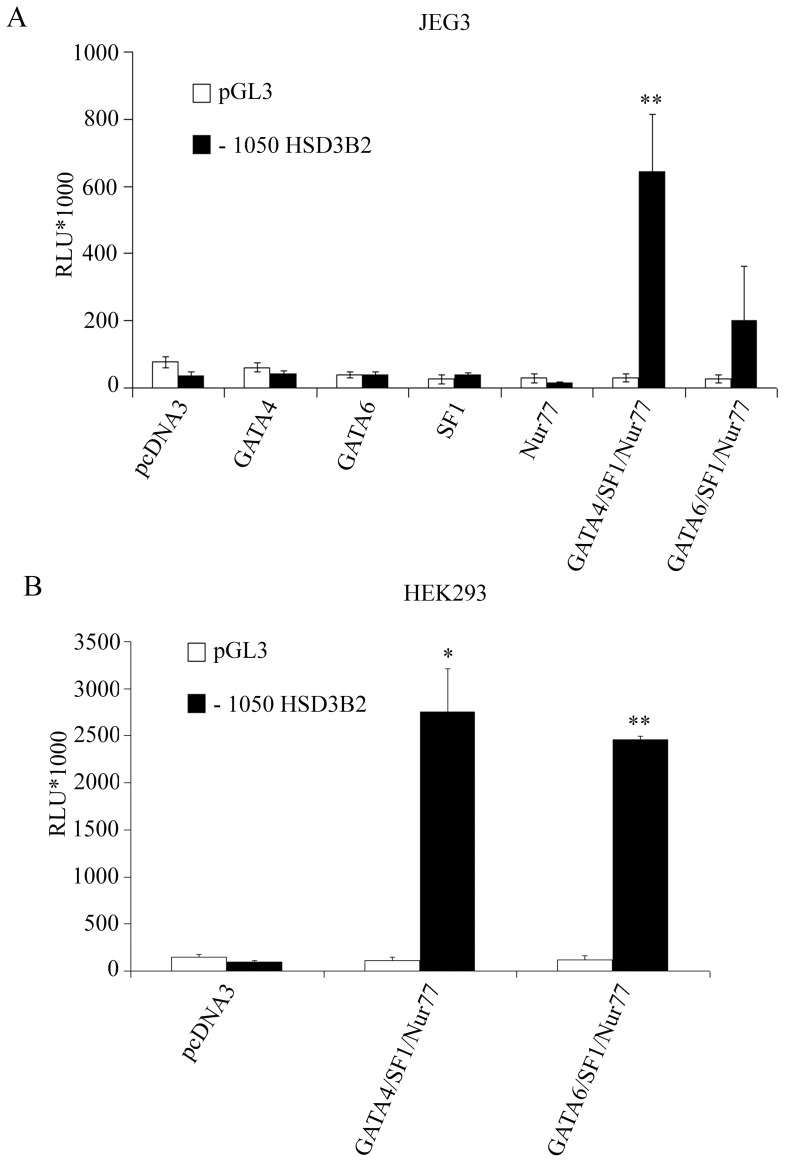
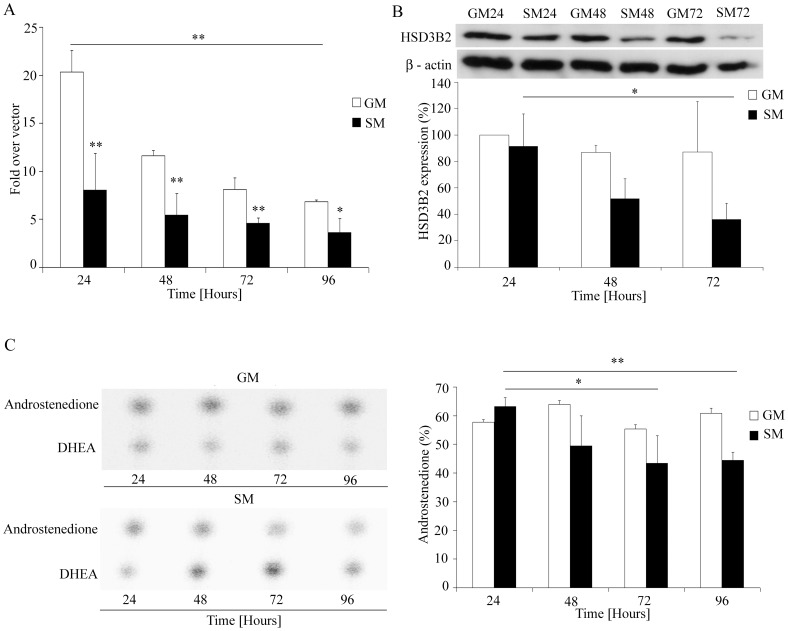
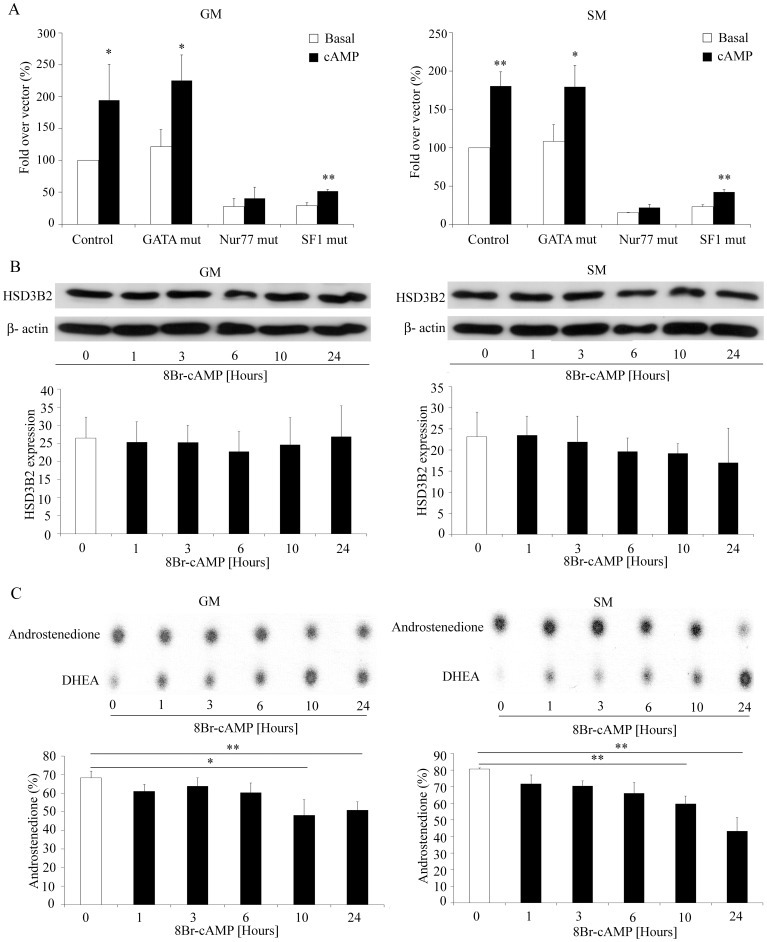
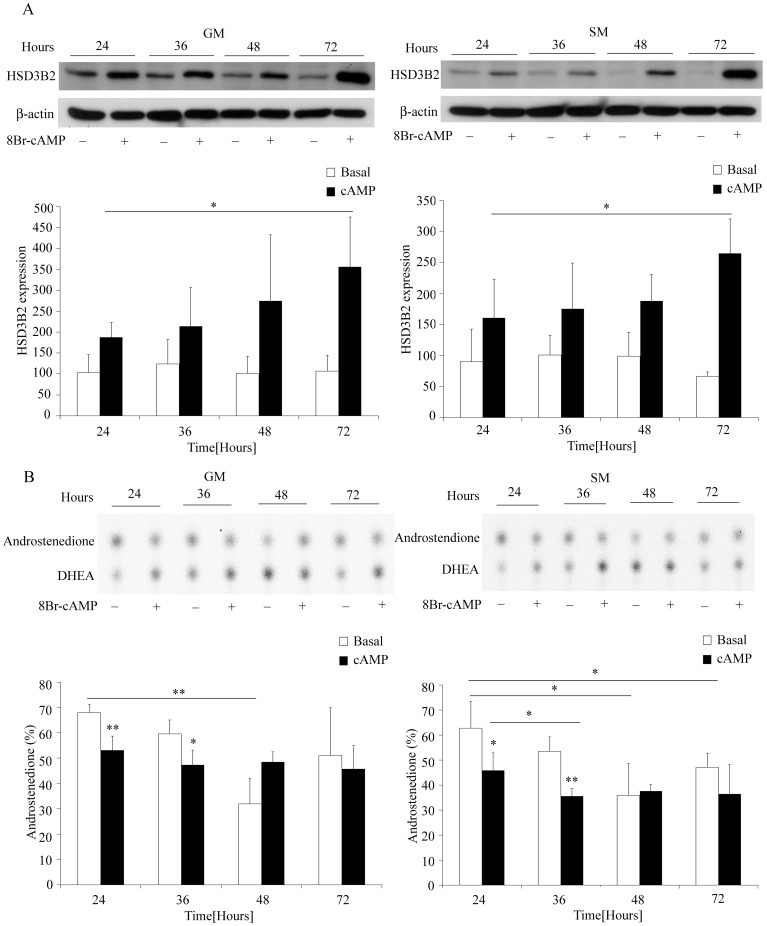
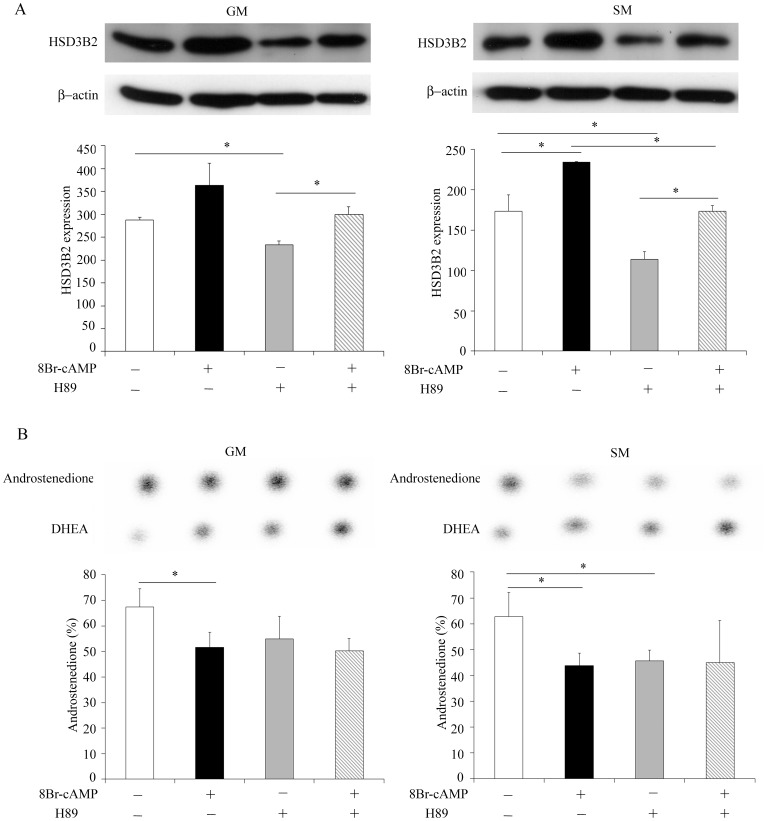
Human steroid biosynthesis depends on a specifically regulated cascade of enzymes including 3β-hydroxysteroid dehydrogenases (HSD3Bs). Type 2 HSD3B catalyzes the conversion of pregnenolone, 17α-hydroxypregnenolone and dehydroepiandrosterone to progesterone, 17α-hydroxyprogesterone and androstenedione in the human adrenal cortex and the gonads but the exact regulation of this enzyme is unknown. Therefore, specific downregulation of HSD3B2 at adrenarche around age 6-8 years and characteristic upregulation of HSD3B2 in the ovaries of women suffering from the polycystic ovary syndrome remain unexplained prompting us to study the regulation of HSD3B2 in adrenal NCI-H295R cells. Our studies confirm that the HSD3B2 promoter is regulated by transcription factors GATA, Nur77 and SF1/LRH1 in concert and that the NBRE/Nur77 site is crucial for hormonal stimulation with cAMP. In fact, these three transcription factors together were able to transactivate the HSD3B2 promoter in placental JEG3 cells which normally do not express HSD3B2. By contrast, epigenetic mechanisms such as methylation and acetylation seem not involved in controlling HSD3B2 expression. Cyclic AMP was found to exert differential effects on HSD3B2 when comparing short (acute) versus long-term (chronic) stimulation. Short cAMP stimulation inhibited HSD3B2 activity directly possibly due to regulation at co-factor or substrate level or posttranslational modification of the protein. Long cAMP stimulation attenuated HSD3B2 inhibition and increased HSD3B2 expression through transcriptional regulation. Although PKA and MAPK pathways are obvious candidates for possibly transmitting the cAMP signal to HSD3B2, our studies using PKA and MEK1/2 inhibitors revealed no such downstream signaling of cAMP. However, both signaling pathways were clearly regulating HSD3B2 expression.
人类类固醇生物合成依赖于一系列受调控的酶级联反应,包括 3β-羟甾脱氢酶(HSD3B)。HSD3B 类型 2 可催化孕烯醇酮、17α-羟孕烯醇酮和脱氢表雄酮转化为孕酮、17α-羟孕酮和雄烯二酮,这一过程发生在人肾上腺皮质和性腺中,但该酶的确切调控机制尚不清楚。因此,HSD3B2 在 6-8 岁左右青春期时的特异性下调以及多囊卵巢综合征女性卵巢中 HSD3B2 的特征性上调仍无法解释,这促使我们研究 HSD3B2 在肾上腺 NCI-H295R 细胞中的调控。我们的研究证实,HSD3B2 启动子受 GATA、Nur77 和 SF1/LRH1 等转录因子的协同调控,而 NBRE/Nur77 位点对于 cAMP 介导的激素刺激至关重要。事实上,这三种转录因子能够共同激活胎盘 JEG3 细胞中 HSD3B2 启动子,而 JEG3 细胞通常不表达 HSD3B2。相比之下,如甲基化和乙酰化等表观遗传机制似乎不参与控制 HSD3B2 的表达。当比较短期(急性)和长期(慢性)刺激时,发现 cAMP 对 HSD3B2 产生了不同的影响。短期 cAMP 刺激可直接抑制 HSD3B2 活性,可能是由于辅因子或底物水平的调节或蛋白质的翻译后修饰。长期 cAMP 刺激通过转录调控减弱 HSD3B2 抑制并增加 HSD3B2 表达。尽管 PKA 和 MAPK 途径是 cAMP 信号可能传递到 HSD3B2 的明显候选途径,但我们使用 PKA 和 MEK1/2 抑制剂的研究并未揭示 cAMP 的这种下游信号。然而,这两种信号通路都明显调节 HSD3B2 的表达。