Departamento de Fisiología de la Nutrición, Instituto Nacional de Ciencias Médicas y Nutrición, México, DF, México.
PLoS One. 2013 Jul 16;8(7):e69338. doi: 10.1371/journal.pone.0069338. Print 2013.
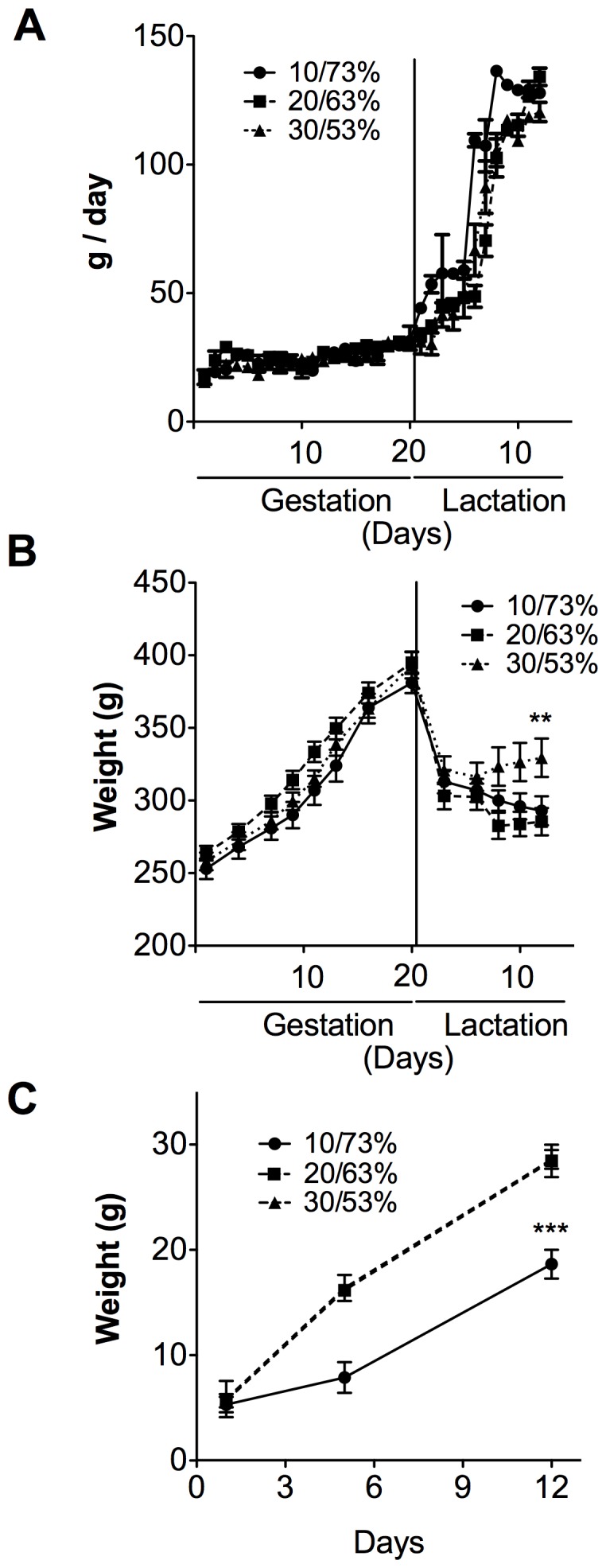
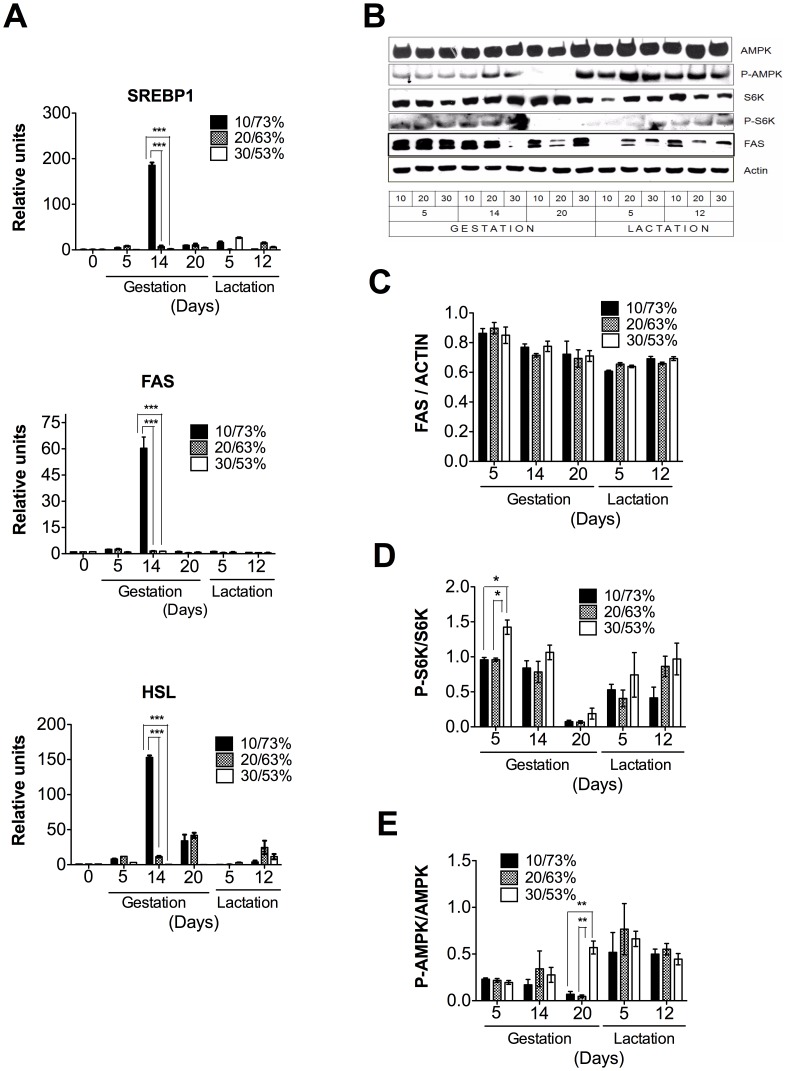
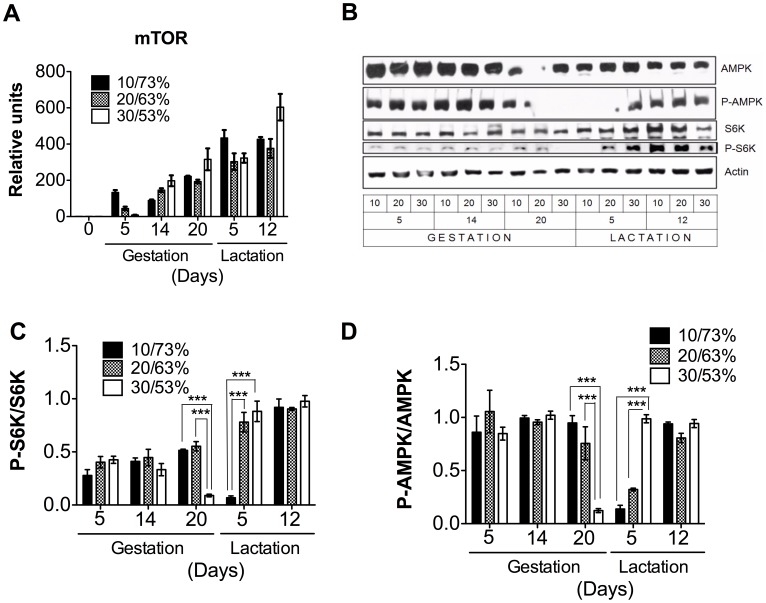
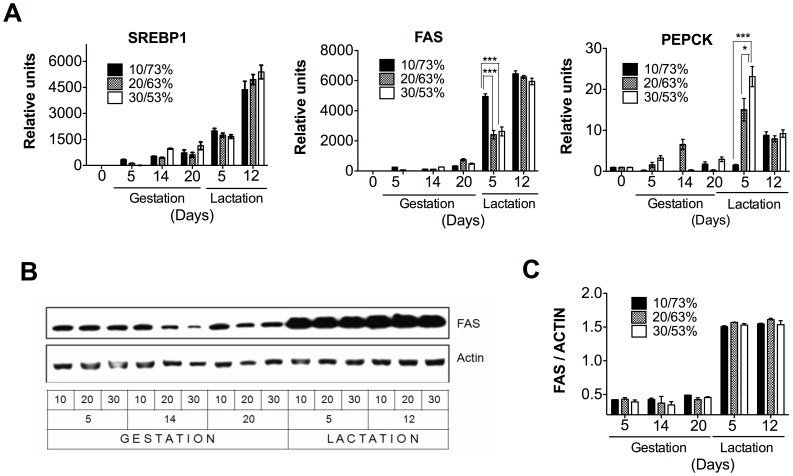
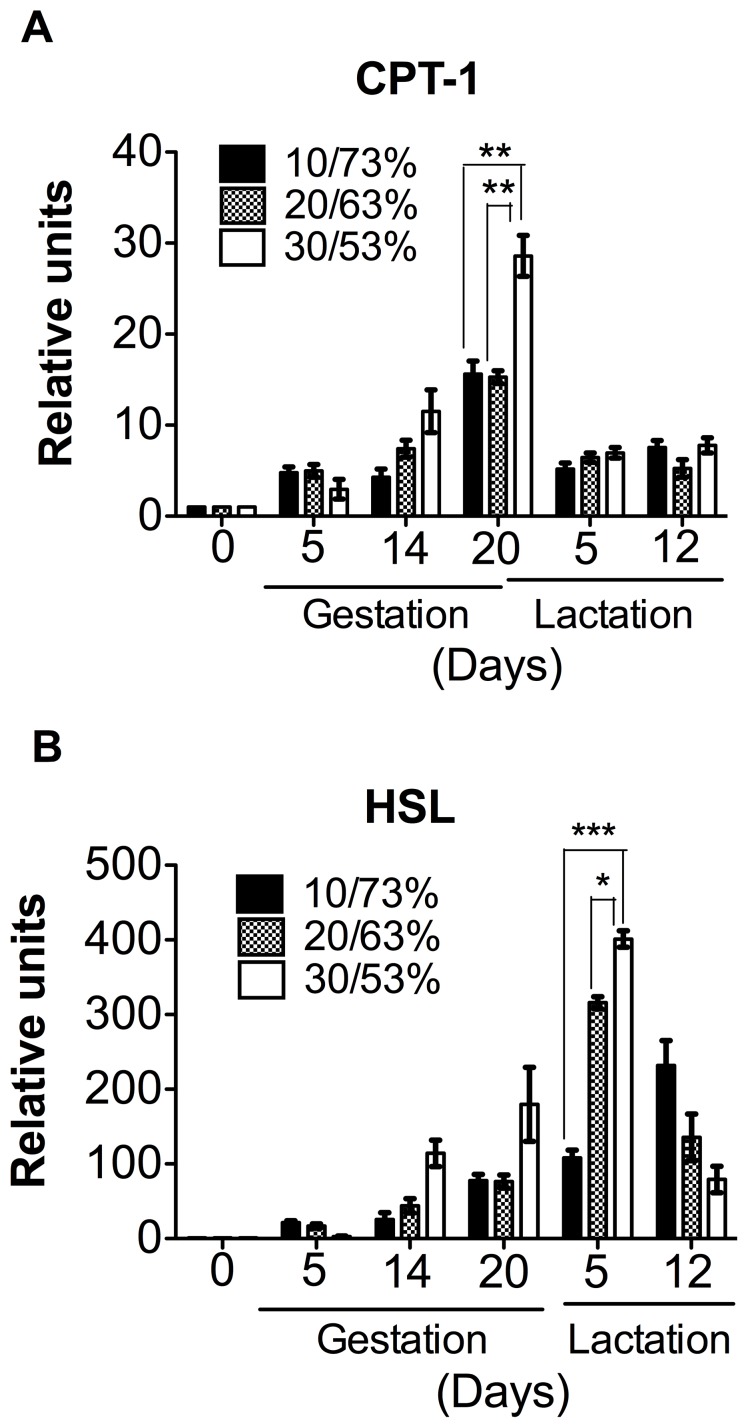
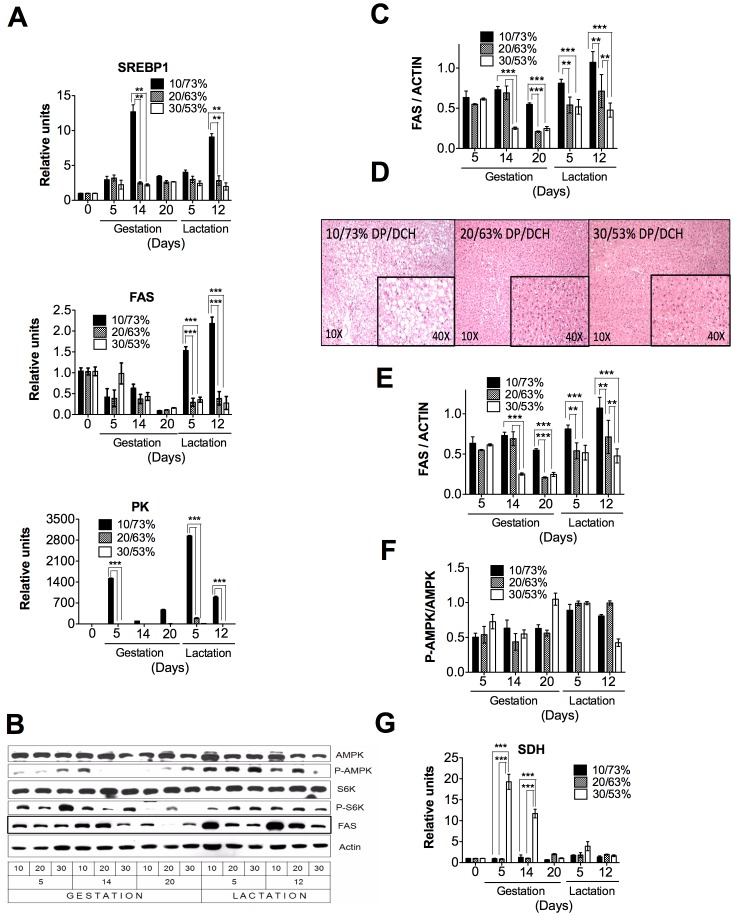
During gestation and lactation, a series of metabolic changes that are affected by the diet occurs in various organs of the mother. However, little is known about how the dietary protein (DP)/carbohydrate (DCH) ratio regulates the expression of metabolic genes in the mother. Therefore, the purpose of this work was to study the effect of consuming different percentages of DP/DCH, specifically 10/73, 20/63 and 30/53%, on the expression of genes involved in lipogenesis and protein synthesis in the mammary gland, liver and adipose tissue during gestation and lactation in dams. While the amount of weight gained during gestation was similar for all groups, only dams fed with 30/53% DP/DCH maintained their weight during lactation. In the mammary gland, the expression of the genes involved in lipogenesis, specifically SREBP1 and FAS, was dramatically increased, and the expression of the genes involved in protein synthesis, such as mTOR1, and the phosphorylation of its target protein, S6K, were also increased throughout pregnancy and lactation, regardless of the concentration of DP/DCH. In the liver and adipose tissue, the expression of the genes and proteins involved in lipid metabolism was dependent on the proportion of DP/DCH. The consumption of a low-protein/high-carbohydrate diet increased the expression of lipogenic genes in the liver and adipose tissue and the amount of lipid deposition in the liver. Conversely, the consumption of a high-protein/low-carbohydrate diet increased the expression of genes involved in amino acid oxidation in the liver during gestation. The metabolic adaptations reflected by the changes in the expression of metabolic genes indicate that the mammary gland has a priority for milk synthesis, whereas the adaptations in the liver and adipose tissue are responsible for providing nutrients to the mammary gland to sustain milk synthesis.
在妊娠和哺乳期,母体的各种器官会发生一系列受饮食影响的代谢变化。然而,对于饮食中的蛋白质(DP)/碳水化合物(DCH)比例如何调节母体代谢基因的表达,人们知之甚少。因此,本研究的目的是研究在妊娠和哺乳期,摄入不同 DP/DCH 比例(10/73、20/63 和 30/53%)对母体乳腺、肝脏和脂肪组织中参与脂肪生成和蛋白质合成的基因表达的影响。虽然各组妊娠期间体重增加量相似,但仅摄入 30/53% DP/DCH 的母鼠在哺乳期维持体重。在乳腺中,参与脂肪生成的基因(如 SREBP1 和 FAS)的表达显著增加,而参与蛋白质合成的基因(如 mTOR1 和其靶蛋白 S6K 的磷酸化)的表达在整个妊娠和哺乳期也增加,而与 DP/DCH 的浓度无关。在肝脏和脂肪组织中,脂质代谢相关基因和蛋白的表达依赖于 DP/DCH 的比例。低蛋白/高碳水化合物饮食增加了肝脏和脂肪组织中脂肪生成基因的表达和肝脏中脂质的沉积量。相反,高蛋白/低碳水化合物饮食增加了妊娠期间肝脏中参与氨基酸氧化的基因的表达。代谢基因表达变化所反映的适应性表明,乳腺优先合成乳汁,而肝脏和脂肪组织的适应性则负责向乳腺提供维持乳汁合成所需的营养物质。