Department of Molecular Pharmacology, Physiology, and Biotechnology, Brown University, Providence, Rhode Island, USA.
PLoS One. 2013 Jul 17;8(7):e69641. doi: 10.1371/journal.pone.0069641. Print 2013.
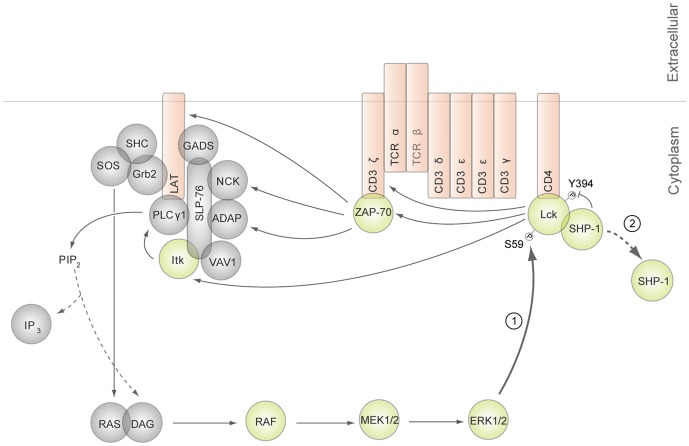
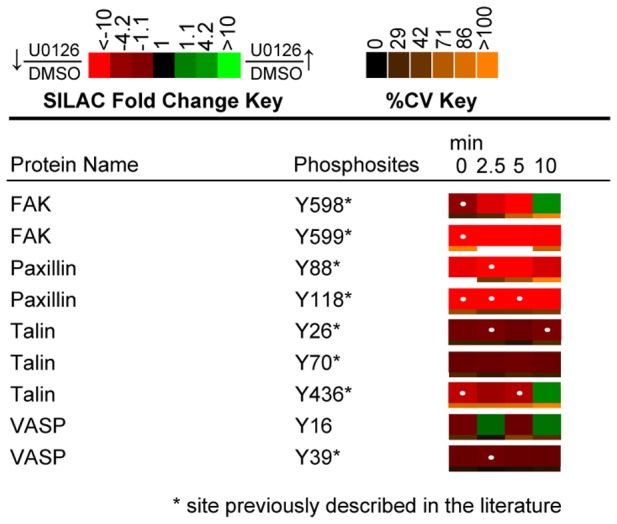
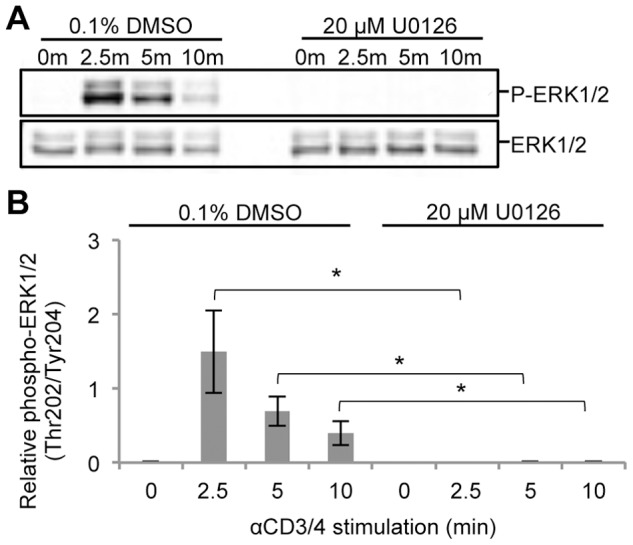
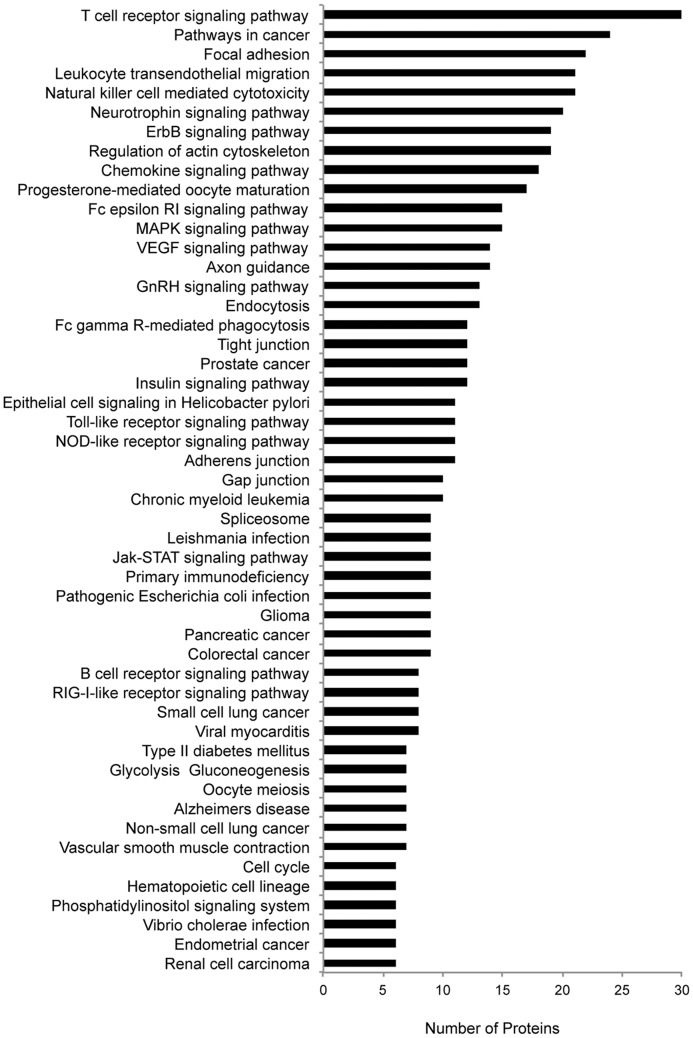
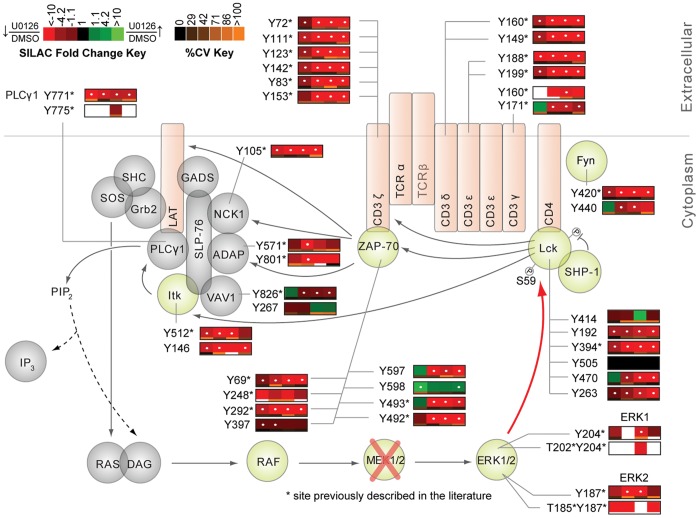
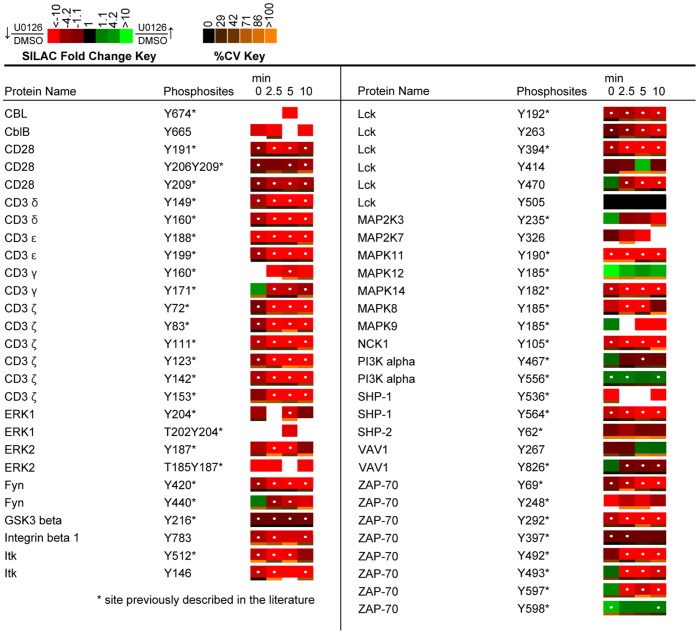
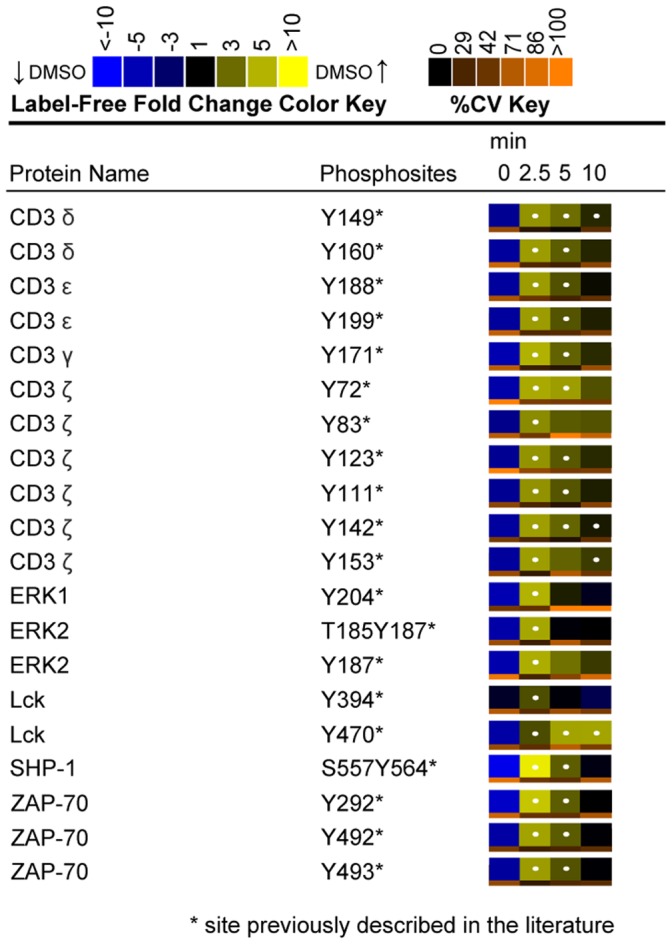
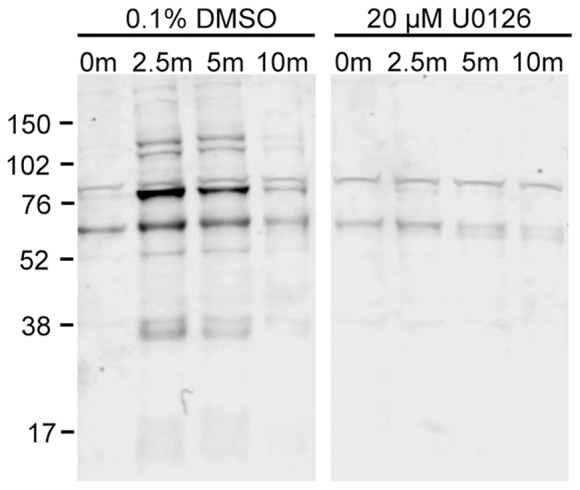
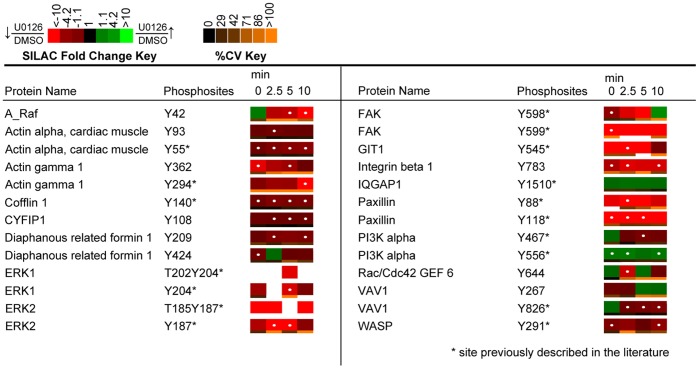
Competing positive and negative signaling feedback pathways play a critical role in tuning the sensitivity of T cell receptor activation by creating an ultrasensitive, bistable switch to selectively enhance responses to foreign ligands while suppressing signals from self peptides. In response to T cell receptor agonist engagement, ERK is activated to positively regulate T cell receptor signaling through phosphorylation of Ser(59) Lck. To obtain a wide-scale view of the role of ERK in propagating T cell receptor signaling, a quantitative phosphoproteomic analysis of 322 tyrosine phosphorylation sites by mass spectrometry was performed on the human Jurkat T cell line in the presence of U0126, an inhibitor of ERK activation. Relative to controls, U0126-treated cells showed constitutive decreases in phosphorylation through a T cell receptor stimulation time course on tyrosine residues found on upstream signaling proteins (CD3 chains, Lck, ZAP-70), as well as downstream signaling proteins (VAV1, PLCγ1, Itk, NCK1). Additional constitutive decreases in phosphorylation were found on the majority of identified proteins implicated in the regulation of actin cytoskeleton pathway. Although the majority of identified sites on T cell receptor signaling proteins showed decreases in phosphorylation, Tyr(598) of ZAP-70 showed elevated phosphorylation in response to U0126 treatment, suggesting differential regulation of this site via ERK feedback. These findings shed new light on ERK's role in positive feedback in T cell receptor signaling and reveal novel signaling events that are regulated by this kinase, which may fine tune T cell receptor activation.
竞争的正、负信号反馈途径在调节 T 细胞受体激活的敏感性方面起着至关重要的作用,它们通过形成超敏、双稳态开关来选择性地增强对外来配体的反应,同时抑制来自自身肽的信号。在 T 细胞受体激动剂结合后,ERK 通过 Ser(59)Lck 的磷酸化被激活,正向调节 T 细胞受体信号。为了获得 ERK 在传播 T 细胞受体信号中的广泛作用的全景视图,对人 Jurkat T 细胞系进行了通过质谱法对 322 个酪氨酸磷酸化位点的定量磷酸蛋白质组学分析,该实验是在 U0126(ERK 激活抑制剂)存在的情况下进行的。与对照相比,U0126 处理的细胞在 T 细胞受体刺激时间过程中表现出对酪氨酸残基的磷酸化的组成性降低,这些酪氨酸残基位于上游信号蛋白(CD3 链、Lck、ZAP-70)和下游信号蛋白(VAV1、PLCγ1、Itk、NCK1)上。在大多数参与调节肌动蛋白细胞骨架途径的鉴定蛋白上也发现了组成性磷酸化降低。尽管 T 细胞受体信号蛋白上的大多数鉴定位点的磷酸化降低,但 ZAP-70 的 Tyr(598)在 U0126 处理时显示出升高的磷酸化,表明该位点通过 ERK 反馈的差异调节。这些发现为 ERK 在 T 细胞受体信号的正反馈中的作用提供了新的认识,并揭示了受这种激酶调节的新的信号事件,这些事件可能可以微调 T 细胞受体的激活。