Correspondence to Amanda Owen Van Horne:
J Speech Lang Hear Res. 2013 Oct;56(5):1701-14. doi: 10.1044/1092-4388(2013/12-0188). Epub 2013 Jul 23.
Spoken language skills of 3- and 6-year-old children who are hard of hearing (HH) were compared with those of children with normal hearing (NH).
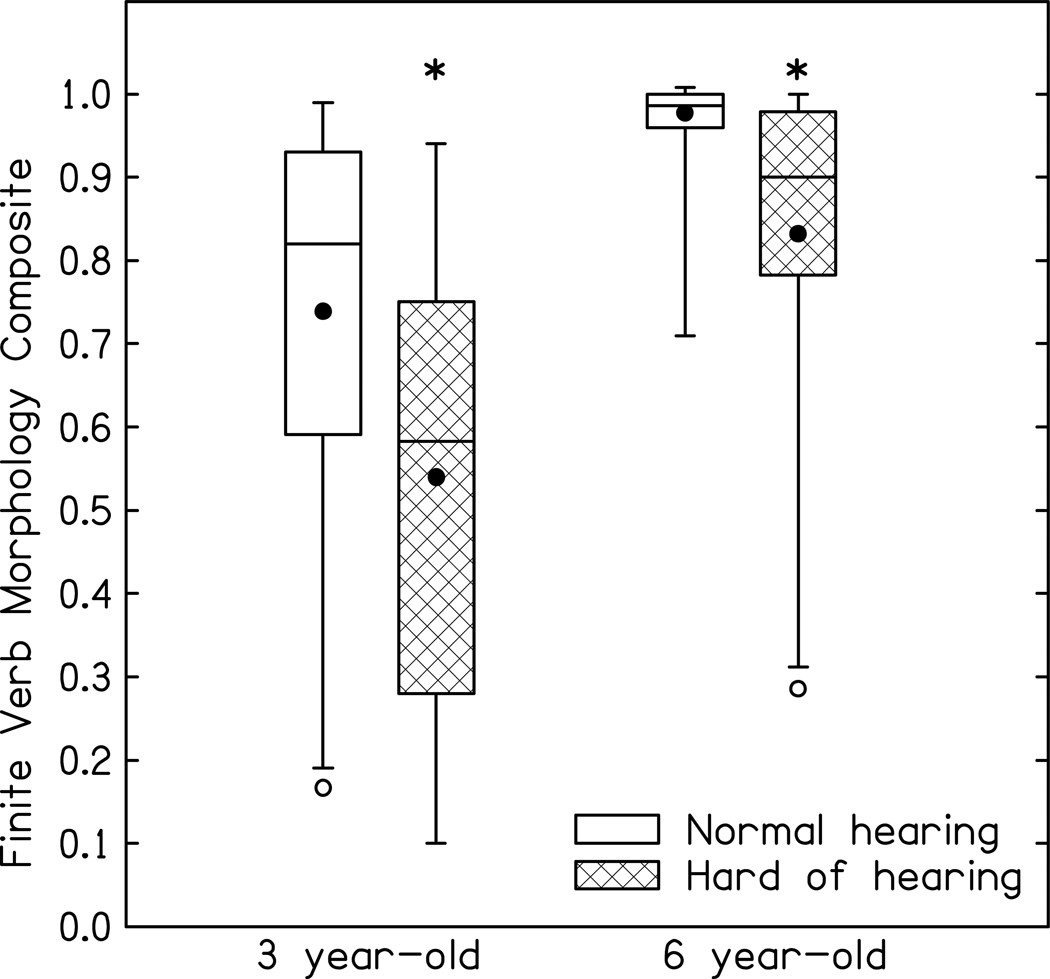
Language skills were measured via mean length of utterance in words (MLUw) and percent correct use of finite verb morphology in obligatory contexts based on spontaneous conversational samples gathered from 185 children (145 HH, 40 NH). Aided speech intelligibility index (SII), better-ear pure-tone average (BE-PTA), maternal education, and age of amplification were used to predict outcomes within the HH group.
On average, the HH group had MLUws that were 0.25-0.5 words shorter than the NH group at both ages, and they produced fewer obligatory verb morphemes. After age, aided SII and age of amplification predicted MLUw. Aided SII and BE-PTA were not interchangeable in this analysis. Age followed by either BE-PTA or aided SII best predicted verb morphology use.
Children who are HH lag behind their peers with NH in grammatical aspects of language. Although some children appear to catch up, more than half of the children who are HH fell below the 25th percentile. Continued monitoring of language outcomes is warranted considering that children who are HH are at increased risk for language learning difficulties.
比较 3 岁和 6 岁听力障碍(HH)儿童与正常听力(NH)儿童的口语技能。
通过从 185 名儿童(145 名 HH,40 名 NH)的自然会话样本中获得的平均词长(MLUw)和在必要语境中正确使用有限动词形态的百分比,测量语言技能。辅助言语可懂度指数(SII)、健耳纯音平均听力级(BE-PTA)、母亲教育程度和放大年龄用于预测 HH 组的结果。
平均而言,HH 组在两个年龄段的 MLUw 比 NH 组短 0.25-0.5 个单词,并且他们产生的必需动词形态较少。除了年龄,辅助 SII 和放大年龄预测 MLUw。在该分析中,辅助 SII 和 BE-PTA 不可互换。年龄之后是 BE-PTA 或辅助 SII 最佳预测动词形态使用。
HH 儿童在语言的语法方面落后于 NH 同龄人。尽管有些孩子似乎赶上来了,但仍有一半以上的 HH 儿童低于第 25 个百分位数。考虑到 HH 儿童有学习语言困难的风险增加,因此需要继续监测语言结果。