Departments of Neurosurgery, Physiology, and Anesthesiology, Loma Linda University, School of Medicine, Loma Linda, CA 92354, USA.
Transl Stroke Res. 2013 Aug;4(4):432-46. doi: 10.1007/s12975-013-0257-2.
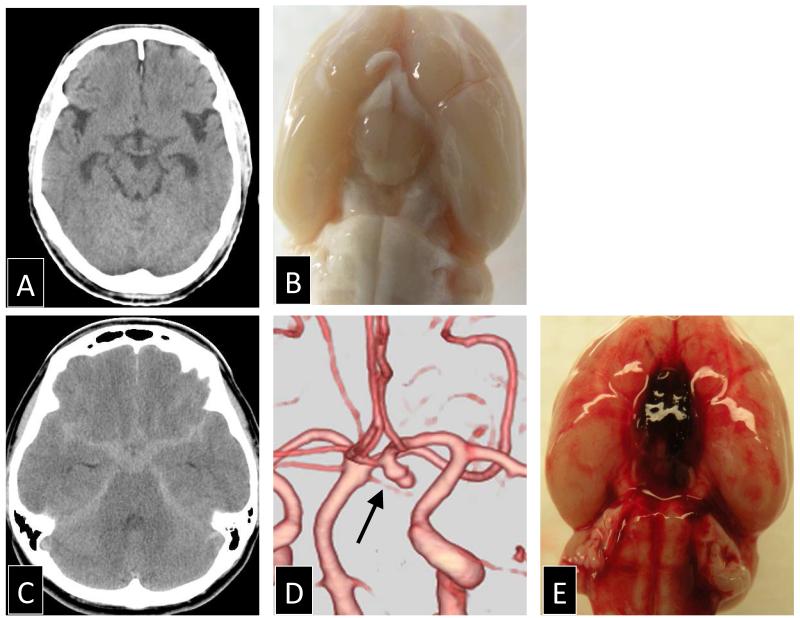
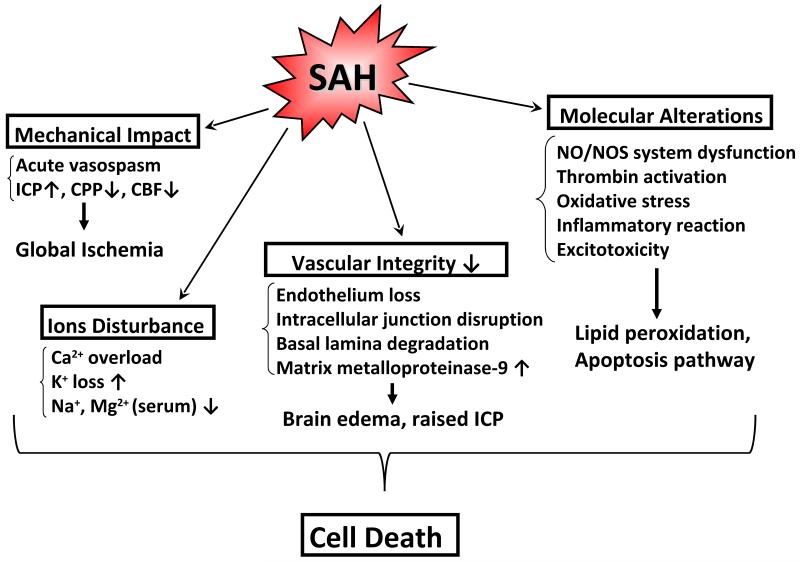
Subarachnoid hemorrhage (SAH), predominantly caused by a ruptured aneurysm, is a devastating neurological disease that has a morbidity and mortality rate higher than 50%. Most of the traditional in vivo research has focused on the pathophysiological or morphological changes of large-arteries after intracisternal blood injection. This was due to a widely held assumption that delayed vasospasm following SAH was the major cause of delayed cerebral ischemia and poor outcome. However, the results of the CONSCIOUS-1 trial implicated some other pathophysiological factors, independent of angiographic vasospasm, in contributing to the poor clinical outcome. The term early brain injury (EBI) has been coined and describes the immediate injury to the brain after SAH, before onset of delayed vasospasm. During the EBI period, a ruptured aneurysm brings on many physiological derangements such as increasing intracranial pressure (ICP), decreased cerebral blood flow (CBF), and global cerebral ischemia. These events initiate secondary injuries such as blood-brain barrier disruption, inflammation, and oxidative cascades that all ultimately lead to cell death. Given the fact that the reversal of vasospasm does not appear to improve patient outcome, it could be argued that the treatment of EBI may successfully attenuate some of the devastating secondary injuries and improve the outcome of patients with SAH. In this review, we provide an overview of the major advances in EBI after SAH research.
蛛网膜下腔出血(SAH)主要由破裂的动脉瘤引起,是一种毁灭性的神经系统疾病,其发病率和死亡率高于 50%。大多数传统的体内研究都集中在脑室内注血后大动脉的病理生理或形态变化。这是因为人们普遍认为,SAH 后迟发性血管痉挛是导致迟发性脑缺血和不良预后的主要原因。然而,CONSCIOUS-1 试验的结果表明,一些与血管造影性血管痉挛无关的其他病理生理因素也会导致不良的临床预后。因此,人们创造了“早期脑损伤(EBI)”这一术语,用于描述 SAH 后迟发性血管痉挛发作前大脑的即刻损伤。在 EBI 期间,破裂的动脉瘤会引起许多生理紊乱,如颅内压(ICP)升高、脑血流(CBF)减少和全脑缺血。这些事件引发继发性损伤,如血脑屏障破坏、炎症和氧化级联反应,最终导致细胞死亡。鉴于血管痉挛的逆转似乎并不能改善患者的预后,可以认为 EBI 的治疗可能成功减轻一些破坏性的继发性损伤,并改善 SAH 患者的预后。在这篇综述中,我们概述了 SAH 后 EBI 研究的主要进展。