Department of Internal Medicine, Yale University, School of Medicine, New Haven, Connecticut, United States of America.
PLoS One. 2013 Jul 24;8(7):e69464. doi: 10.1371/journal.pone.0069464. Print 2013.
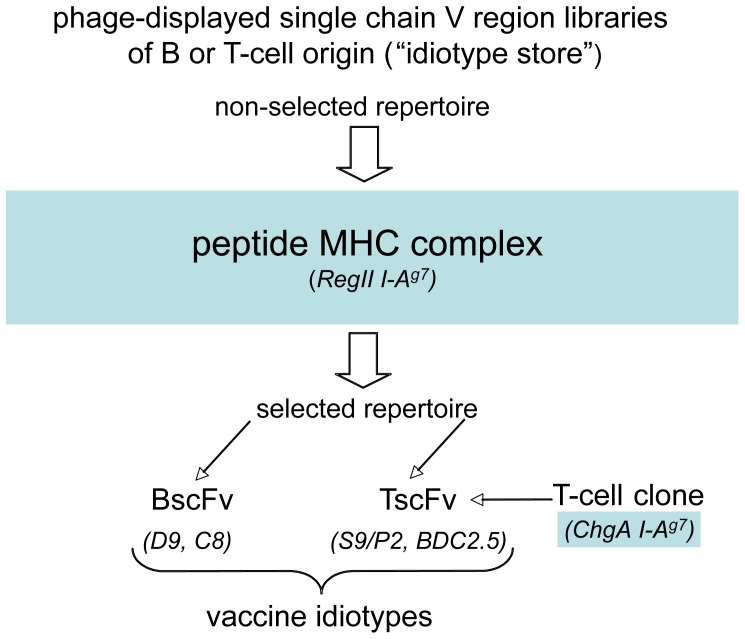
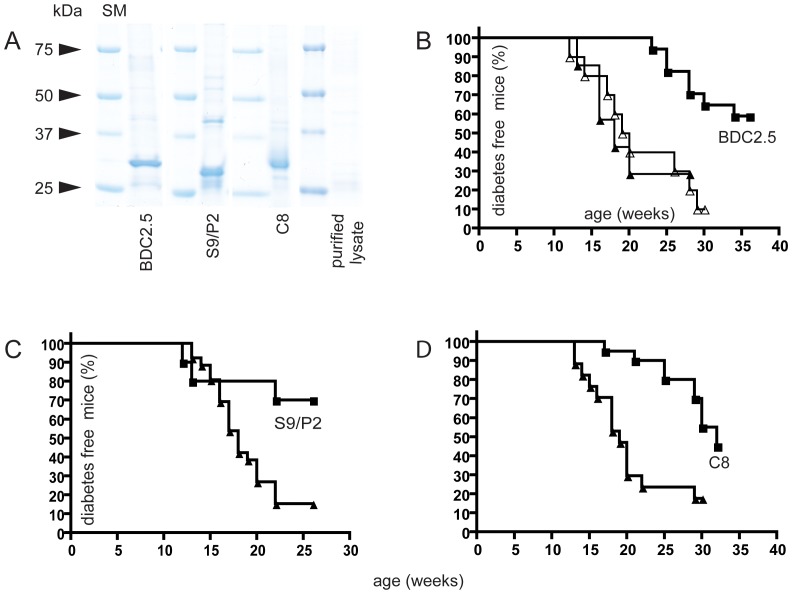
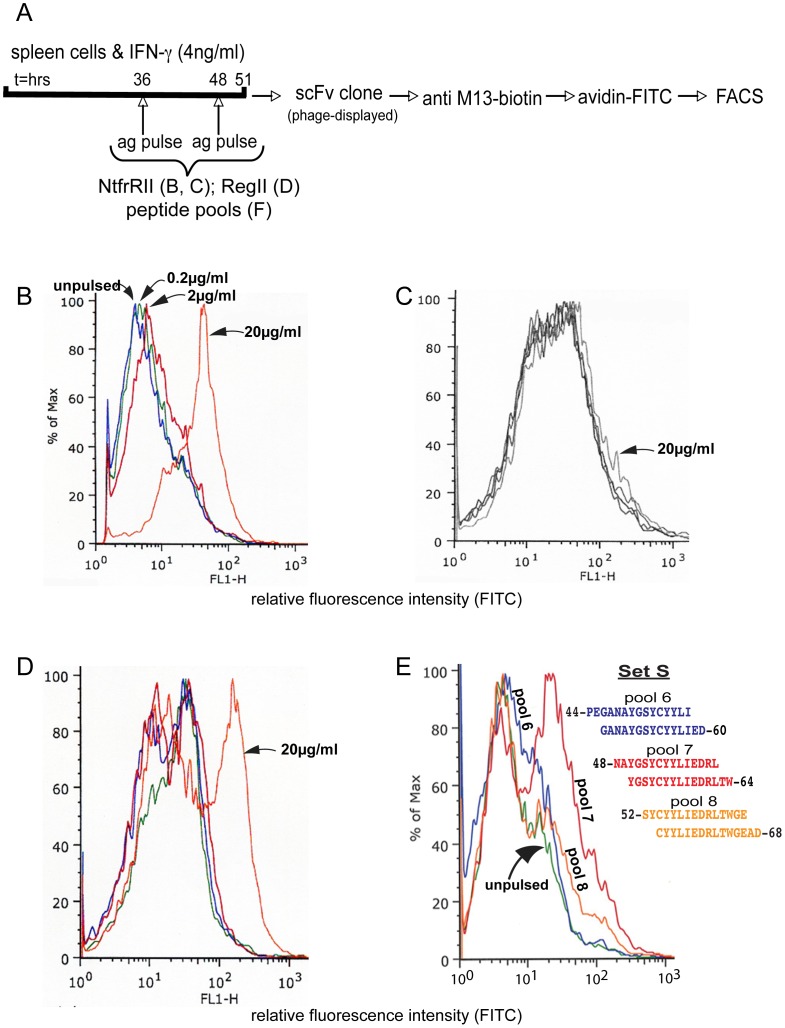
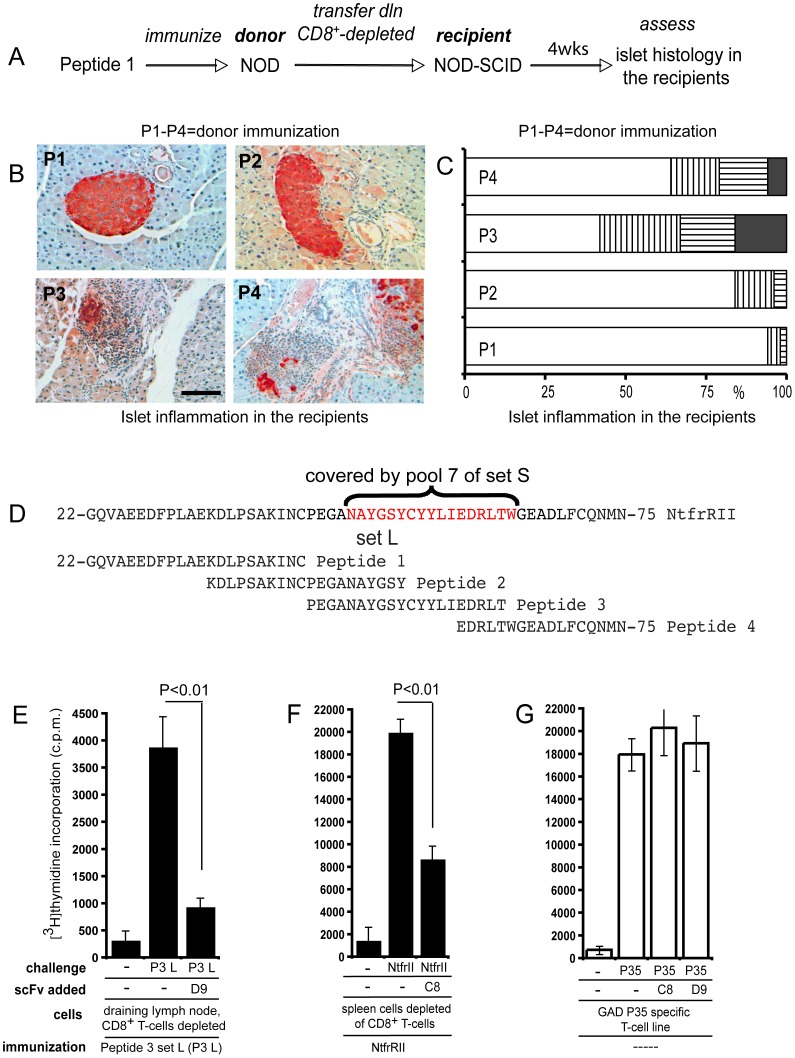
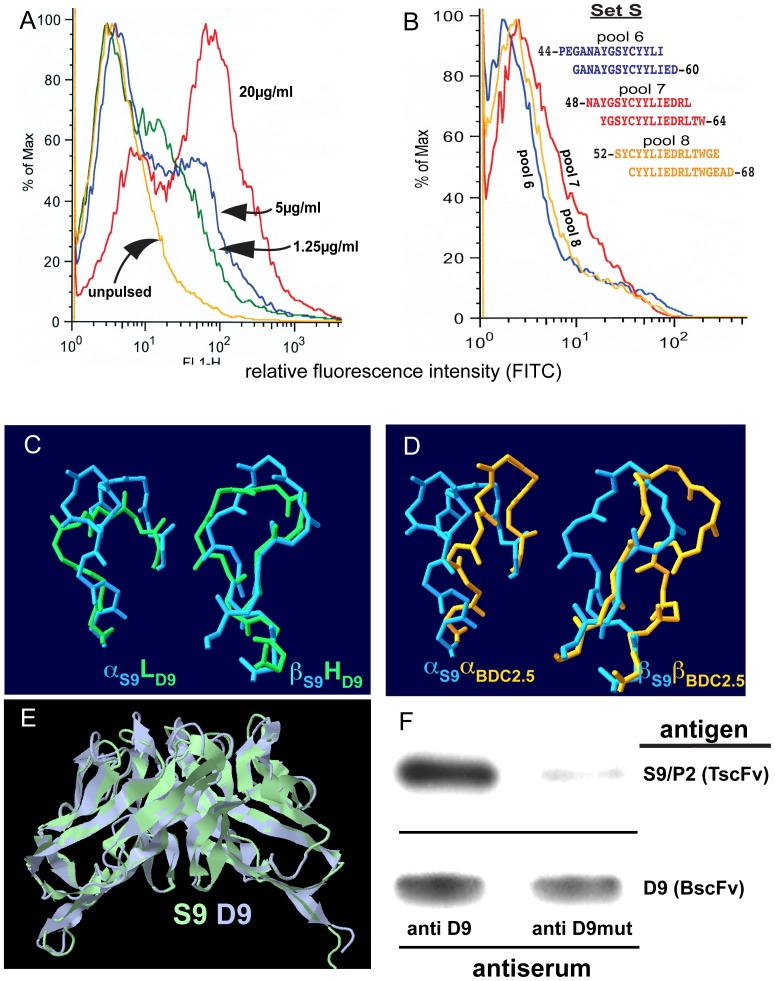
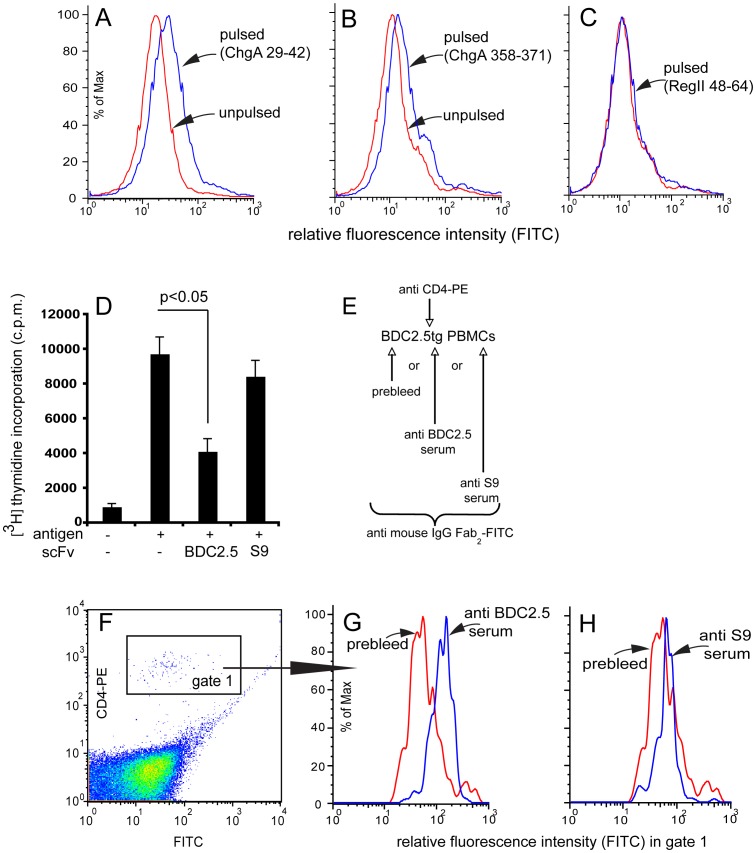
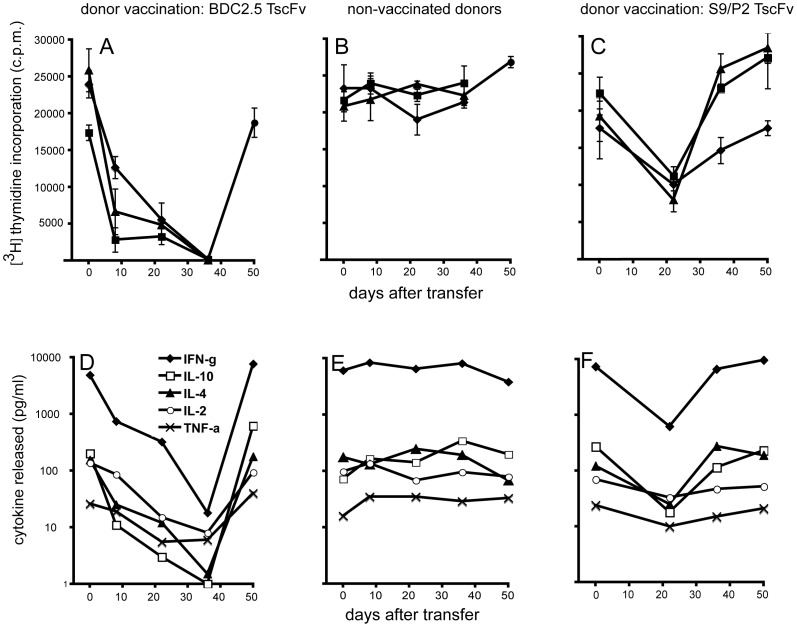
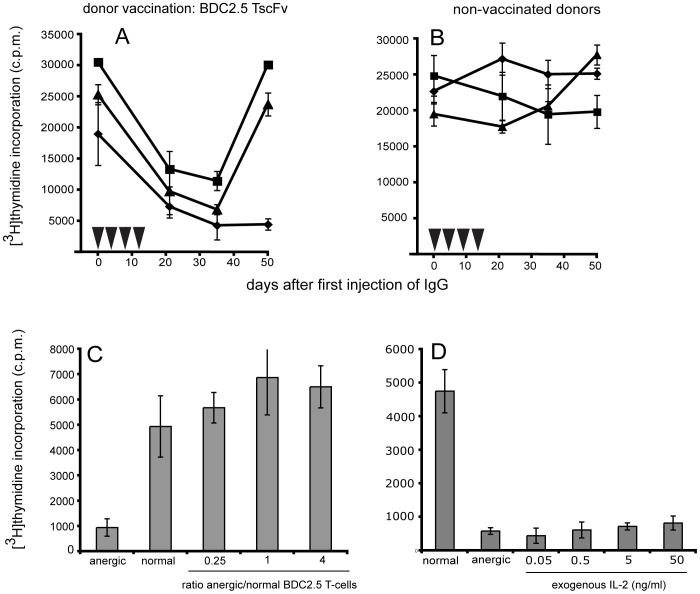
To develop a vaccination approach for prevention of type 1 diabetes (T1D) that selectively attenuates self-reactive T-cells targeting specific autoantigens, we selected phage-displayed single chain antigen receptor libraries for clones binding to a complex of the NOD classII MHC I-A(g7) and epitopes derived from the islet autoantigen RegII. Libraries were generated from B-cell receptor repertoires of classII-mismatched mice immunized with RegII-pulsed NOD antigen presenting cells or from T-cell receptor repertoires in pancreatic lymph nodes of NOD mice. Both approaches yielded clones recognizing a RegII-derived epitope in the context of I-A(g7), which activated autoreactive CD4(+) T-cells. A receptor with different specificity was obtained by converting the BDC2.5 TCR into single chain form. B- but not T-cells from donors vaccinated with the clones transferred protection from diabetes to NOD-SCID recipients if the specificity of the diabetes inducer cell and the single chain receptor were matched. B-cells and antibodies from donors vaccinated with the BDC2.5 single chain receptor induced a state of profound anergy in T-cells of BDC2.5 TCR transgenic NOD recipients while B-cells from donors vaccinated with a single chain receptor specific for I-A(g7) RegII peptide complexes induced only partial non-responsiveness. Vaccination of normal NOD mice with receptors recognizing I-A(g7) RegII peptide complexes or with the BDC2.5 single chain receptor delayed onset of T1D. Thus anti-idiotypic vaccination can be successfully applied to T1D with vaccines either generated from self-reactive T-cell clones or derived from antigen receptor libraries.
为了开发一种预防 1 型糖尿病(T1D)的疫苗接种方法,该方法选择性地减弱针对特定自身抗原的自身反应性 T 细胞,我们选择了针对与 NOD 类 II MHC I-A(g7)和胰岛自身抗原 RegII 衍生表位复合物结合的噬菌体展示单链抗原受体文库。这些文库是从用 RegII 脉冲 NOD 抗原呈递细胞免疫的 II 类错配小鼠的 B 细胞受体库或 NOD 小鼠胰腺淋巴结中的 T 细胞受体库中生成的。这两种方法都产生了识别 I-A(g7)背景下 RegII 衍生表位的克隆,这些克隆激活了自身反应性 CD4(+)T 细胞。通过将 BDC2.5 TCR 转化为单链形式,可以获得具有不同特异性的受体。如果糖尿病诱导细胞和单链受体的特异性匹配,用克隆转导的 B 细胞而非 T 细胞可从 NOD-SCID 受体中转移对糖尿病的保护作用。用 BDC2.5 单链受体接种的供体 B 细胞和抗体可诱导 BDC2.5 TCR 转基因 NOD 受体中的 T 细胞处于深度无能状态,而用针对 I-A(g7)RegII 肽复合物的单链受体接种的供体 B 细胞仅诱导部分非反应性。用识别 I-A(g7)RegII 肽复合物的受体或 BDC2.5 单链受体对正常 NOD 小鼠进行疫苗接种可延迟 T1D 的发病。因此,针对独特型的疫苗接种可以成功应用于 T1D,疫苗可以来源于自身反应性 T 细胞克隆,也可以来源于抗原受体文库。