Department of Microbiology and Molecular Genetics, Michigan State University, East Lansing, Michigan, United States of America.
PLoS One. 2013 Jul 24;8(7):e69539. doi: 10.1371/journal.pone.0069539. Print 2013.
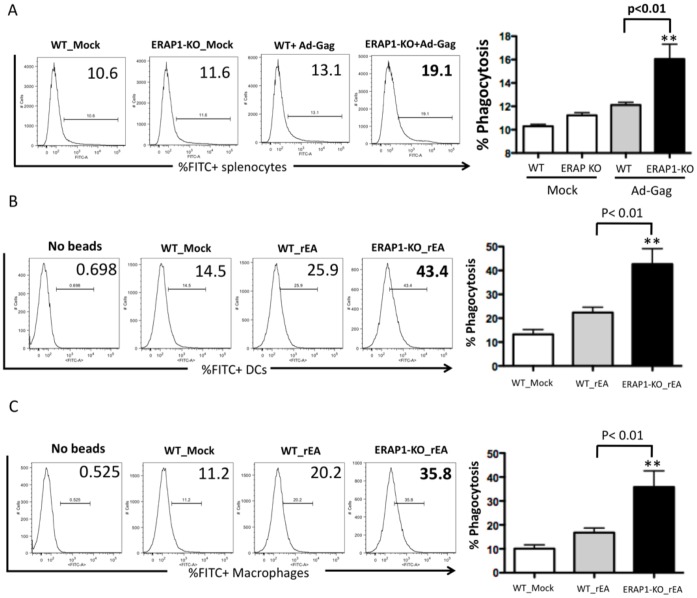
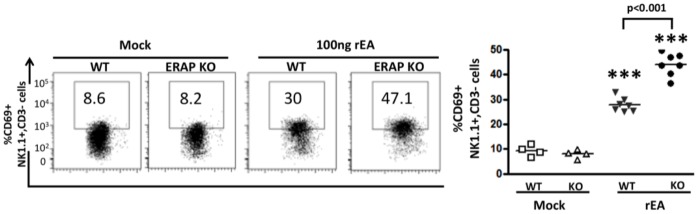
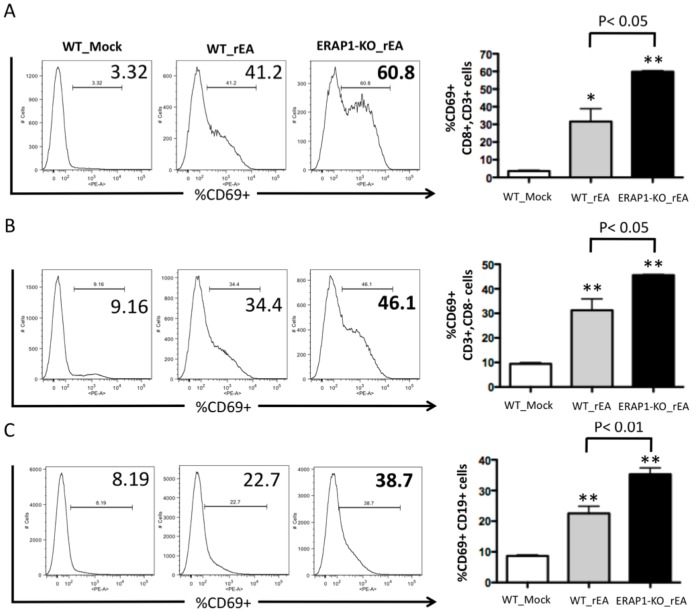
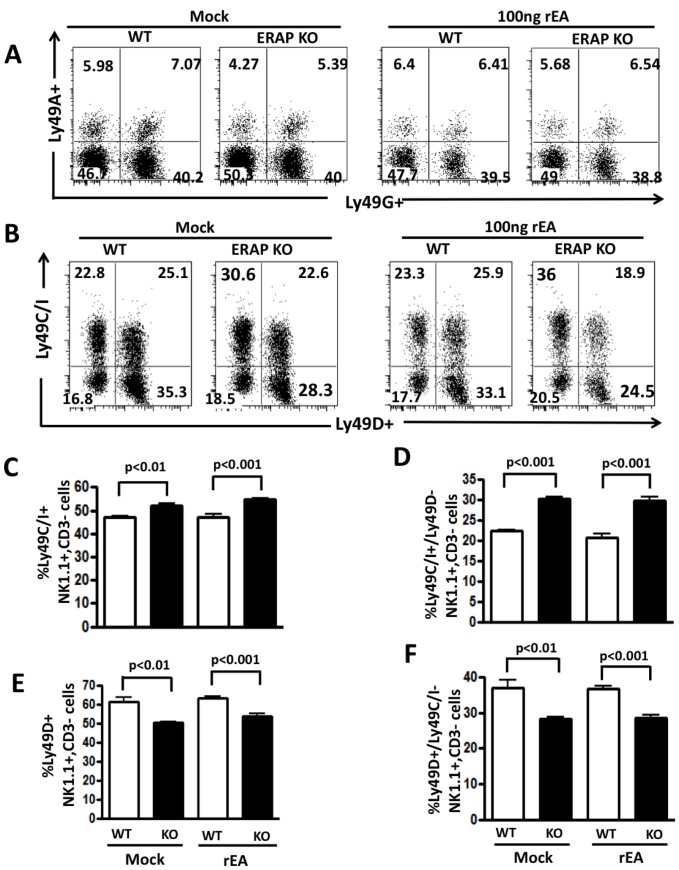
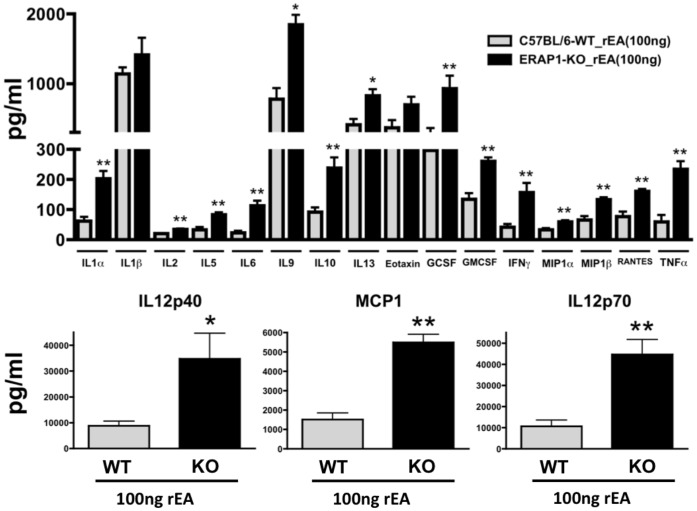
Endoplasmic reticulum aminopeptidase-1 (ERAP1) is a multifunctional, ubiquitously expressed enzyme whose peptide-trimming role during antigen processing for presentation by MHC I molecules is well established, however, a role for ERAP1 in modulating global innate immune responses has not been described to date. Here we demonstrate that, relative to wild type mice, mice lacking ERAP1 exhibit exaggerated innate immune responses early during pathogen recognition, as characterized by increased activation of splenic and hepatic NK and NKT cells and enhanced production of pro-inflammatory cytokines such as IL12 and MCP1. Our data also revealed that ERAP1 is playing a critical role in NK cell development and function. We observed higher frequencies of terminally matured NK cells, as well as higher frequencies of licensed NK cells (expressing the Ly49C and Ly49I receptors) in ERAP1-KO mice, results that positively correlated with an enhanced NK activation and IFNγ production by ERAP1-KO mice challenged with pro-inflammatory stimuli. Furthermore, during pathogen recognition, ERAP1 regulates IL12 production by CD11c(+) DCs specifically, with increases in IL12 production positively correlated with an increased phagocytic activity of splenic DCs and macrophages. Collectively, our results demonstrate a previously unrecognized, more central role for the ERAP1 protein in modulating several aspects of both the development of the innate immune system, and its responses during the initial stages of pathogen recognition. Such a role may explain why ERAP1 has been implicated by GWAS in the pathogenesis of autoimmune diseases that may be precipitated by aberrant responses to pathogen encounters.
内质网氨肽酶-1(ERAP1)是一种多功能的、广泛表达的酶,其在抗原加工过程中对 MHC I 分子呈递的肽修剪作用已得到充分证实,然而,到目前为止,还没有描述 ERAP1 在调节全局固有免疫反应中的作用。在这里,我们证明与野生型小鼠相比,缺乏 ERAP1 的小鼠在病原体识别的早期表现出过度的固有免疫反应,其特征为脾和肝 NK 和 NKT 细胞的激活增加,以及促炎细胞因子如 IL12 和 MCP1 的产生增强。我们的数据还表明,ERAP1 在 NK 细胞的发育和功能中起着关键作用。我们观察到 ERAP1-KO 小鼠中终末成熟 NK 细胞的频率更高,以及表达 Ly49C 和 Ly49I 受体的许可 NK 细胞的频率更高,这些结果与 ERAP1-KO 小鼠在受到促炎刺激时 NK 激活和 IFNγ产生增强呈正相关。此外,在病原体识别过程中,ERAP1 特异性调节 CD11c(+)DC 中 IL12 的产生,IL12 产生的增加与脾 DC 和巨噬细胞吞噬活性的增加呈正相关。总之,我们的结果表明,ERAP1 蛋白在调节固有免疫系统的发育及其在病原体识别的初始阶段的反应的几个方面中起着以前未被认识到的、更核心的作用。这种作用可能解释了为什么 ERAP1 已被 GWAS 牵连到自身免疫性疾病的发病机制中,这些疾病可能是由于对病原体的异常反应而引发的。