Greenebaum Cancer Center, University of Maryland, Baltimore, Maryland, USA; Graduate Program in Life Science, University of Maryland, Baltimore, Maryland, USA.
Department of Biochemistry, National Defense Medical Center, Taipei, Taiwan.
J Invest Dermatol. 2014 Feb;134(2):405-414. doi: 10.1038/jid.2013.320. Epub 2013 Jul 26.
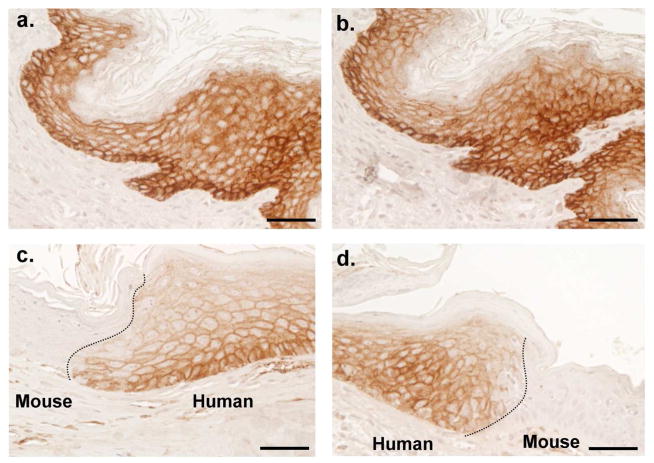
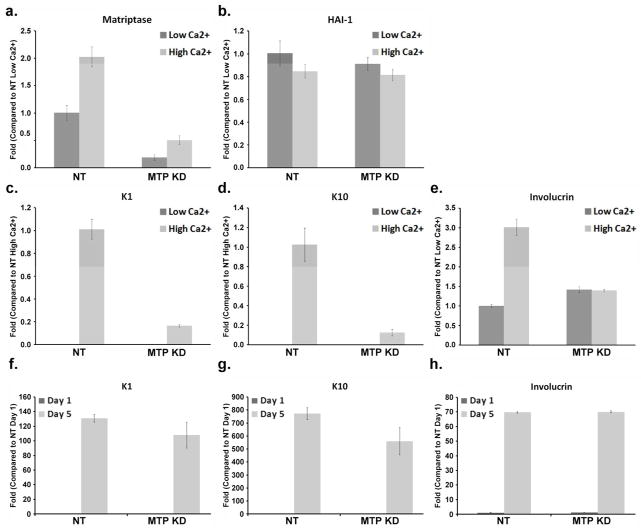
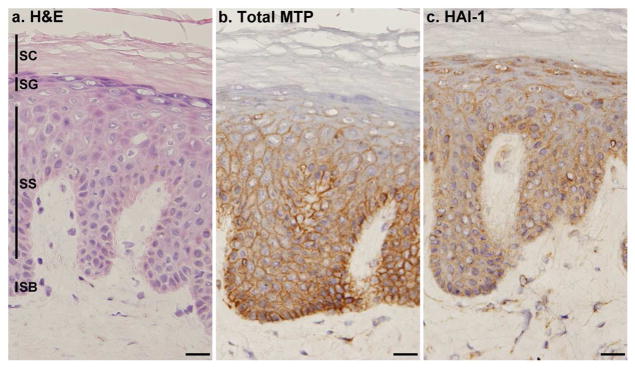
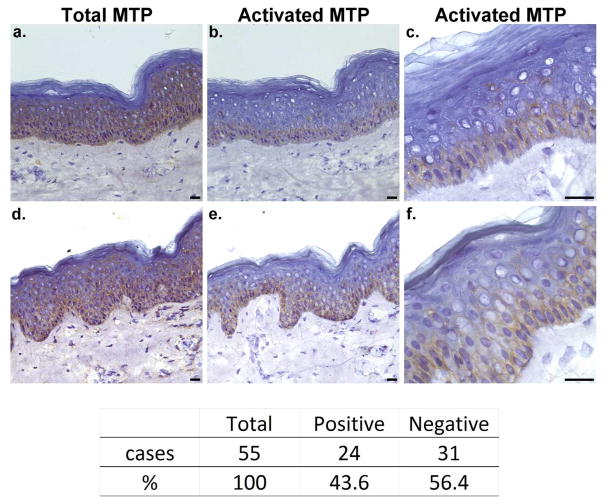
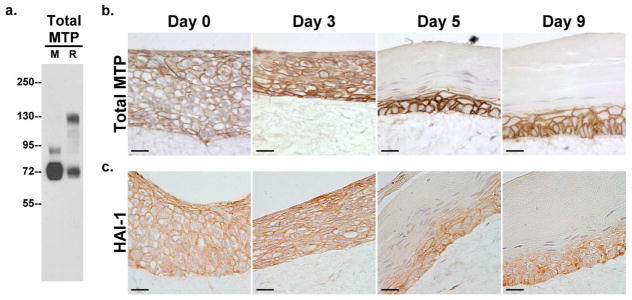
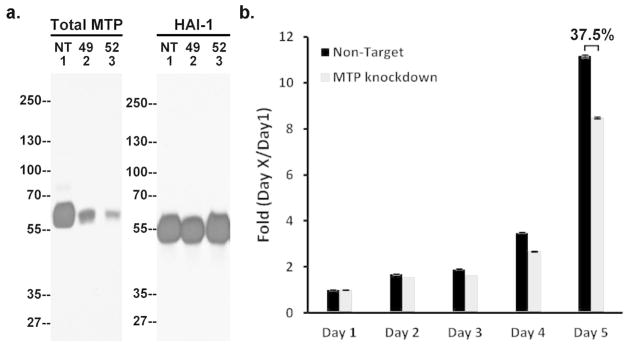
Genetic defects in matriptase are linked to two congenital ichthyoses: autosomal recessive ichthyosis with hypotrichosis (ARIH, OMIM 610765) and ichthyosis, follicular atrophoderma, hypotrichosis, and hypohidrosis (IFAH, OMIM 602400). Mouse models with matriptase deficiency indicate an involvement of matriptase in suprabasal keratinocytes in the maintenance of the epidermal barrier. In contrast to what has been reported for mouse skin, we show that in human skin matriptase is primarily expressed in the basal and spinous keratinocytes, but not in the more differentiated keratinocytes of the granular layer. In addition, matriptase zymogen activation was predominantly detected in the basal cells. Furthermore, by using skin organotypic cultures as a model system to monitor the course of human epidermal differentiation, we found elevated matriptase zymogen activation during early stages of epidermal differentiation, coupled with a loss of matriptase expression in the late stages of this process. We also show here that matriptase deficiency in HaCaT cells modestly reduces cell proliferation and temporally affects calcium-induced expression of differentiation markers. These collective data suggest that, unlike mouse matriptase, human matriptase may be involved in the regulation of keratinocyte growth and early differentiation, rather than terminal differentiation, providing mechanistic insights into the pathology of the two congenital ichthyoses: ARIH and IFAH.
丝氨酸蛋白酶抑制剂(matriptase)的遗传缺陷与两种先天性鱼鳞病相关:常染色体隐性遗传性少毛症伴鱼鳞病(ARIH,OMIM 610765)和鱼鳞病、滤泡性萎缩性皮肤病、少毛症和少汗症(IFAH,OMIM 602400)。缺乏丝氨酸蛋白酶抑制剂的小鼠模型表明,丝氨酸蛋白酶抑制剂在维持表皮屏障中参与了基底层角质形成细胞的功能。与已报道的小鼠皮肤不同,我们发现丝氨酸蛋白酶抑制剂在人类皮肤中主要表达于基底层和棘层角质形成细胞,但不表达于颗粒层中更分化的角质形成细胞。此外,丝氨酸蛋白酶原的激活主要在基底层细胞中检测到。此外,我们使用皮肤器官培养作为模型系统来监测人类表皮分化的过程,发现表皮分化的早期阶段丝氨酸蛋白酶抑制剂原的激活增加,同时在这一过程的晚期丝氨酸蛋白酶抑制剂表达丧失。我们还发现,HaCaT 细胞中丝氨酸蛋白酶抑制剂的缺乏会适度降低细胞增殖,并在时间上影响钙诱导的分化标志物的表达。这些综合数据表明,与小鼠丝氨酸蛋白酶抑制剂不同,人类丝氨酸蛋白酶抑制剂可能参与了角质形成细胞生长和早期分化的调节,而不是终末分化,为两种先天性鱼鳞病(ARIH 和 IFAH)的发病机制提供了新的见解。