Department of Biochemistry and Molecular Biology, School of Medicine, Kyung Hee University, Seoul 130-701, Republic of Korea.
BMC Med. 2013 Aug 6;11:178. doi: 10.1186/1741-7015-11-178.
MitoQ is a mitochondria-targeted derivative of the antioxidant ubiquinone, with antioxidant and anti-apoptotic functions. Reactive oxygen species are involved in many inflammatory diseases including inflammatory bowel disease. In this study, we assessed the therapeutic effects of MitoQ in a mouse model of experimental colitis and investigated the possible mechanisms underlying its effects on intestinal inflammation.
Reactive oxygen species levels and mitochondrial function were measured in blood mononuclear cells of patients with inflammatory bowel disease. The effects of MitoQ were evaluated in a dextran sulfate sodium-induced colitis mouse model. Clinical and pathological markers of disease severity and oxidative injury, and levels of inflammatory cytokines in mouse colonic tissue were measured. The effect of MitoQ on inflammatory cytokines released in the human macrophage-like cell line THP-1 was also analyzed.
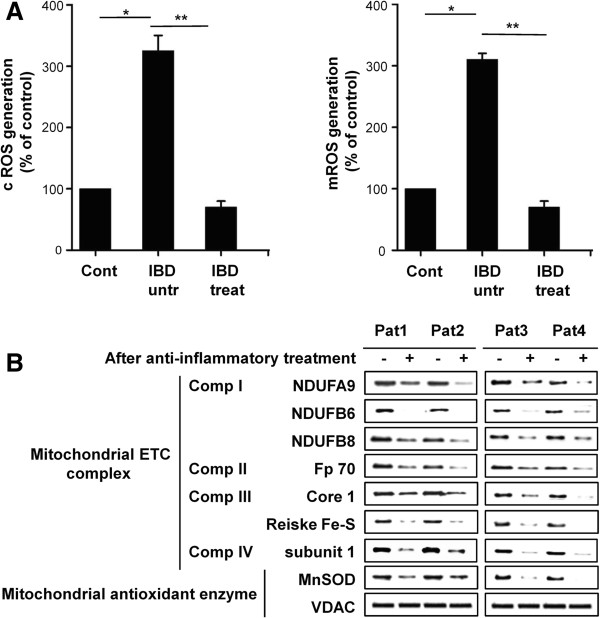
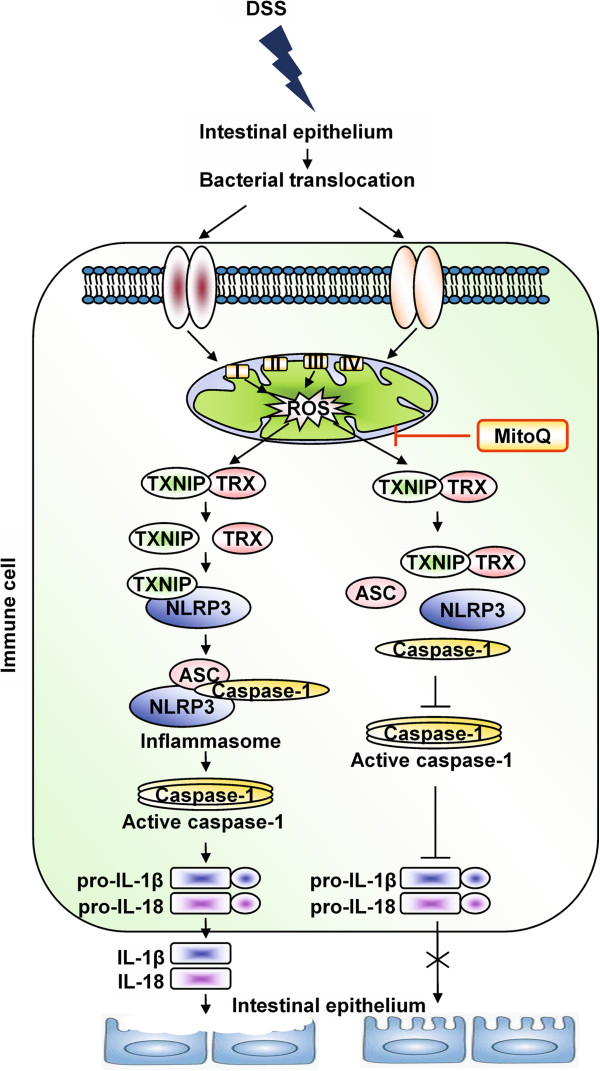
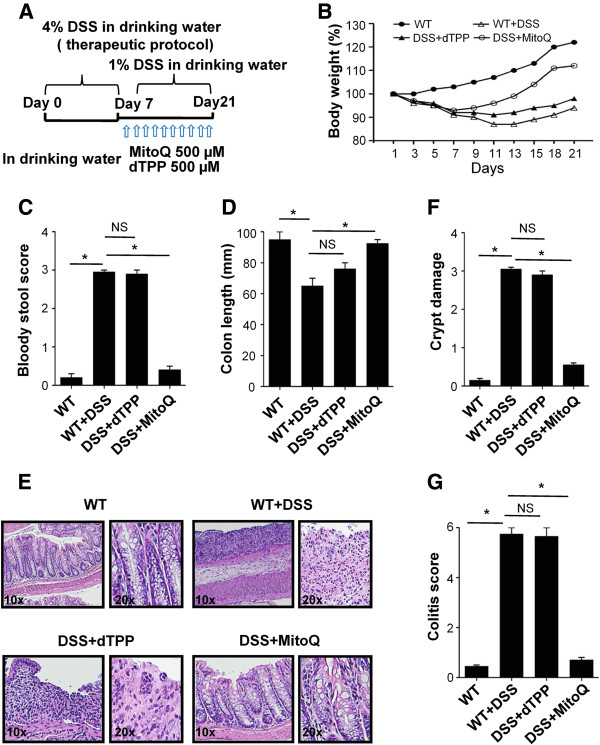
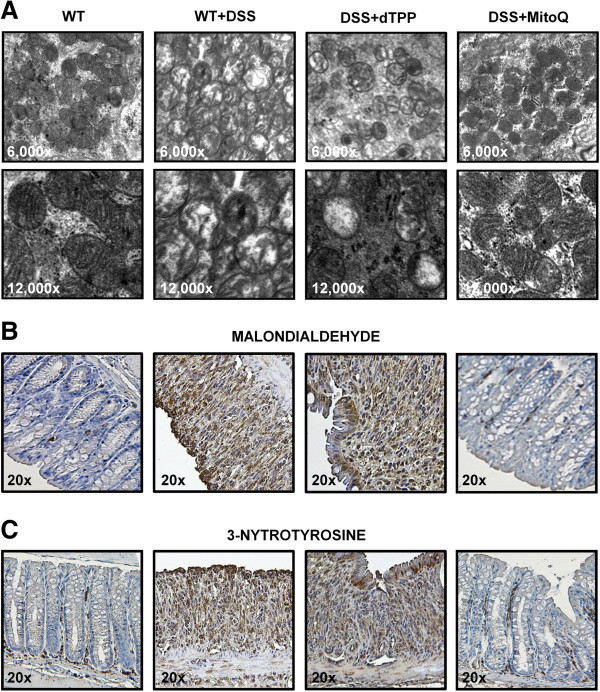
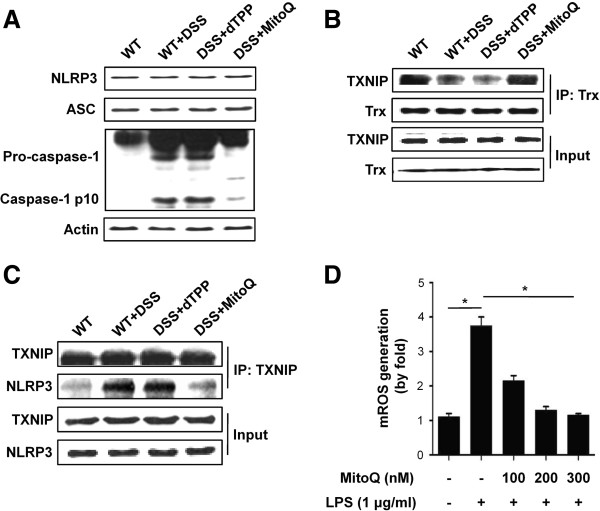
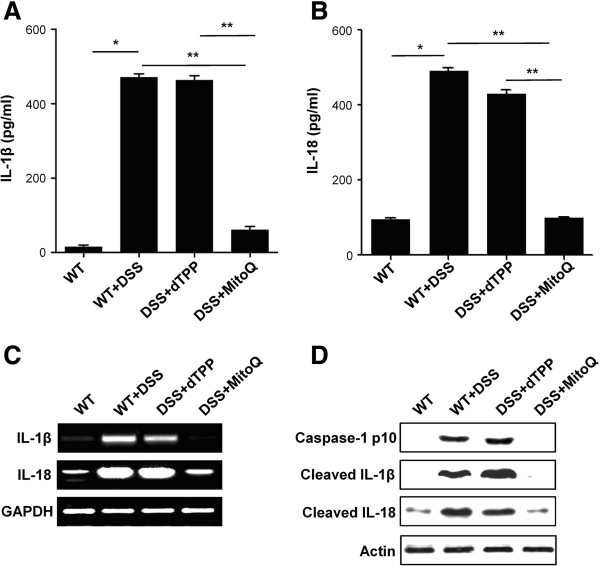
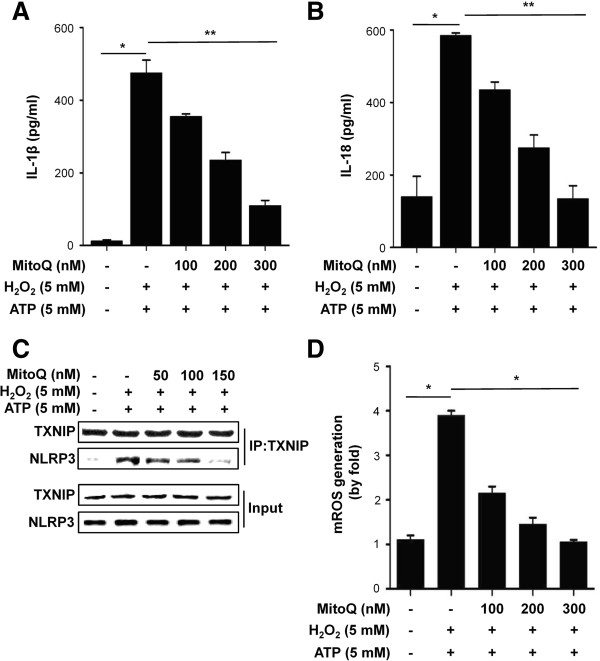
Cellular and mitochondrial reactive oxygen species levels in mononuclear cells were significantly higher in patients with inflammatory bowel disease (P <0.003, cellular reactive oxygen species; P <0.001, mitochondrial reactive oxygen species). MitoQ significantly ameliorated colitis in the dextran sulfate sodium-induced mouse model in vivo, reduced the increased oxidative stress response (malondialdehyde and 3-nitrotyrosine formation), and suppressed mitochondrial and histopathological injury by decreasing levels of inflammatory cytokines IL-1 beta and IL-18 (P <0.001 and P <0.01 respectively). By decreasing mitochondrial reactive oxygen species, MitoQ also suppressed activation of the NLRP3 inflammasome that was responsible for maturation of IL-1 beta and IL-18. In vitro studies demonstrated that MitoQ decreases IL-1 beta and IL-18 production in human THP-1 cells.
Taken together, our results suggest that MitoQ may have potential as a novel therapeutic agent for the treatment of acute phases of inflammatory bowel disease.
MitoQ 是一种抗氧化剂泛醌的线粒体靶向衍生物,具有抗氧化和抗细胞凋亡功能。活性氧参与许多炎症性疾病,包括炎症性肠病。在这项研究中,我们评估了 MitoQ 在实验性结肠炎小鼠模型中的治疗效果,并研究了其对肠道炎症影响的可能机制。
测量了炎症性肠病患者血液单核细胞中的活性氧水平和线粒体功能。在葡聚糖硫酸钠诱导的结肠炎小鼠模型中评估了 MitoQ 的作用。测量了疾病严重程度和氧化损伤的临床和病理标志物,以及小鼠结肠组织中炎症细胞因子的水平。还分析了 MitoQ 对人巨噬细胞样细胞系 THP-1 释放的炎症细胞因子的影响。
单核细胞中的细胞和线粒体活性氧水平在炎症性肠病患者中显着升高(P <0.003,细胞活性氧;P <0.001,线粒体活性氧)。MitoQ 显着改善了体内葡聚糖硫酸钠诱导的结肠炎小鼠模型,减轻了氧化应激反应的增加(丙二醛和 3-硝基酪氨酸形成),并通过降低炎症细胞因子 IL-1β和 IL-18 的水平抑制了线粒体和组织病理学损伤(分别为 P <0.001 和 P <0.01)。通过降低线粒体活性氧,MitoQ 还抑制了负责 IL-1β和 IL-18 成熟的 NLRP3 炎性体的激活。体外研究表明,MitoQ 可减少人 THP-1 细胞中 IL-1β和 IL-18 的产生。
综上所述,我们的研究结果表明,MitoQ 可能有潜力成为治疗炎症性肠病急性期的新型治疗剂。