Program in Ecology Evolution and Conservation Biology, University of Illinois at Urbana-Champaign 515 Morrill Hall, 505 S Goodwin Ave, Urbana, Illinois, 61801.
Ecol Evol. 2013 Jul;3(7):2128-37. doi: 10.1002/ece3.623. Epub 2013 Jun 4.
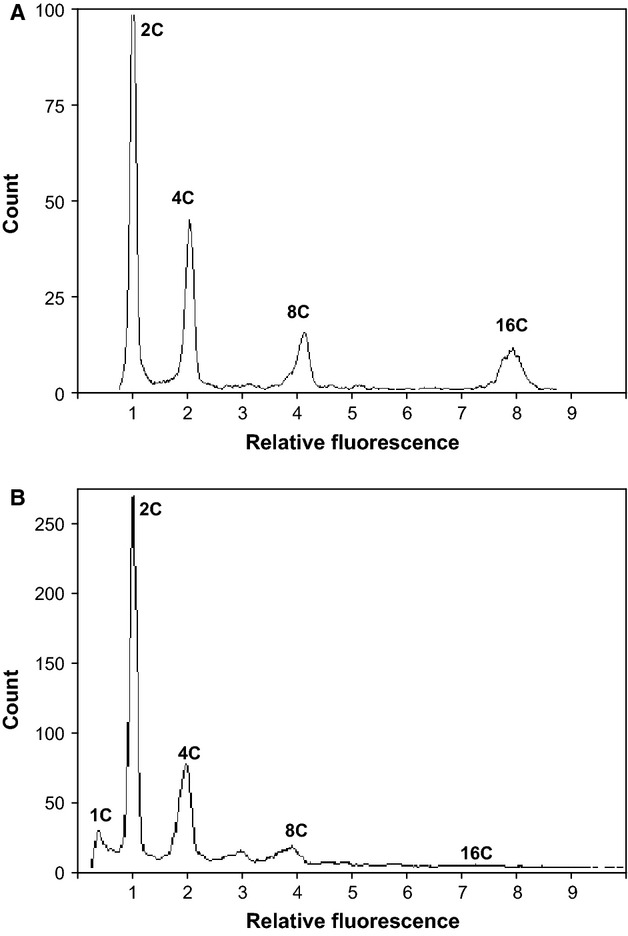
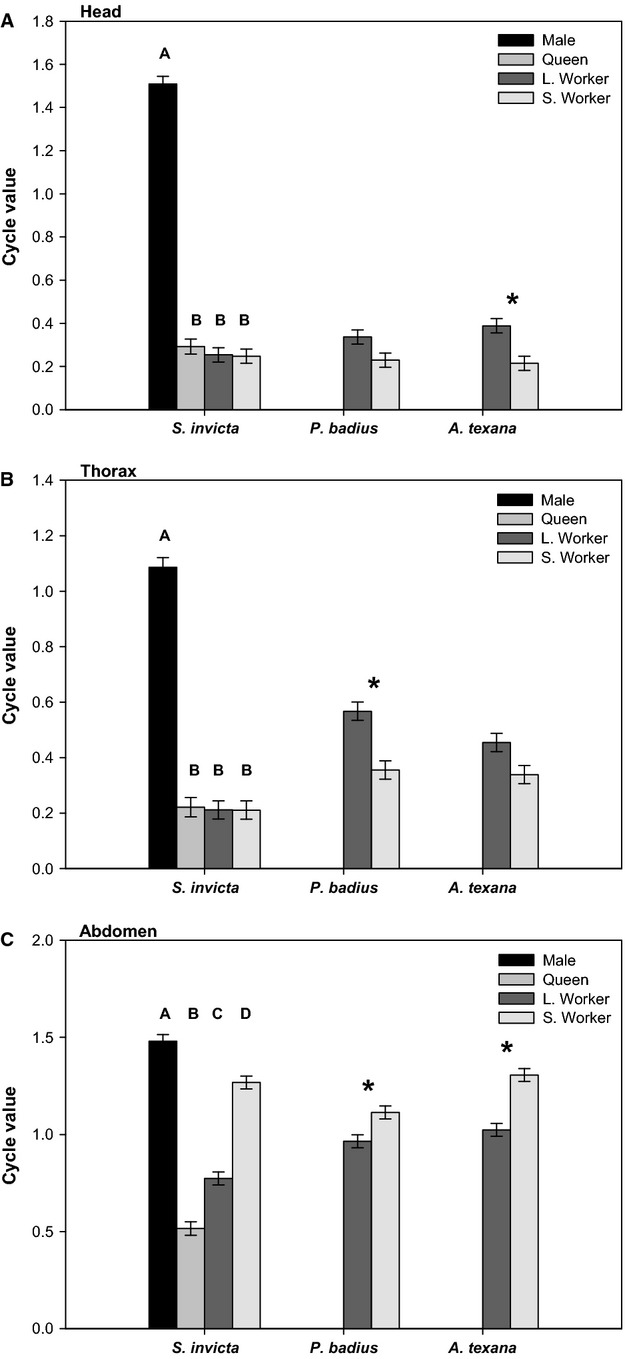
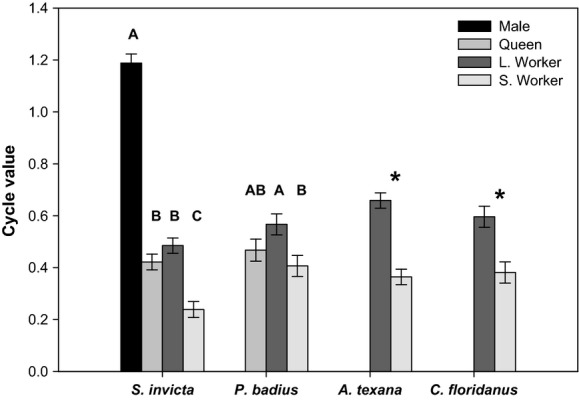
Endoreduplication is the process by which the nuclear genome is repeatedly replicated without mitotic cell division, resulting in nuclei that contain numerous additional genome copies. Endoreduplication occurs widely throughout Eucarya and is particularly common in angiosperms and insects. Although endoreduplication is an important process in the terminal differentiation of some specialized cell types, and often increases cell size and metabolism, the direct effects of increasing nuclear ploidy on cell function are not well resolved. Here, we examine if endoreduplication may play a role in body size and/or caste differentiation in ants. Nuclear ploidy was measured by flow cytometry of whole individuals (providing the basis for overall body size patterns) and individual body segments for multiple polymorphic ant species. We used cell cycle values, interpreted as the mean number of endocycles performed by each cell in the sample, as our measure of overall endoreduplication. Among females of four polymorphic ant species, endoreduplication was positively related with size within the worker caste, but was not related to caste generally in two species where we also examined queens. Additionally, abdomens had the greatest endoreduplication of all body parts regardless of caste or size. We also found that males, having derived from haploid unfertilized eggs, had the highest rates of endoreduplication and may compensate for their haploid origin by performing an additional endocycle relative to females. These results suggest that endoreduplication may play a role in body size variation in eusocial insects and the development of some segment-specific tissues.
内复制是核基因组在没有有丝分裂细胞分裂的情况下重复复制的过程,导致核内包含许多额外的基因组拷贝。内复制在真核生物中广泛发生,特别是在被子植物和昆虫中更为常见。尽管内复制是一些特化细胞类型终末分化的重要过程,并且通常会增加细胞大小和代谢,但增加核倍性对细胞功能的直接影响尚未得到很好的解决。在这里,我们研究内复制是否可能在蚂蚁的体型和/或级型分化中发挥作用。通过对整个个体(为整体体型模式提供基础)和多个多态性蚂蚁物种的个体身体片段进行流式细胞术测量核倍性。我们使用细胞周期值,将其解释为样本中每个细胞进行的内循环的平均次数,作为我们衡量整体内复制的指标。在四个多态性蚂蚁物种的雌性中,内复制与工蚁级别的体型呈正相关,但在我们也检查了女王的两个物种中,与一般级型无关。此外,无论级型或体型如何,腹部的内复制最多。我们还发现,雄性是由单倍体未受精卵衍生而来的,其内复制率最高,可能通过相对于雌性进行额外的内循环来补偿其单倍体起源。这些结果表明,内复制可能在社会性昆虫的体型变异和某些节段特异性组织的发育中发挥作用。