Paquin Marie-Christine, Cagnol Sébastien, Carrier Julie C, Leblanc Caroline, Rivard Nathalie
Département d'Anatomie et Biologie Cellulaire, Cancer Research Pavillon, Faculté de Médecine et des Sciences de la Santé, Université de Sherbrooke, 3201, Jean-Mignault, Sherbrooke, J1E4K8, QC, Canada.
BMC Cell Biol. 2013 Aug 6;14:33. doi: 10.1186/1471-2121-14-33.
The transcription factor E2F4 controls proliferation of normal and cancerous intestinal epithelial cells. E2F4 localization in normal human intestinal epithelial cells (HIEC) is cell cycle-dependent, being cytoplasmic in quiescent differentiated cells but nuclear in proliferative cells. However, the intracellular signaling mechanisms regulating such E2F4 localization remain unknown.
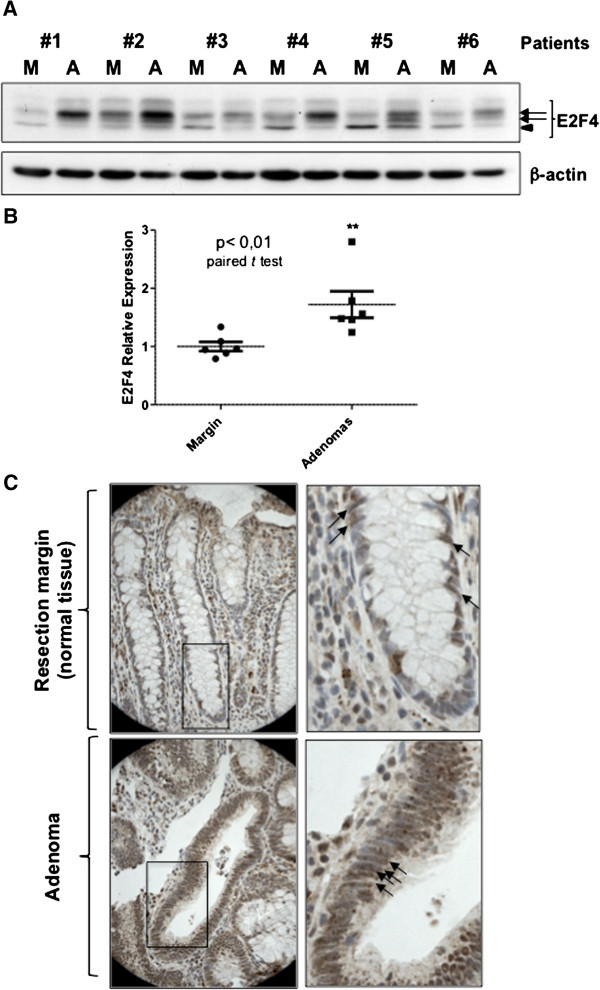
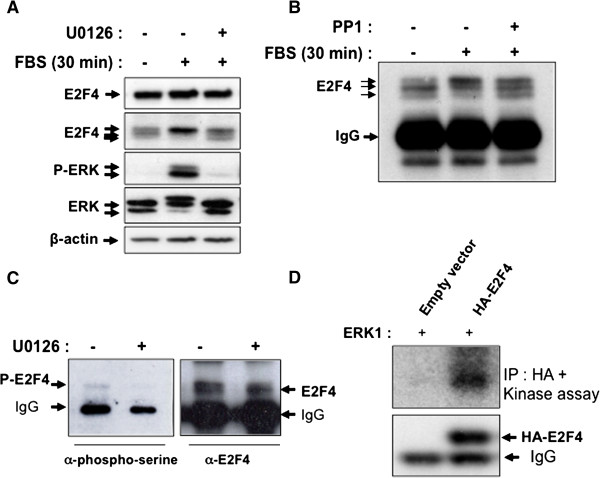
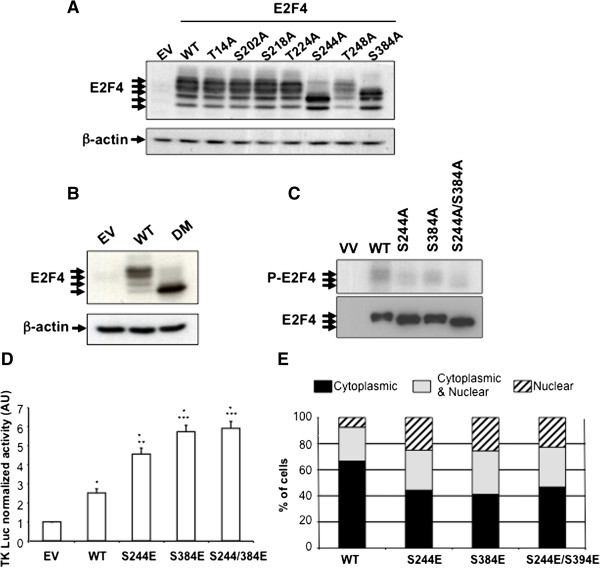
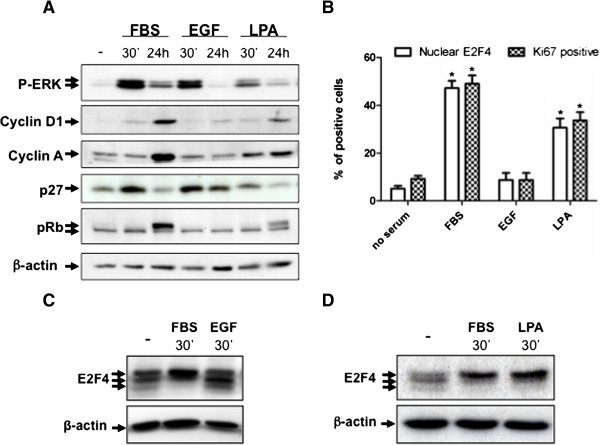
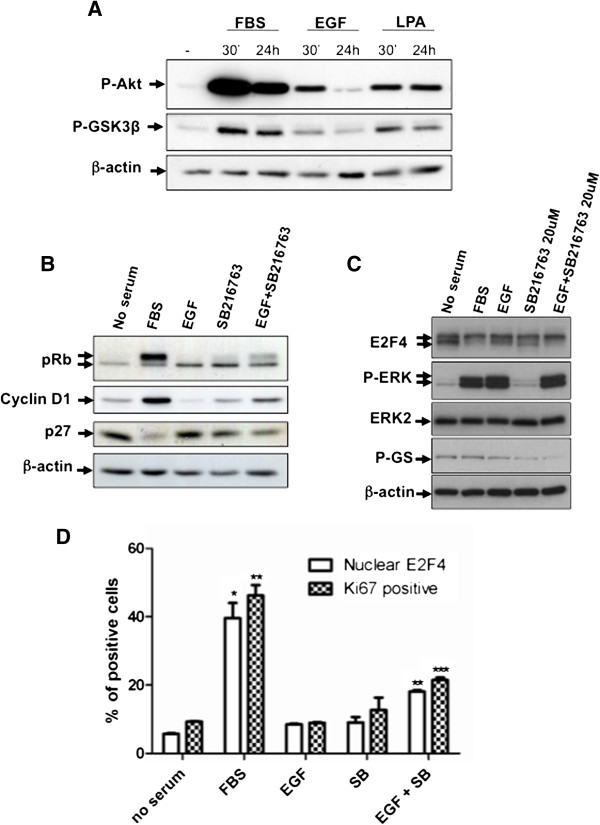
Treatment of quiescent HIEC with serum induced ERK1/2 activation, E2F4 phosphorylation, E2F4 nuclear translocation and G1/S phase transition while inhibition of MEK/ERK signaling by U0126 prevented these events. Stimulation of HIEC with epidermal growth factor (EGF) also led to the activation of ERK1/2 but, in contrast to serum or lysophosphatidic acid (LPA), EGF failed to induce E2F4 phosphorylation, E2F4 nuclear translocation and G1/S phase transition. Furthermore, Akt and GSK3β phosphorylation levels were markedly enhanced in serum- or LPA-stimulated HIEC but not by EGF. Importantly, E2F4 phosphorylation, E2F4 nuclear translocation and G1/S phase transition were all observed in response to EGF when GSK3 activity was concomitantly inhibited by SB216763. Finally, E2F4 was found to be overexpressed, phosphorylated and nuclear localized in epithelial cells from human colorectal adenomas exhibiting mutations in APC and KRAS or BRAF genes, known to deregulate GSK3/β-catenin and MEK/ERK signaling, respectively.
The present results indicate that MEK/ERK activation and GSK3 inhibition are both required for E2F4 phosphorylation as well as its nuclear translocation and S phase entry in HIEC. This finding suggests that dysregulated E2F4 nuclear localization may be an instigating event leading to hyperproliferation and hence, of tumor initiation and promotion in the colon and rectum.
转录因子E2F4控制正常和癌性肠上皮细胞的增殖。E2F4在正常人肠上皮细胞(HIEC)中的定位是细胞周期依赖性的,在静止分化细胞中位于细胞质,但在增殖细胞中位于细胞核。然而,调节这种E2F4定位的细胞内信号传导机制仍不清楚。
用血清处理静止的HIEC可诱导ERK1/2激活、E2F4磷酸化、E2F4核转位和G1/S期转换,而U0126抑制MEK/ERK信号传导可阻止这些事件。用表皮生长因子(EGF)刺激HIEC也可导致ERK1/2激活,但与血清或溶血磷脂酸(LPA)不同,EGF未能诱导E2F4磷酸化、E2F4核转位和G1/S期转换。此外,Akt和GSK3β磷酸化水平在血清或LPA刺激的HIEC中显著增强,但EGF刺激则不然。重要的是,当SB216763同时抑制GSK3活性时,在对EGF的反应中观察到了E2F4磷酸化、E2F4核转位和G1/S期转换。最后发现,在APC和KRAS或BRAF基因发生突变的人大肠腺瘤上皮细胞中,E2F4过表达、磷酸化且定位于细胞核,已知这些基因分别使GSK3/β-连环蛋白和MEK/ERK信号传导失调。
目前的结果表明,MEK/ERK激活和GSK3抑制对于HIEC中E2F4磷酸化及其核转位和S期进入都是必需的。这一发现表明,E2F4核定位失调可能是导致过度增殖的起始事件,从而导致结肠和直肠肿瘤的发生和发展。