Talhouk Rabih, Tarraf Charbel, Kobrossy Laila, Shaito Abdallah, Bazzi Samer, Bazzoun Dana, El-Sabban Marwan
Department of Biology, Faculty of Arts and Sciences, American University of Beirut (AUB), Beirut, Lebanon.
J Reprod Infertil. 2012 Jan;13(1):21-32.
Gap-junctional intercellular communication (GJIC) is implicated in physicological processes and it is vitally important for granulosa cell (GC) differentiation and oocyte growth. We investigated the expression of connexin 43 (Cx43), a gap junctional protein, in normal and androstenedione-induced polycystic ovary (PCO), the effects of androstenedione on Cx43 expression, GJIC and progesterone production in granulosa cells in vitro.
Isolated GCs from rat ovary were supplemented with FSH and dripped with EHS-matrix (EHS-drip) in culture media, were treated with physiological (10(-7) M) or pathological (10(-5) M) androstenedione concentrations to induce differentiation. Cx43 protein levels were assessed by Western blotting. Immunohistochemistry was also used to determine the localization of Cx43 in GCs and corpus luteum (CL) of controls and PCOs. Differentiation of GCs was determined by progesterone assay and Lucifer yellow dye transfer for GJIC status. The degree of significance of variations between the results was analyzed by ANOVA using SPSS (version 11.5; 2002).
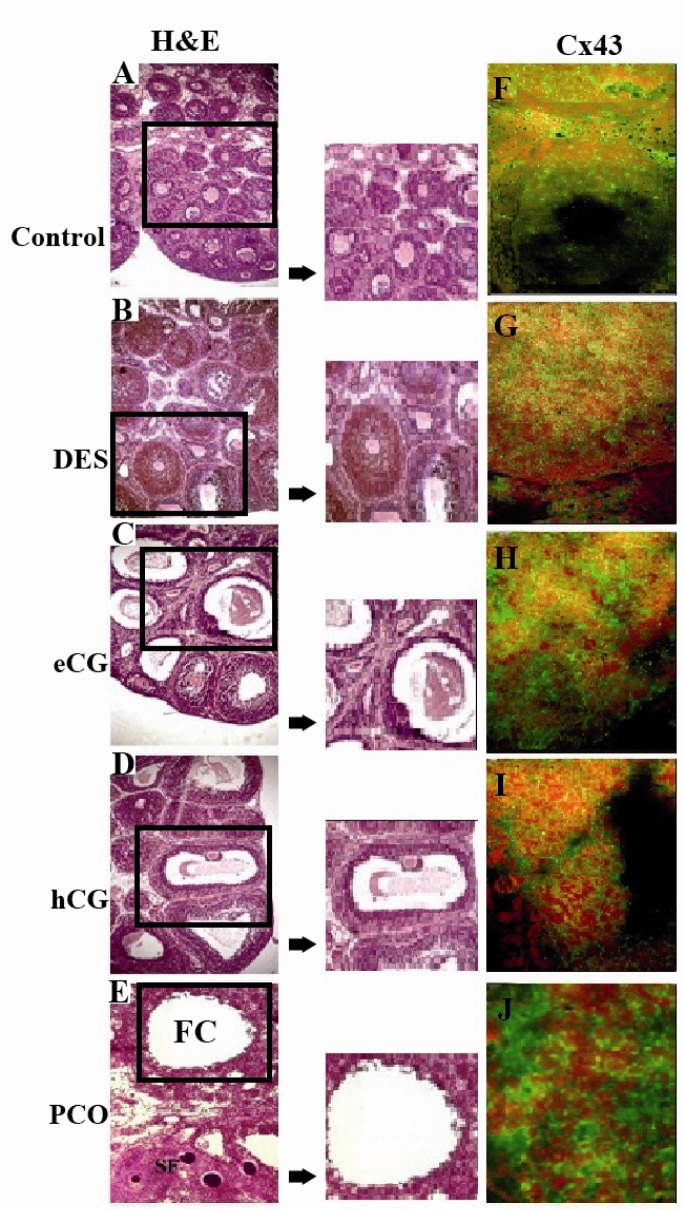
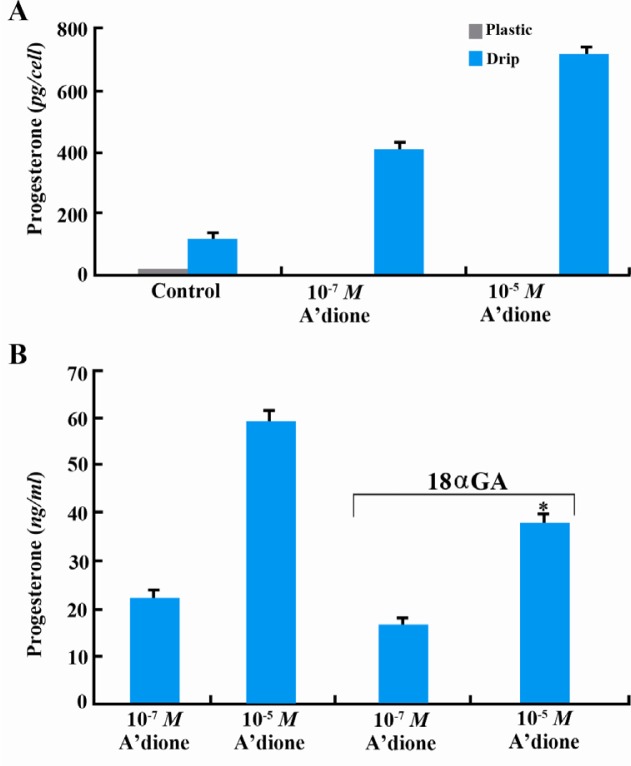
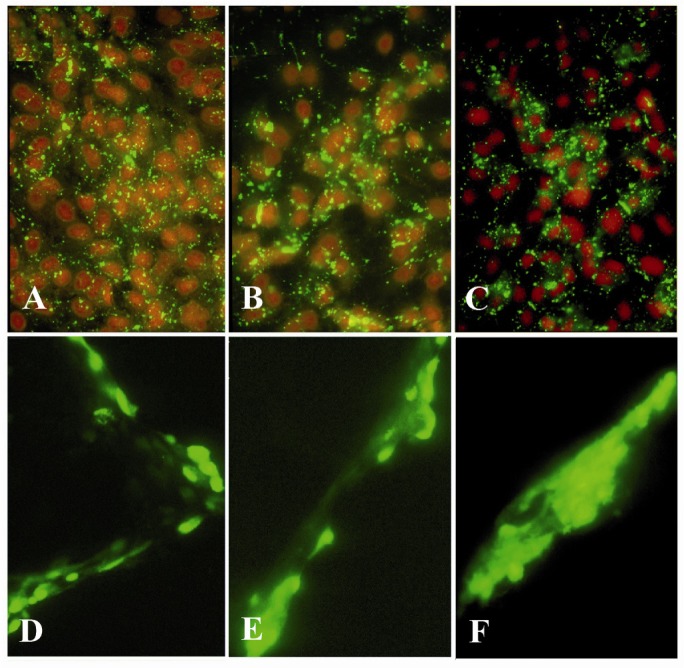
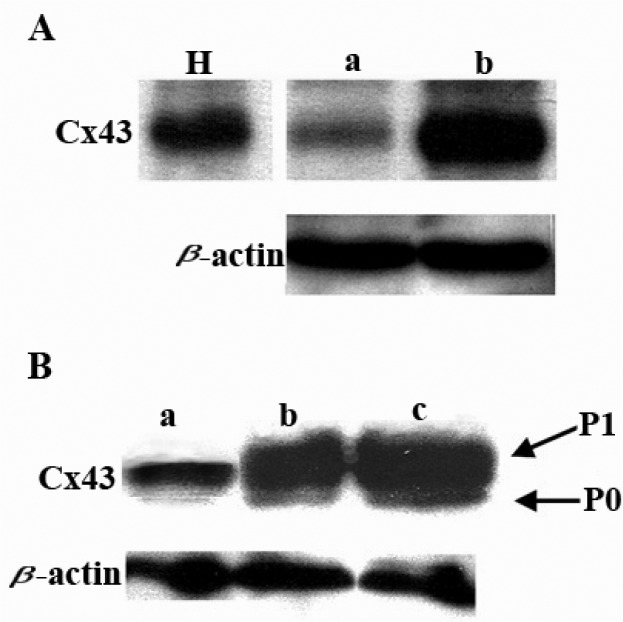
Cx43 localized in the GC layer of both the control and PCOs. Its protein levels were upregulated in PCO rat ovaries. GCs in culture with or without androstenedione had a punctate membranous distribution of Cx43. However, androstenedione increased GJIC and upregulated progesterone and Cx43 protein levels. Inhibiting GJIC by 18-α GA in androstenedione-treated GCs caused partial inhibition of progesterone production, suggesting a possible role of GJIC in mediating the action of androstenedione on GC differentiation.
This study presented a suitable culture model for polycystic ovary syndrome and showed that Cx43 and GJIC might contribute to the pathogenesis of polycystic ovary syndrome.
缝隙连接细胞间通讯(GJIC)参与生理过程,对颗粒细胞(GC)分化和卵母细胞生长至关重要。我们研究了缝隙连接蛋白连接蛋白43(Cx43)在正常和雄烯二酮诱导的多囊卵巢(PCO)中的表达,以及雄烯二酮对体外颗粒细胞中Cx43表达、GJIC和孕酮产生的影响。
从大鼠卵巢分离的颗粒细胞在培养基中补充促卵泡激素(FSH)并滴加基质胶(EHS-滴),用生理浓度(10⁻⁷ M)或病理浓度(10⁻⁵ M)的雄烯二酮处理以诱导分化。通过蛋白质免疫印迹法评估Cx43蛋白水平。免疫组织化学也用于确定Cx43在对照组和PCOs的颗粒细胞和黄体(CL)中的定位。通过孕酮测定和荧光素黄染料转移来确定颗粒细胞的分化情况及GJIC状态。使用SPSS(版本11.5;2002)通过方差分析(ANOVA)分析结果之间差异的显著性程度。
Cx43定位于对照组和PCOs的颗粒细胞层。其蛋白水平在PCO大鼠卵巢中上调。在有或没有雄烯二酮的培养颗粒细胞中,Cx43呈点状膜分布。然而,雄烯二酮增加了GJIC并上调了孕酮和Cx43蛋白水平。在雄烯二酮处理的颗粒细胞中用18-α-甘草次酸抑制GJIC导致孕酮产生部分抑制,表明GJIC可能在介导雄烯二酮对颗粒细胞分化的作用中发挥作用。
本研究提出了一种适用于多囊卵巢综合征的培养模型,并表明Cx43和GJIC可能与多囊卵巢综合征的发病机制有关。