Division of Cardiology, Department of Pediatrics, The Children's Hospital of Philadelphia and the Perelman School of Medicine, Philadelphia, Pennsylvania; Penn Cardiovascular Institute, Perelman School of Medicine, University of Pennsylvania, Philadelphia, Pennsylvania.
J Am Soc Echocardiogr. 2013 Nov;26(11):1322-9. doi: 10.1016/j.echo.2013.06.022. Epub 2013 Aug 6.
Assessing right ventricular (RV) performance is essential for patients with tetralogy of Fallot (TOF). The aim of this study was to investigate the reliability and validity of tricuspid annular plane systolic excursion (TAPSE) against cardiac magnetic resonance imaging measures and cardiopulmonary exercise testing.
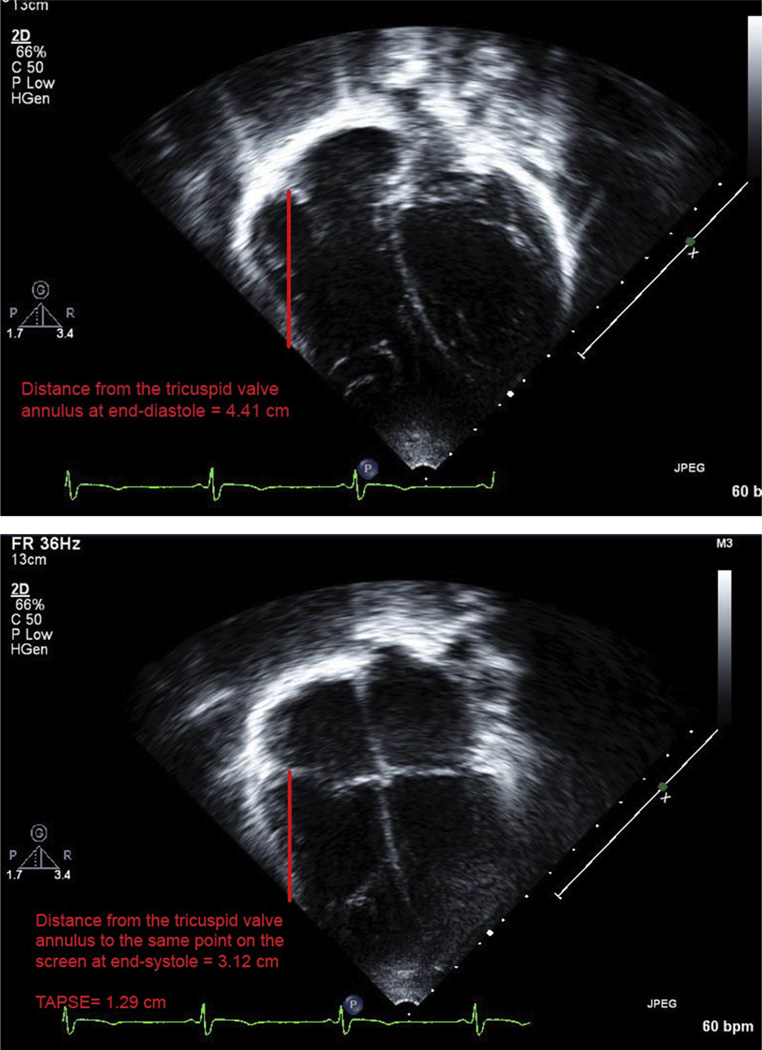
A retrospective study was performed in 125 outpatients with repaired TOF with available protocol-driven echocardiography, cardiac magnetic resonance imaging, and exercise stress testing obtained as part of a cross-sectional study. TAPSE was measured on the two-dimensional apical four-chamber view on echocardiography by two readers. Multivariate linear regression was used to examine the association between TAPSE and measures of RV function and exercise capacity.
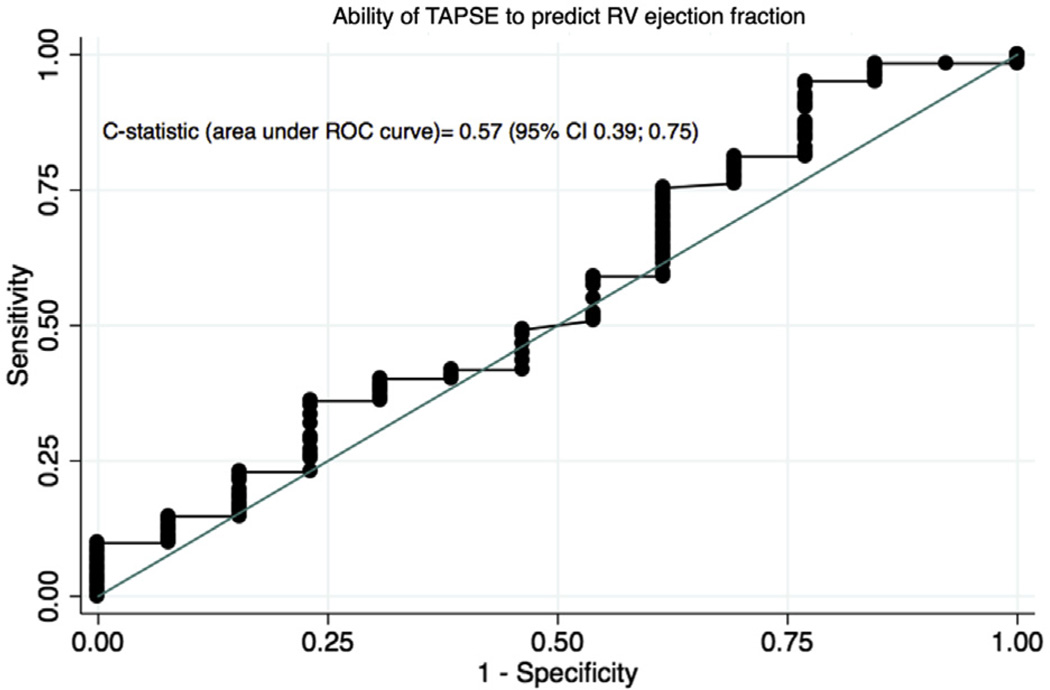
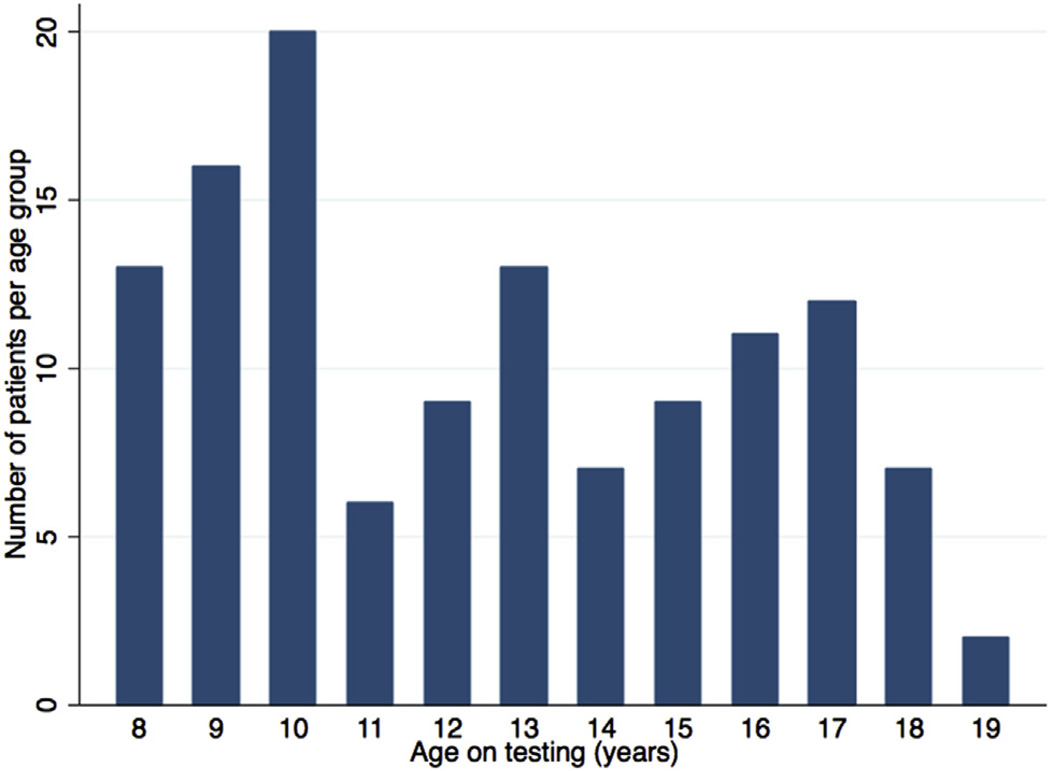
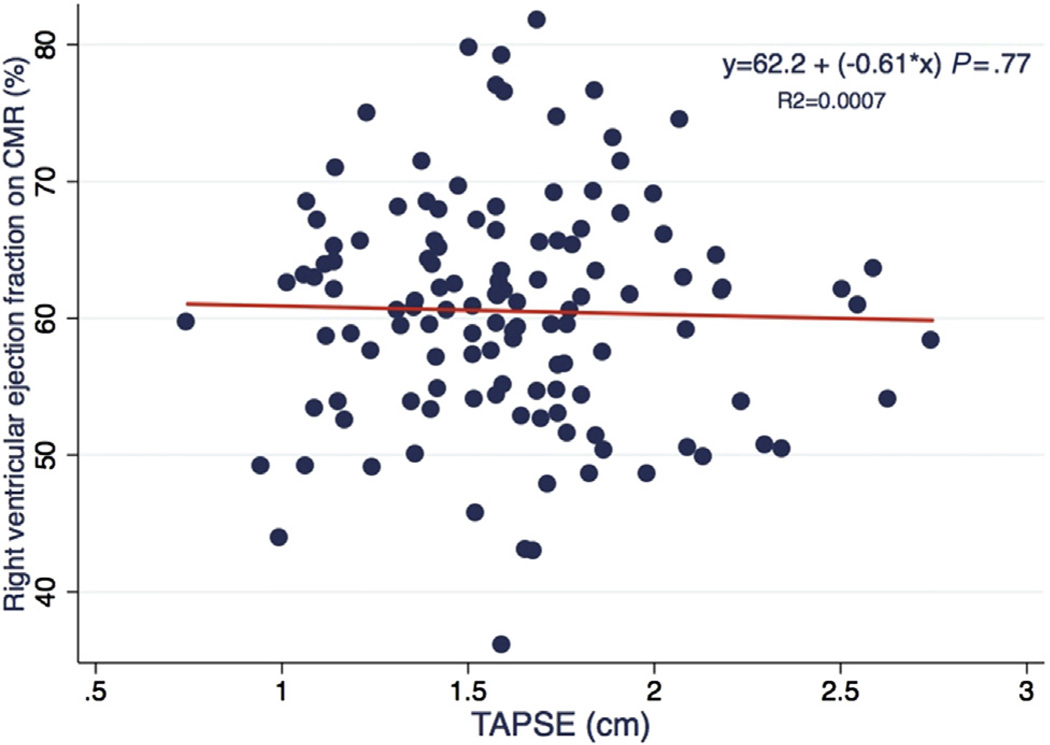
The mean age was 12.6 ± 3.3 years, 41 patients (33%) were female, and 104 (83%) were white. TAPSE averaged 1.6 ± 0.37 cm, with an interreader intraclass correlation coefficient of 0.78 (n = 18). TAPSE was significantly associated with cardiac magnetic resonance-based RV stroke volume after adjustment for gender and body surface area (β = 13.8; 95% confidence interval, 2.25-25.30; P = .02). TAPSE was not associated with cardiac magnetic resonance-based RV ejection fraction (P = .77). On exercise testing, TAPSE was not associated with peak oxygen consumption, percentage of predicted oxygen consumption, oxygen pulse, or the ventilatory equivalent for carbon dioxide in patients with maximal exercise stress testing (n = 73 [58%]).
TAPSE is reproducibly measured by echocardiography in patients with TOF. It is not associated with RV ejection fraction or exercise performance, and its association with RV stroke volume may be confounded by body size. On the basis of these results, TAPSE is not representative of global RV performance in patients with TOF.
评估右心室(RV)功能对于法洛四联症(TOF)患者至关重要。本研究旨在探讨三尖瓣环平面收缩期位移(TAPSE)与心脏磁共振成像(CMR)测量和心肺运动试验(CPET)的可靠性和有效性。
对 125 例接受过修复的 TOF 门诊患者进行回顾性研究,这些患者有可用的协议驱动的超声心动图、CMR 和作为横断面研究一部分的运动应激测试。TAPSE 通过两位读者在二维心尖四腔视图上进行测量。多元线性回归用于检查 TAPSE 与 RV 功能和运动能力测量之间的关联。
平均年龄为 12.6 ± 3.3 岁,41 例(33%)为女性,104 例(83%)为白人。TAPSE 平均值为 1.6 ± 0.37cm,两位读者间的组内相关系数为 0.78(n = 18)。在调整性别和体表面积后,TAPSE 与 CMR 测量的 RV 搏出量显著相关(β = 13.8;95%置信区间,2.25-25.30;P =.02)。TAPSE 与 CMR 测量的 RV 射血分数无关(P =.77)。在 CPET 中,TAPSE 与最大运动应激测试的峰值氧耗量、预计氧耗量百分比、氧脉搏或二氧化碳通气当量无关(n = 73 [58%])。
超声心动图可重复性测量 TOF 患者的 TAPSE。它与 RV 射血分数或运动表现无关,与 RV 搏出量的关联可能受到体型的影响。基于这些结果,TAPSE 不能代表 TOF 患者的整体 RV 功能。