Division of Molecular and Cellular Medicine, National Cancer Center Research Institute, 5-1-1, Tsukiji, Chuo-ku, Tokyo, 104-0045, Japan.
Angiogenesis. 2014 Jan;17(1):17-26. doi: 10.1007/s10456-013-9372-7. Epub 2013 Aug 9.
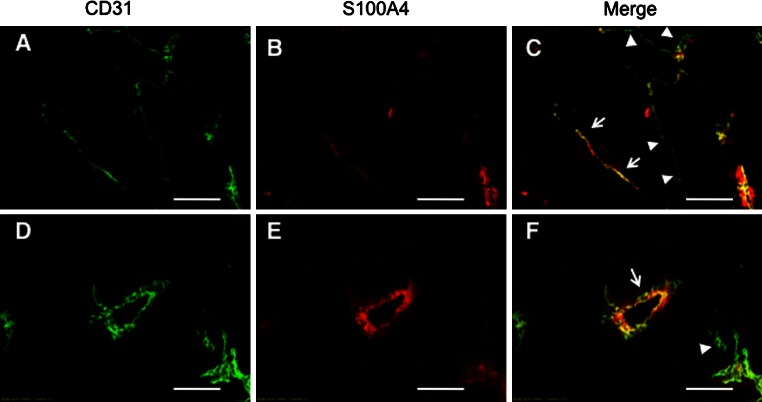
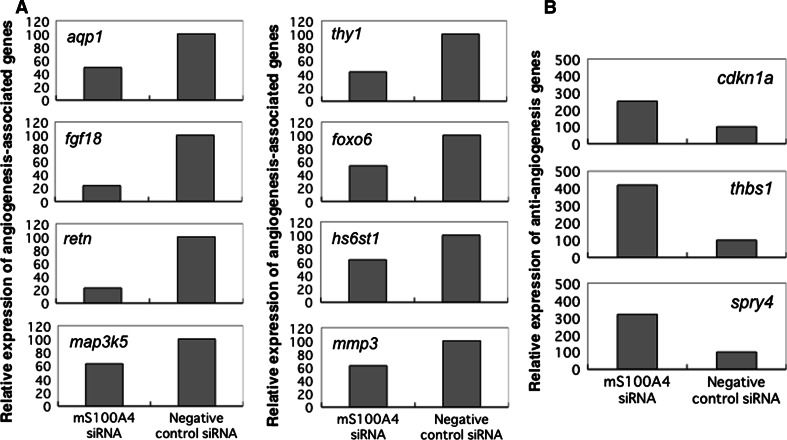
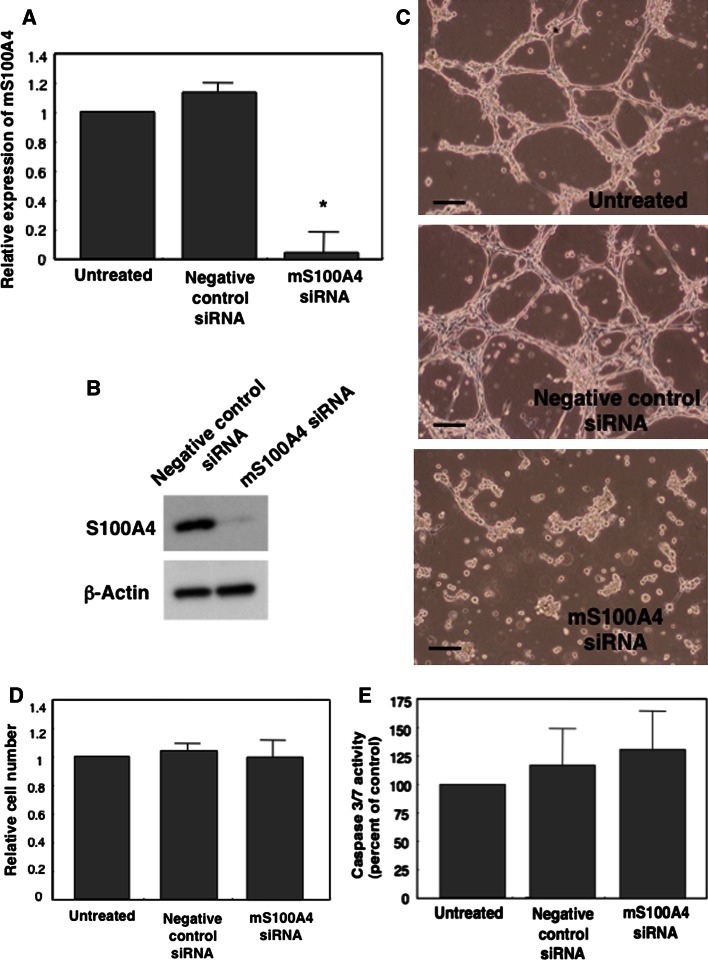
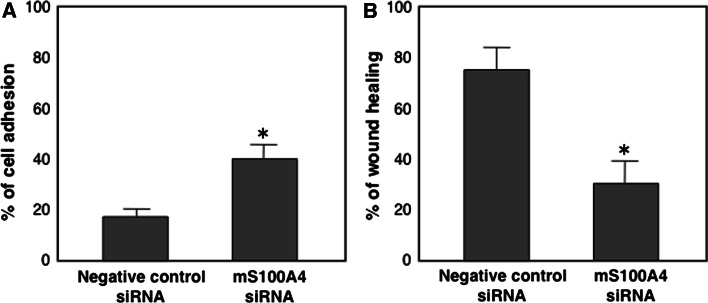
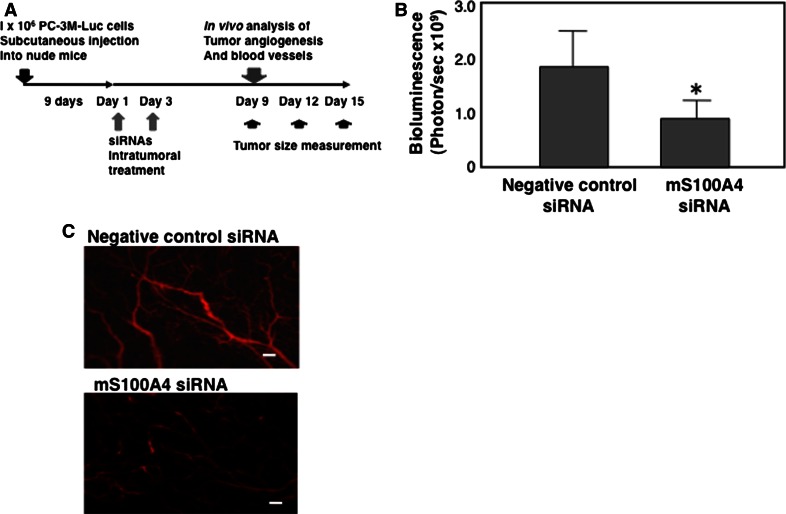
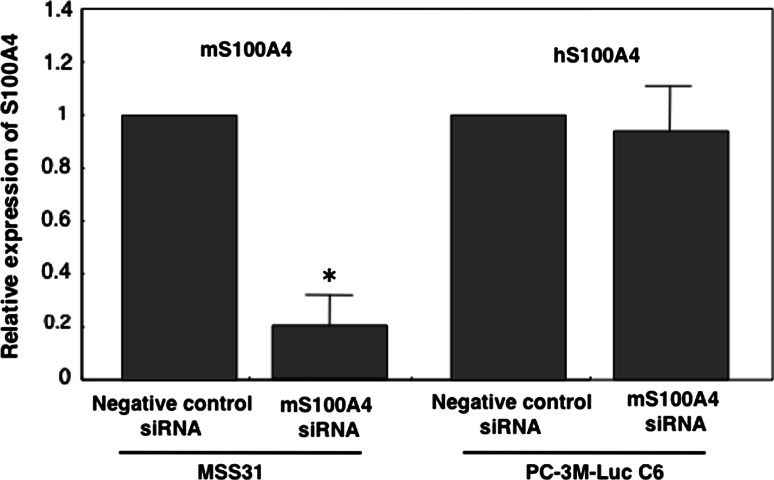
Endothelial cells express S100A4, a metastasis-associated protein, but its role in angiogenesis remains to be elucidated. Here we show that knockdown of S100A4 in mouse endothelial MSS31 cells by murine specific small interference RNA (mS100A4 siRNA) markedly suppressed capillary-like tube formation in vitro, in early stage after the treatment, along with down- and up-regulation of some of the pro-angiogenic and anti-angiogenic gene expression, respectively. Of particular note is that intra-tumor administration of the mS100A4 siRNA in a human prostate cancer xenograft significantly reduced tumor vascularity and resulted in the inhibition of tumor growth. These findings show that S100A4 in endothelial cells is involved in tube formation, and suggest its potential as a molecular target for inhibiting tumor angiogenesis, which warrants further development of endothelial S100A4-based strategies for cancer treatment.
内皮细胞表达 S100A4,一种与转移相关的蛋白,但它在血管生成中的作用仍有待阐明。在这里,我们发现通过小鼠特异性小干扰 RNA(mS100A4 siRNA)敲低小鼠内皮 MSS31 细胞中的 S100A4,在治疗的早期阶段,明显抑制了体外毛细血管样管形成,同时分别下调和上调了一些促血管生成和抗血管生成基因的表达。值得注意的是,在人前列腺癌异种移植模型中,肿瘤内给予 mS100A4 siRNA 显著降低了肿瘤血管生成,并抑制了肿瘤生长。这些发现表明内皮细胞中的 S100A4 参与了管形成,并提示其作为抑制肿瘤血管生成的分子靶点的潜力,这需要进一步开发基于内皮 S100A4 的癌症治疗策略。