AdvanceCOR GmbH, Martinsried, Germany.
PLoS One. 2013 Jul 23;8(7):e66960. doi: 10.1371/journal.pone.0066960. Print 2013.
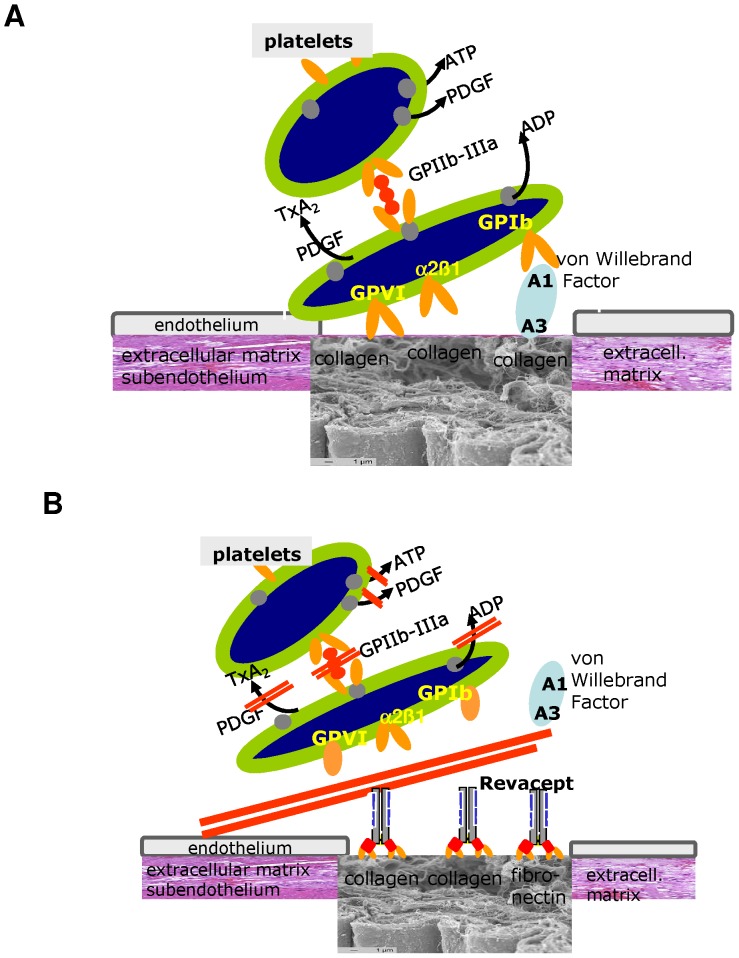
We examined the effect of Revacept, an Fc fusion protein which is specifically linked to the extracellular domain of glycoprotein VI (GPVI), on thrombus formation after vessel wall injury and on experimental stroke in mice.
Several antiplatelet drugs for the treatment of myocardial infarction or ischemic stroke with potent anti-ischemic effects have been developed, but all incur a significant risk of bleeding.
Platelet adhesion and thrombus formation after endothelial injury was monitored in the carotid artery by intra-vital fluorescence microscopy. The morphological and clinical consequences of stroke were investigated in a mouse model with a one hour-occlusion of the middle cerebral artery.
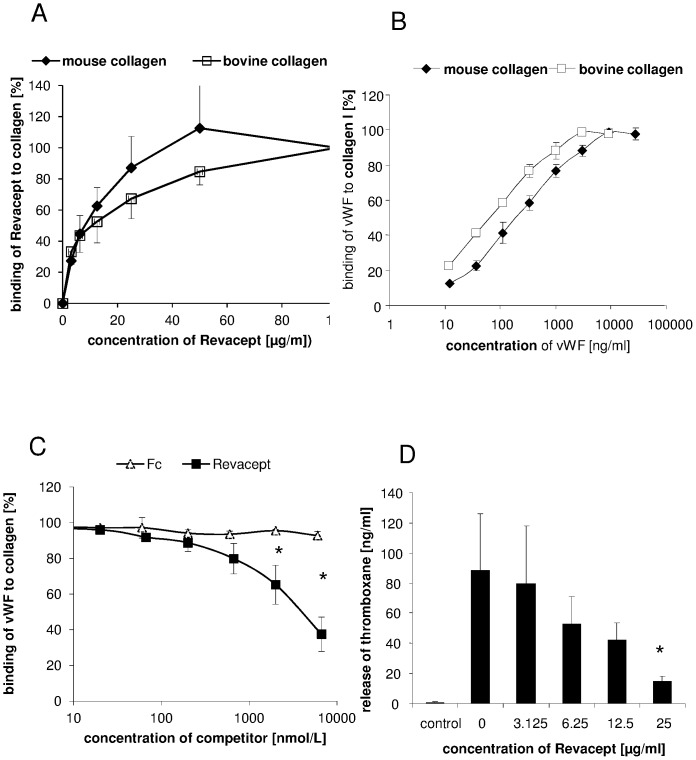
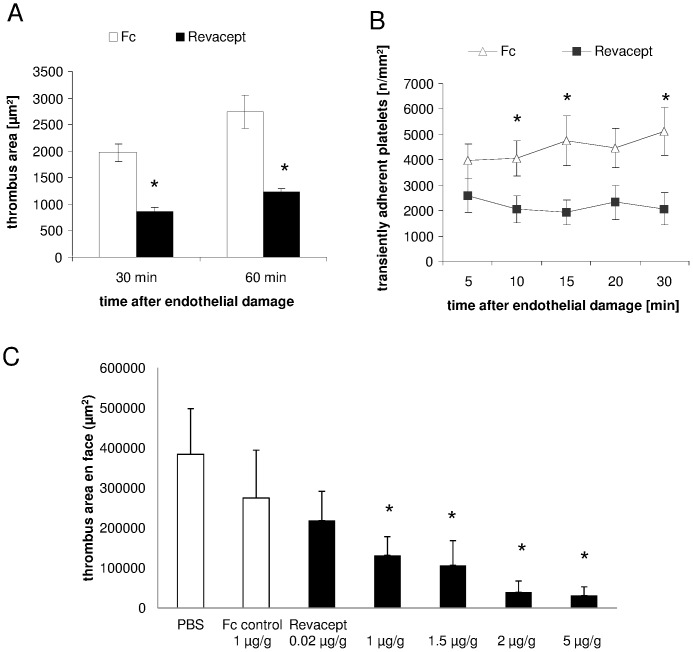
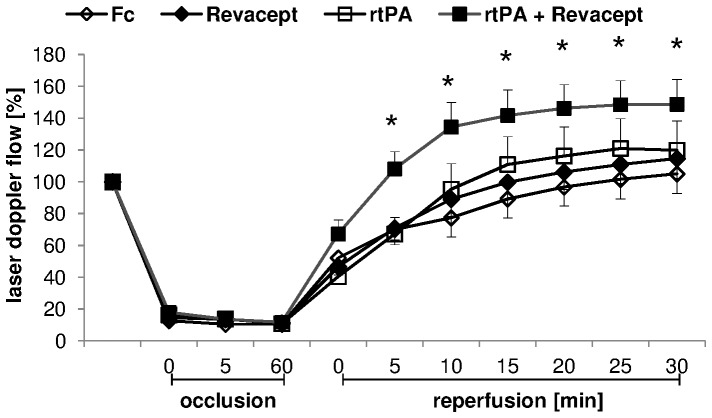
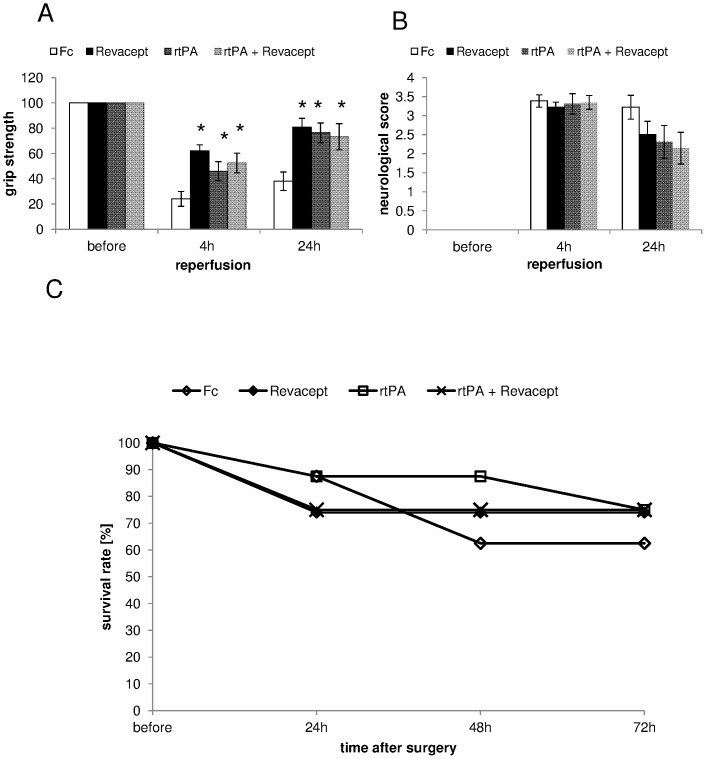
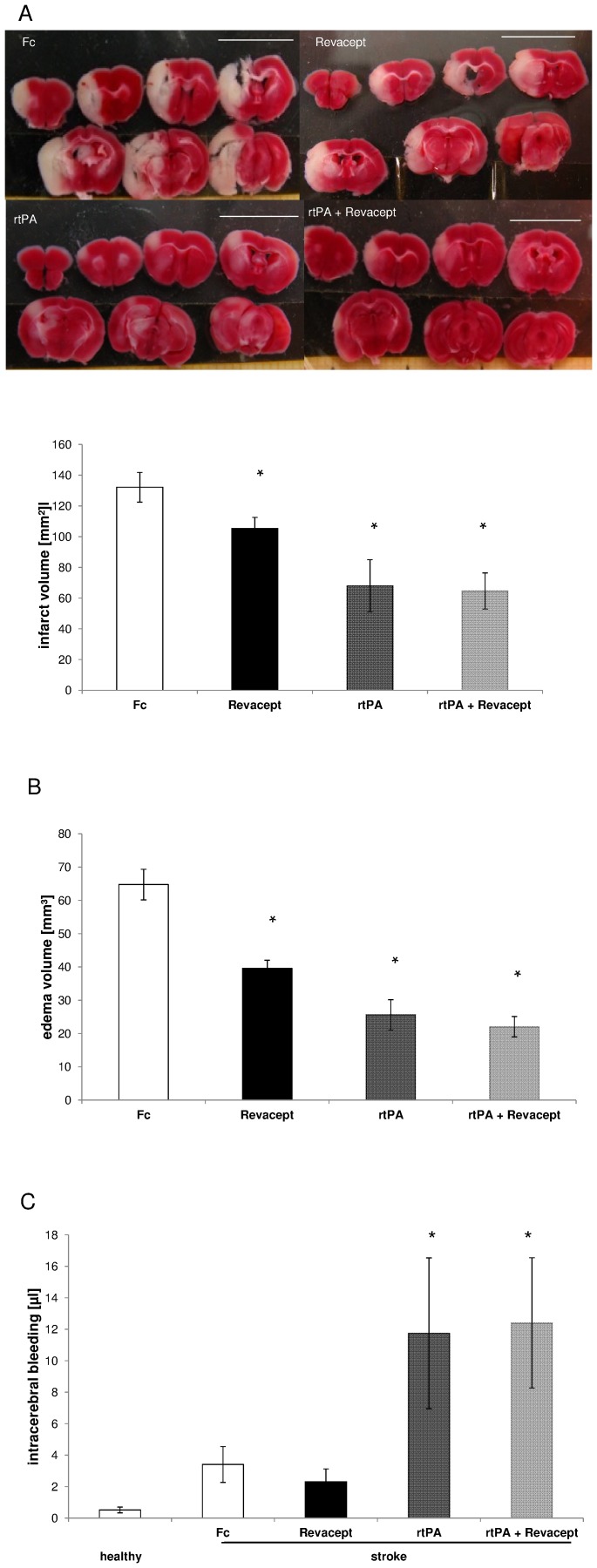
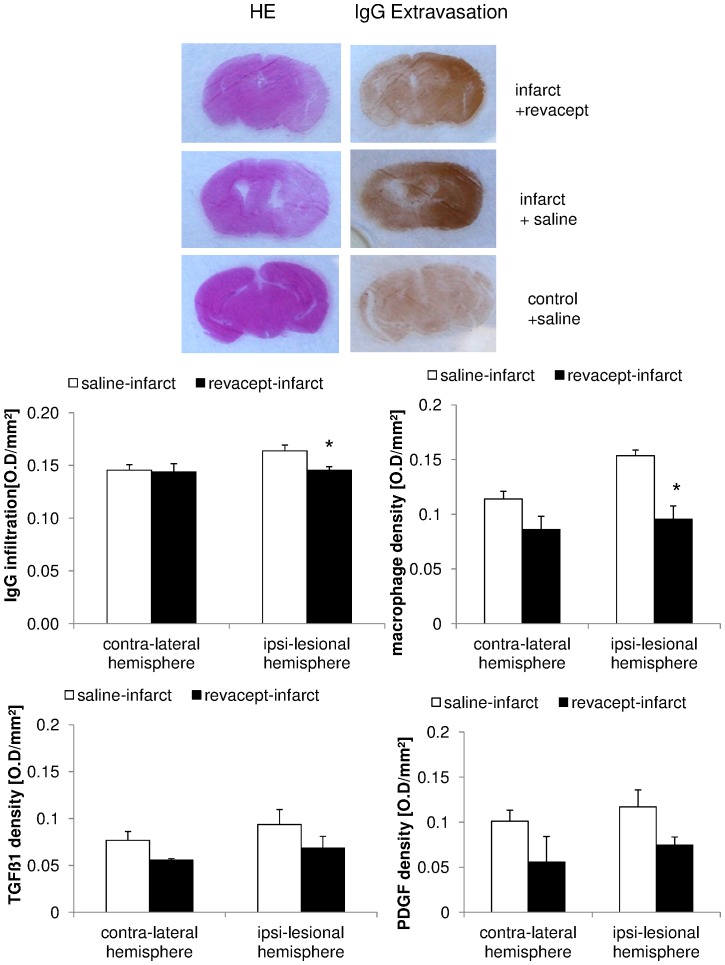
Thrombus formation was significantly decreased after endothelial injury by 1 mg/kg Revacept i.v., compared to Fc only. 1 mg/kg Revacept i.v. applied in mice with ischemic stroke immediately before reperfusion significantly improved functional outcome, cerebral infarct size and edema compared to Fc only. Also treatment with 10 mg/kg rtPA was effective, and functional outcome was similar in both treatment groups. The combination of Revacept with rtPA leads to increased reperfusion compared to treatment with either agent alone. In contrast to rtPA, however, there were no signs of increased intracranial bleeding with Revacept. Both rtPA and Revacept improved survival after stroke compared to placebo treatment. Revacept and vWF bind to collagen and Revacept competitively prevented the binding of vWF to collagen.
Revacept reduces arterial thrombus formation, reduces cerebral infarct size and edema after ischemic stroke, improves functional and prognostic outcome without intracranial bleeding. Revacept not only prevents GPVI-mediated, but probably also vWF-mediated platelet adhesion and aggregate formation. Therefore Revacept might be a potent and safe tool to treat ischemic complications of stroke.
我们研究了 Revacept(一种与糖蛋白 VI(GPVI)的细胞外结构域特异性连接的 Fc 融合蛋白)对血管壁损伤后血栓形成以及实验性中风小鼠的影响。
已经开发了几种抗血小板药物来治疗心肌梗死或缺血性中风,这些药物具有很强的抗缺血作用,但都有很大的出血风险。
通过活体内荧光显微镜监测颈动脉内皮损伤后的血小板黏附和血栓形成。在大脑中动脉闭塞 1 小时的小鼠模型中,研究中风的形态学和临床后果。
与仅用 Fc 相比,静脉内给予 1mg/kg Revacept 可显著减少内皮损伤后的血栓形成。与仅用 Fc 相比,缺血性中风小鼠再灌注前立即静脉内给予 1mg/kg Revacept 可显著改善功能结局、脑梗死面积和水肿。用 10mg/kg rtPA 治疗也有效,且两组治疗的功能结局相似。Revacept 与 rtPA 的联合应用可增加再灌注,而单独应用任一药物则没有增加。然而,与 rtPA 不同的是,Revacept 没有增加颅内出血的迹象。与安慰剂治疗相比,rtPA 和 Revacept 均可提高中风后的存活率。Revacept 和 vWF 与胶原结合,Revacept 竞争性地阻止 vWF 与胶原结合。
Revacept 可减少动脉血栓形成,减少缺血性中风后的脑梗死面积和水肿,改善功能和预后,无颅内出血。Revacept 不仅可以预防 GPVI 介导的血小板黏附和聚集形成,还可能预防 vWF 介导的血小板黏附和聚集形成。因此,Revacept 可能是一种治疗中风缺血性并发症的有效且安全的工具。