Kenya Wildlife Service, Nairobi, Kenya.
PLoS One. 2013 Jul 30;8(7):e71179. doi: 10.1371/journal.pone.0071179. Print 2013.
Very few studies have ever focused on the elephants that are wounded or killed as local communities attempt to scare these animals away from their settlements and farms, or on the cases in which local people take revenge after elephants have killed or injured humans. On the other hand, local communities live in close proximity to elephants and hence can play a positive role in elephant conservation by informing the authorities of the presence of injured elephants.
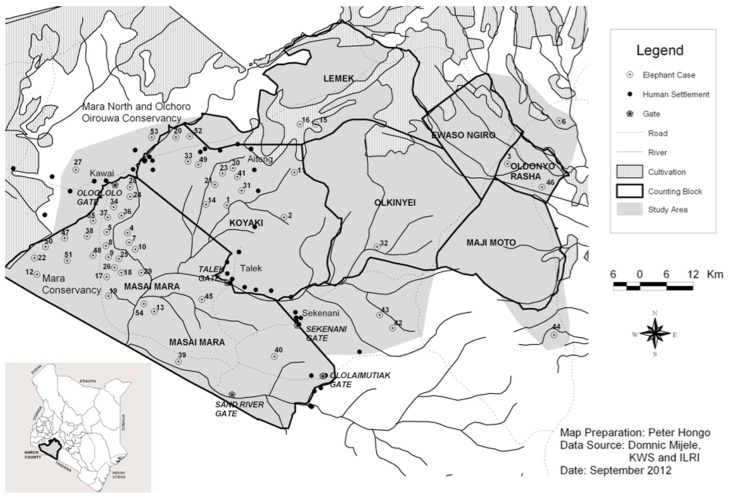
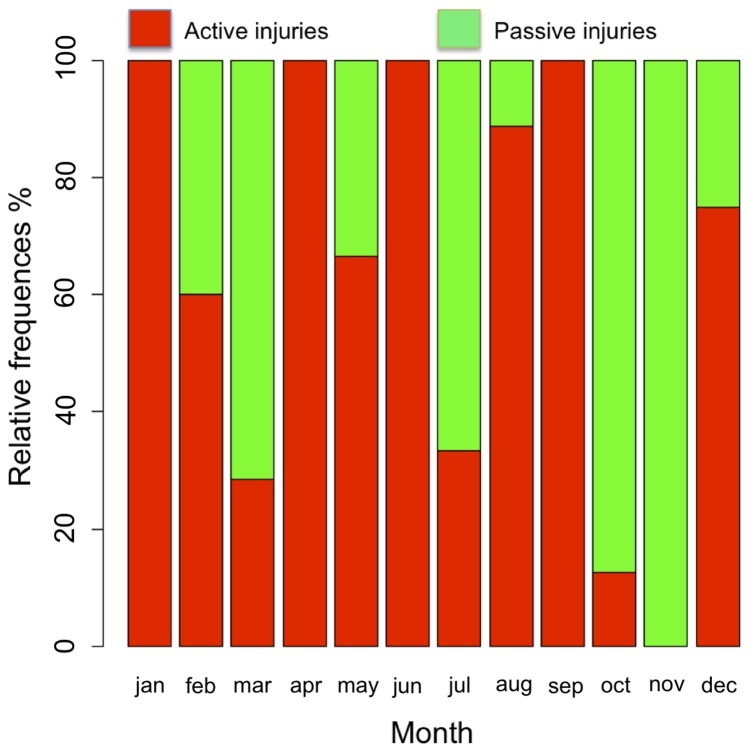
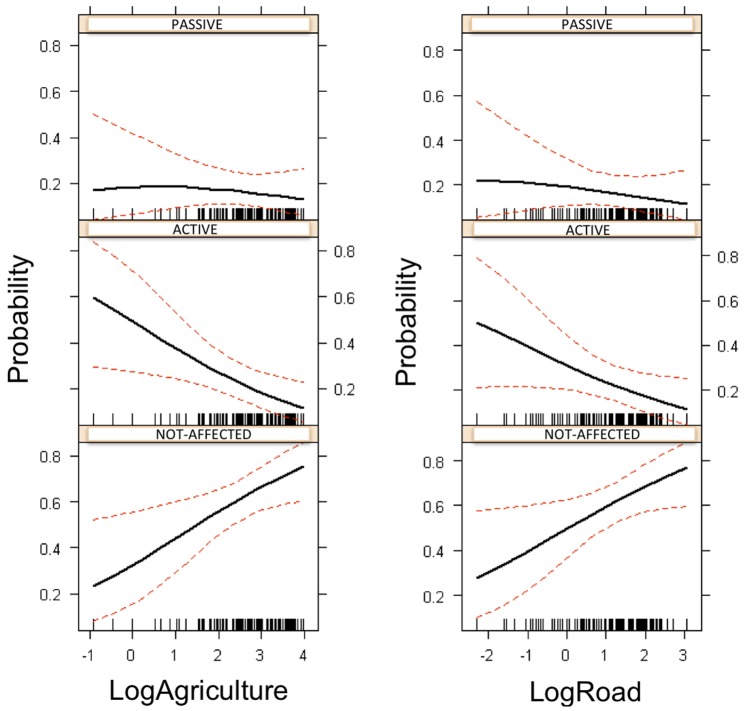
METHODOLOGY/PRINCIPAL FINDINGS: Between 2007 and 2011, 129 elephants were monitored in Masai Mara (Kenya), of which 54 had various types of active (intentionally caused) or passive (non-intentionally caused) injuries. Also studied were 75 random control samples of apparently unaffected animals. The observed active injuries were as expected biased by age, with adults suffering more harm; on the other hand, no such bias was observed in the case of passive injuries. Bias was also observed in elephant sex since more males than females were passively and actively injured. Cases of passive and active injuries in elephants were negatively related to the proximity to roads and farms; the distribution of injured elephants was not affected by the presence of either human settlements or water sources. Overall more elephants were actively injured during the dry season than the wet season as expected. Local communities play a positive role by informing KWS authorities of the presence of injured elephants and reported 43% of all cases of injured elephants.
Our results suggest that the negative effect of local communities on elephants could be predicted by elephant proximity to farms and roads. In addition, local communities may be able to play a more positive role in elephant conservation given that they are key informants in the early detection of injured elephants.
很少有研究关注当地社区为了驱赶这些动物离开定居点和农场而伤害或杀死的大象,也很少有研究关注大象伤人或伤畜后当地人进行报复的情况。另一方面,当地社区与大象生活在一起,因此,他们可以通过向当局报告受伤大象的情况,在大象保护方面发挥积极作用。
方法/主要发现:2007 年至 2011 年间,在马赛马拉(肯尼亚)监测了 129 头大象,其中 54 头大象有各种类型的活跃(故意造成的)或被动(非故意造成的)伤害。还研究了 75 个随机对照样本的明显未受影响的动物。观察到的活跃伤害与年龄有关,成年大象受到的伤害更大;另一方面,在被动伤害的情况下没有观察到这种偏差。大象的性别也存在偏差,因为雄性大象比雌性大象更容易受到被动和主动伤害。大象的被动和主动伤害与靠近道路和农场有关;受伤大象的分布不受人类住区或水源的影响。总体而言,与湿季相比,旱季受伤的大象更多,这是意料之中的。当地社区通过向 KWS 当局报告受伤大象的情况,发挥了积极作用,并报告了 43%的受伤大象病例。
我们的研究结果表明,当地社区对大象的负面影响可以通过大象与农场和道路的距离来预测。此外,鉴于当地社区是早期发现受伤大象的关键信息来源,他们可能能够在大象保护方面发挥更积极的作用。