Key Laboratory of Crop Germplasm, Department of Agronomy, Zhejiang University, Hangzhou, Zhejiang, China.
PLoS One. 2013 Aug 6;8(8):e68435. doi: 10.1371/journal.pone.0068435. Print 2013.
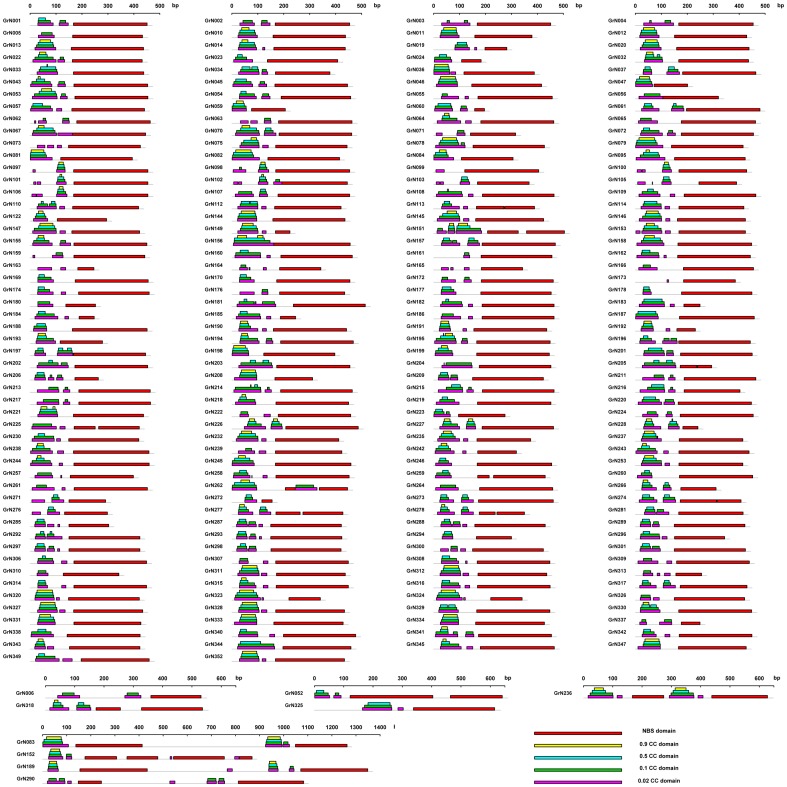
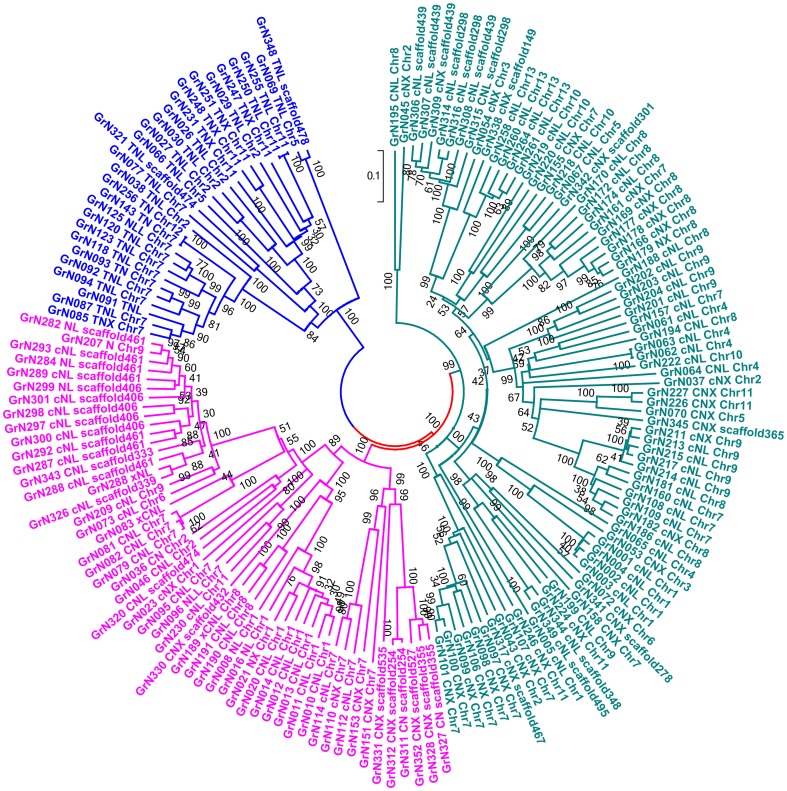
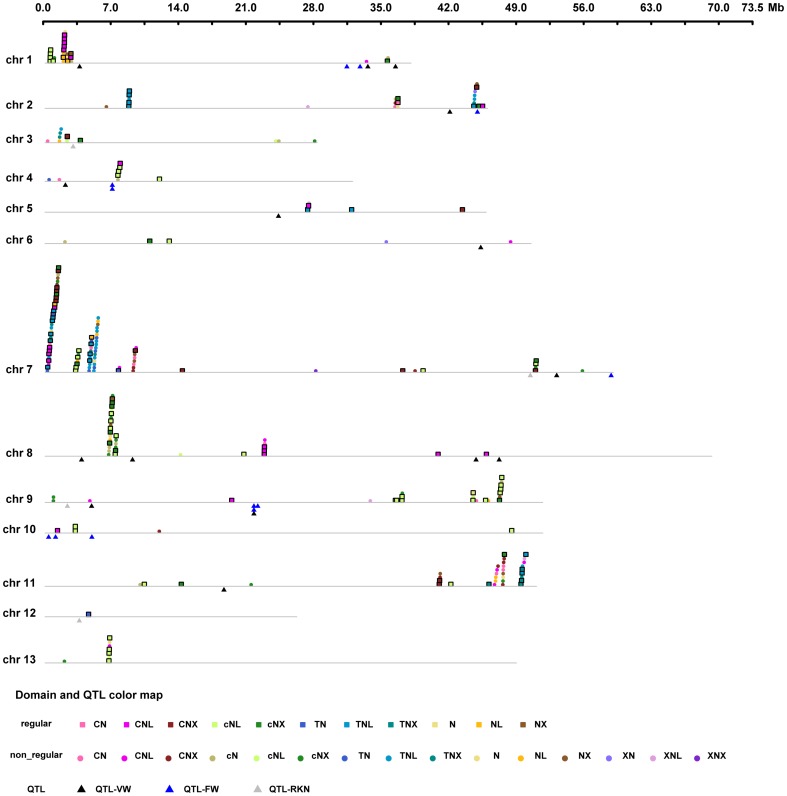
Plant disease resistance genes are a key component of defending plants from a range of pathogens. The majority of these resistance genes belong to the super-family that harbors a Nucleotide-binding site (NBS). A number of studies have focused on NBS-encoding genes in disease resistant breeding programs for diverse plants. However, little information has been reported with an emphasis on systematic analysis and comparison of NBS-encoding genes in cotton. To fill this gap of knowledge, in this study, we identified and investigated the NBS-encoding resistance genes in cotton using the whole genome sequence information of Gossypium raimondii. Totally, 355 NBS-encoding resistance genes were identified. Analyses of the conserved motifs and structural diversity showed that the most two distinct features for these genes are the high proportion of non-regular NBS genes and the high diversity of N-termini domains. Analyses of the physical locations and duplications of NBS-encoding genes showed that gene duplication of disease resistance genes could play an important role in cotton by leading to an increase in the functional diversity of the cotton NBS-encoding genes. Analyses of phylogenetic comparisons indicated that, in cotton, the NBS-encoding genes with TIR domain not only have their own evolution pattern different from those of genes without TIR domain, but also have their own species-specific pattern that differs from those of TIR genes in other plants. Analyses of the correlation between disease resistance QTL and NBS-encoding resistance genes showed that there could be more than half of the disease resistance QTL associated to the NBS-encoding genes in cotton, which agrees with previous studies establishing that more than half of plant resistance genes are NBS-encoding genes.
植物抗病基因是植物抵御多种病原体的关键组成部分。这些抗病基因大多数属于含有核苷酸结合位点(NBS)的超家族。许多研究都集中在不同植物的抗病育种计划中的 NBS 编码基因上。然而,关于棉花中 NBS 编码基因的系统分析和比较,报道的信息很少。为了填补这一知识空白,本研究利用海岛棉基因组序列信息,鉴定和研究了棉花中的 NBS 编码抗病基因。总共鉴定出 355 个 NBS 编码抗病基因。保守基序和结构多样性分析表明,这些基因最突出的两个特征是不规则 NBS 基因比例高和 N 端结构域多样性高。NBS 编码基因物理位置和复制分析表明,抗病基因的复制可能通过增加棉花 NBS 编码基因的功能多样性,在棉花中发挥重要作用。系统发育比较分析表明,在棉花中,含有 TIR 结构域的 NBS 编码基因不仅具有与不含 TIR 结构域的基因不同的自身进化模式,而且具有与其他植物中的 TIR 基因不同的特有模式。抗病 QTL 与 NBS 编码抗病基因之间相关性的分析表明,在棉花中,可能有超过一半的抗病 QTL 与 NBS 编码基因相关,这与之前的研究一致,即超过一半的植物抗性基因是 NBS 编码基因。