Department of Pediatrics Research, The University of Texas MD Anderson Cancer Center, Houston, Texas, USA.
PLoS One. 2013 Aug 1;8(8):e70608. doi: 10.1371/journal.pone.0070608. Print 2013.
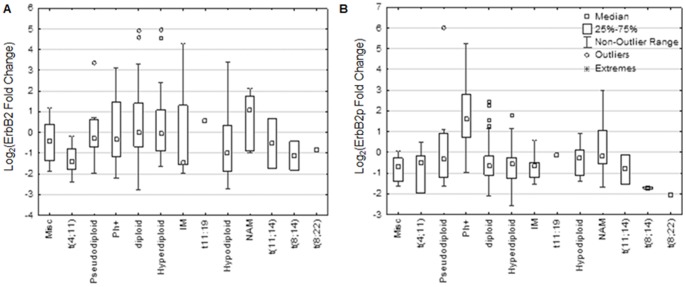
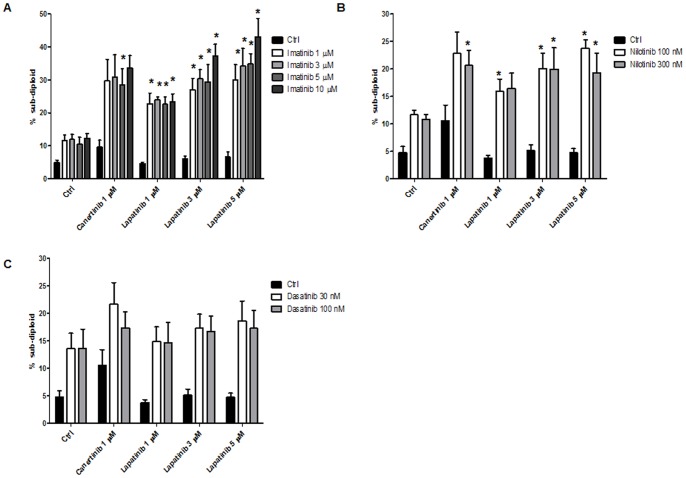
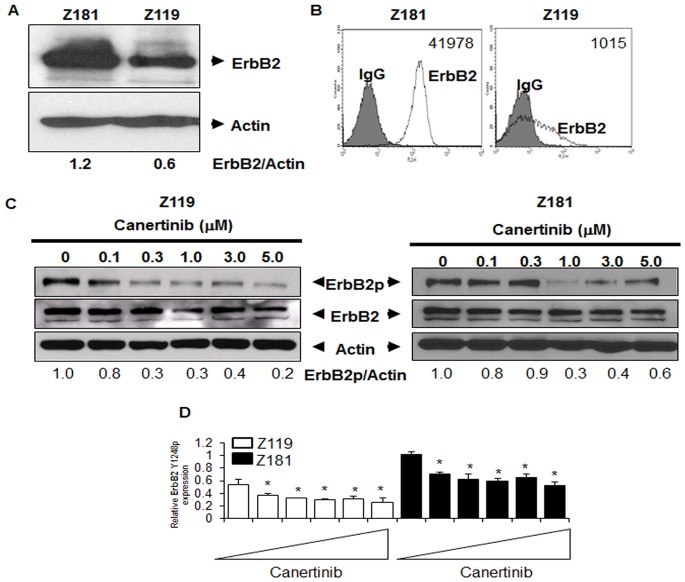
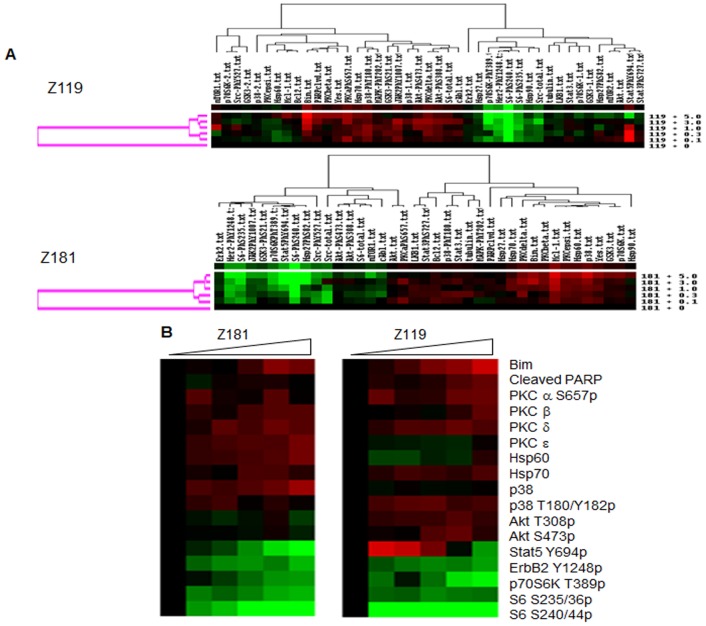
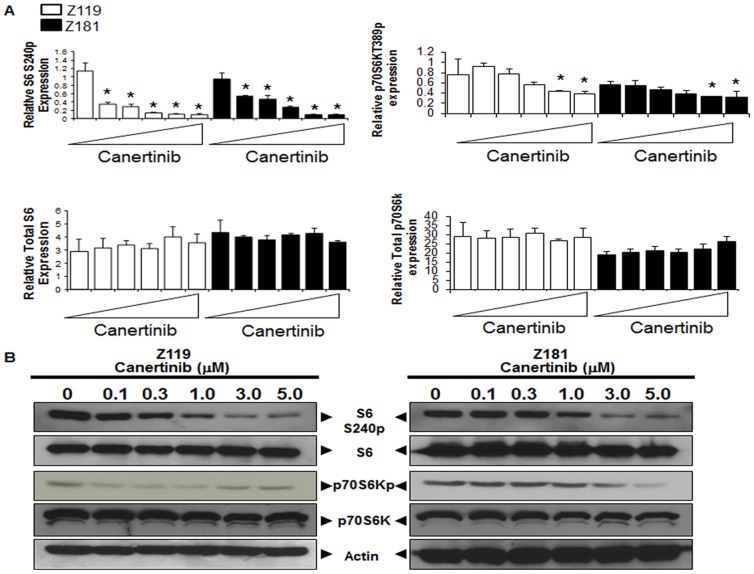
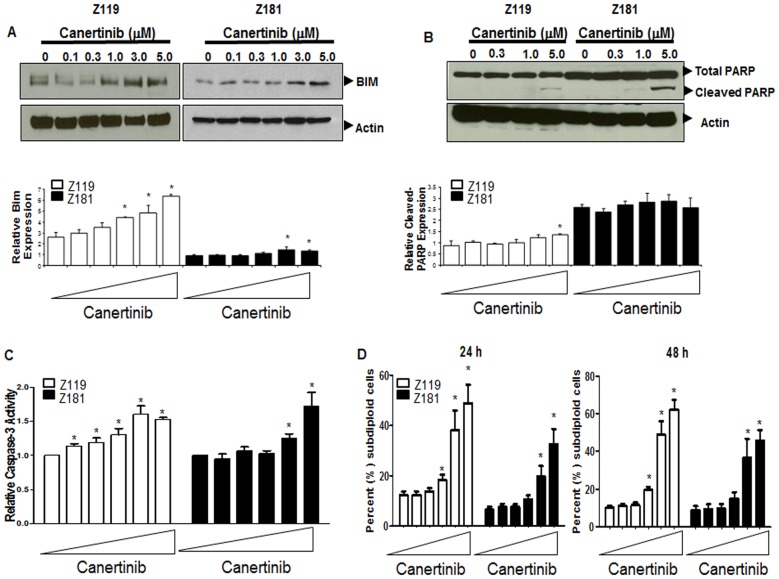
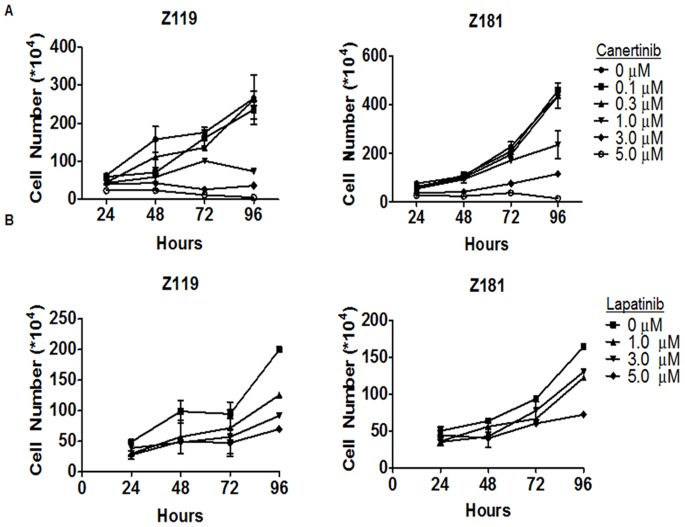
The presence of the Philadelphia chromosome in patients with acute lymphoblastic leukemia (Ph(+)ALL) is a negative prognostic indicator. Tyrosine kinase inhibitors (TKI) that target BCR/ABL, such as imatinib, have improved treatment of Ph(+)ALL and are generally incorporated into induction regimens. This approach has improved clinical responses, but molecular remissions are seen in less than 50% of patients leaving few treatment options in the event of relapse. Thus, identification of additional targets for therapeutic intervention has potential to improve outcomes for Ph+ALL. The human epidermal growth factor receptor 2 (ErbB2) is expressed in ~30% of B-ALLs, and numerous small molecule inhibitors are available to prevent its activation. We analyzed a cohort of 129 ALL patient samples using reverse phase protein array (RPPA) with ErbB2 and phospho-ErbB2 antibodies and found that activity of ErbB2 was elevated in 56% of Ph(+)ALL as compared to just 4.8% of Ph(-)ALL. In two human Ph+ALL cell lines, inhibition of ErbB kinase activity with canertinib resulted in a dose-dependent decrease in the phosphorylation of an ErbB kinase signaling target p70S6-kinase T389 (by 60% in Z119 and 39% in Z181 cells at 3 µM). Downstream, phosphorylation of S6-kinase was also diminished in both cell lines in a dose-dependent manner (by 91% in both cell lines at 3 µM). Canertinib treatment increased expression of the pro-apoptotic protein Bim by as much as 144% in Z119 cells and 49% in Z181 cells, and further produced caspase-3 activation and consequent apoptotic cell death. Both canertinib and the FDA-approved ErbB1/2-directed TKI lapatinib abrogated proliferation and increased sensitivity to BCR/ABL-directed TKIs at clinically relevant doses. Our results suggest that ErbB signaling is an additional molecular target in Ph(+)ALL and encourage the development of clinical strategies combining ErbB and BCR/ABL kinase inhibitors for this subset of ALL patients.
费城染色体(Ph(+))在急性淋巴细胞白血病(ALL)患者中的存在是一个预后不良的指标。针对 BCR/ABL 的酪氨酸激酶抑制剂(TKI),如伊马替尼,已经改善了 Ph(+)ALL 的治疗效果,并且通常被纳入诱导治疗方案中。这种方法提高了临床反应率,但只有不到 50%的患者达到分子缓解,这使得在复发时几乎没有治疗选择。因此,鉴定出其他治疗靶点有可能改善 Ph+ALL 的治疗效果。人表皮生长因子受体 2(ErbB2)在约 30%的 B-ALL 中表达,并且有许多小分子抑制剂可用于阻止其激活。我们使用含有 ErbB2 和磷酸化 ErbB2 抗体的反相蛋白阵列(RPPA)分析了 129 例 ALL 患者样本,发现 Ph(+)ALL 中 ErbB2 的活性升高,而 Ph(-)ALL 中只有 4.8%升高。在两种人 Ph+ALL 细胞系中,用卡那替尼抑制 ErbB 激酶活性可导致 ErbB 激酶信号靶标 p70S6-激酶 T389 的磷酸化程度呈剂量依赖性下降(在 Z119 细胞中为 3μM 时下降 60%,在 Z181 细胞中下降 39%)。下游,两种细胞系中 S6-激酶的磷酸化也呈剂量依赖性降低(在两种细胞系中均为 3μM 时下降 91%)。卡那替尼治疗可使 Z119 细胞中促凋亡蛋白 Bim 的表达增加多达 144%,Z181 细胞中增加 49%,并进一步产生 caspase-3 激活和随后的细胞凋亡。卡那替尼和 FDA 批准的 ErbB1/2 定向 TKI 拉帕替尼均可在临床相关剂量下阻断增殖并增加对 BCR/ABL 定向 TKI 的敏感性。我们的研究结果表明,ErbB 信号是 Ph(+)ALL 的另一个分子靶点,并鼓励开发联合 ErbB 和 BCR/ABL 激酶抑制剂的临床策略,用于这部分 ALL 患者。