Department of Thoracic Oncology, Cancer Center, State Key Laboratory of Biotherapy, West China Hospital, Sichuan University, Chengdu 610041, PR China.
J Transl Med. 2013 Aug 12;11:186. doi: 10.1186/1479-5876-11-186.
Natural killer (NK) cells can kill tumor cells in a non-MHC-restricted manner. However, cancer cells frequently escape from the attack of NK cells by multiple ways. In this study, we investigated the effect of gefitinib on the interaction between NK cells and lung cancer cells.
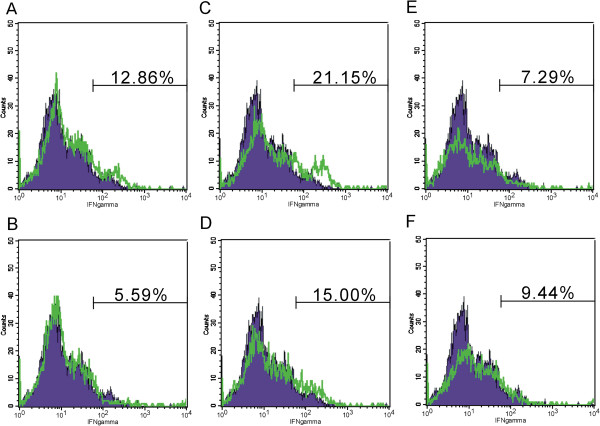
⁵¹Cr release assay, CD107a assay, and IFN-γ secretion assay were performed to detect the sensitivity of lung cancer cell lines A549 and H1975 to NK cells cytotoxicity in the presence of gefitinib. Human NK cells were co-cultured with A549 and H1975 cell lines in the presence of gefitinib. NKG2D ligands, ULBP1, ULBP2, MICA, and MHC-I on tumor cells, and NKG2D, NKp44 and NKp46 on NK cells were evaluated with flow cytometry. 51Cr release assay was performed when NKG2D antibody were added into the co-culture system. Expressions of stat3 and LC3 I/II on tumor cells were determined with western blot after co-cultured with NK cells. After treated with gefitinib, mannose-6-phosphate receptor (MPR) on H1975 cells was evaluated by flow cytometry. ⁵¹Cr release assay were performed when MPR antagonist were used.
Gefitinib increased cytotoxicity of NK cells to human lung cancer H1975 cells with EGFR L858R + T790M mutations, while not in A549 cells with wild type EGFR. Gefitinib could block the immune escape by up-regulating the expression of NKG2D ligands ULBP1, ULBP2 or MICA on tumor cells and NKG2D on NK cells in the co-culture system. Gefitinib and NK cells up-regulated MHC-I expression in A549 while not in H1975 cells. NKG2D antibody blocked the enhanced NK cytotoxicity by gefitinib. The combination of NK cells and gefitinib could significantly down-regulate stat3 expression. Furthermore, NK cells-mediated tumor cell autophagy was observed in A549 cells while not in H1975 cells. Notably, gefitinib increased autophagy and MPR expression in H1975 cells, which improved the sensitivity to NK cell-based immunotherapy.
Gefitinib greatly enhanced NK cell cytotoxicity to lung cancer cells with EGFR L858R + T790M resistance mutation. Combination of EGFR tyrokinase inhibitors and NK cells adoptive immunotherapy may represent a potentially effective strategy for patients with non-small cell lung cancer.
自然杀伤 (NK) 细胞可以以非 MHC 限制的方式杀死肿瘤细胞。然而,癌细胞经常通过多种方式逃避 NK 细胞的攻击。在这项研究中,我们研究了吉非替尼对 NK 细胞与肺癌细胞相互作用的影响。
采用 ⁵¹Cr 释放试验、CD107a 试验和 IFN-γ 分泌试验检测吉非替尼对肺癌细胞系 A549 和 H1975 对 NK 细胞细胞毒性的敏感性。在吉非替尼存在的情况下,将人 NK 细胞与 A549 和 H1975 细胞系共培养。用流式细胞术评估肿瘤细胞上的 NKG2D 配体 ULBP1、ULBP2、MICA 和 MHC-I,以及 NK 细胞上的 NKG2D、NKp44 和 NKp46。当共培养系统中加入 NKG2D 抗体时,进行 ⁵¹Cr 释放试验。用 Western blot 法检测与 NK 细胞共培养后肿瘤细胞中 stat3 和 LC3 I/II 的表达。用吉非替尼处理后,用流式细胞术评估 H1975 细胞上甘露糖-6-磷酸受体 (MPR) 的表达。当使用 MPR 拮抗剂时,进行 ⁵¹Cr 释放试验。
吉非替尼增加了具有 EGFR L858R+T790M 突变的人肺癌 H1975 细胞对 NK 细胞的细胞毒性,而对具有野生型 EGFR 的 A549 细胞则没有。吉非替尼可通过上调共培养系统中肿瘤细胞上的 NKG2D 配体 ULBP1、ULBP2 或 MICA 和 NK 细胞上的 NKG2D,阻断免疫逃逸。吉非替尼和 NK 细胞在上皮细胞 A549 中上调 MHC-I 表达,但在 H1975 细胞中则没有。NKG2D 抗体阻断了吉非替尼增强的 NK 细胞毒性。NK 细胞与吉非替尼的联合治疗可显著下调 stat3 表达。此外,在 A549 细胞中观察到 NK 细胞介导的肿瘤细胞自噬,但在 H1975 细胞中则没有。值得注意的是,吉非替尼增加了 H1975 细胞中的自噬和 MPR 表达,提高了其对 NK 细胞为基础的免疫治疗的敏感性。
吉非替尼大大增强了具有 EGFR L858R+T790M 耐药突变的肺癌细胞对 NK 细胞的细胞毒性。表皮生长因子受体酪氨酸激酶抑制剂与 NK 细胞过继免疫治疗的联合可能是治疗非小细胞肺癌患者的一种潜在有效策略。