Tutlewska Katarzyna, Lubinski Jan, Kurzawski Grzegorz
Department of Genetics and Pathology, International Hereditary Cancer Center, Pomeranian Medical University, Połabska 4, 70-115, Szczecin, Poland.
Hered Cancer Clin Pract. 2013 Aug 12;11(1):9. doi: 10.1186/1897-4287-11-9.
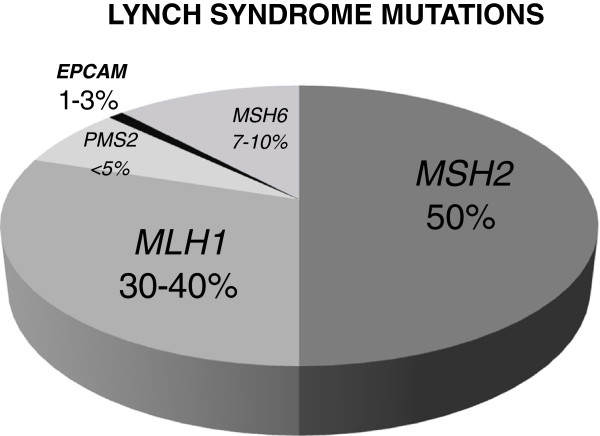
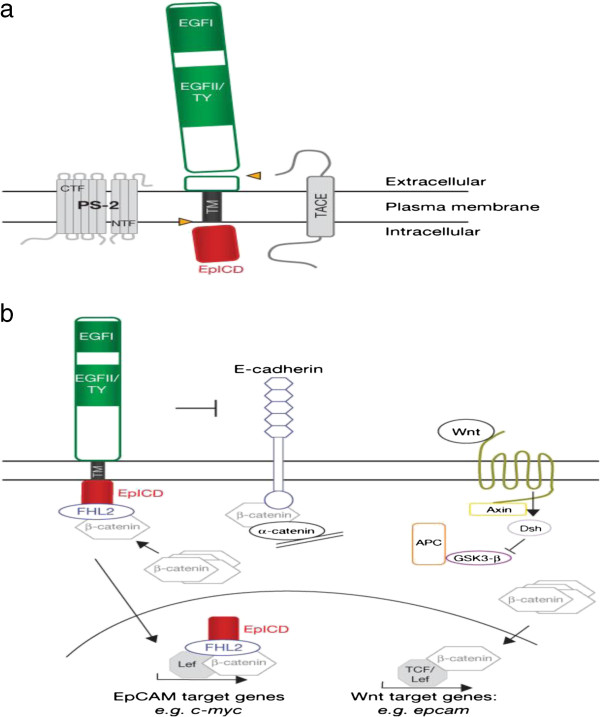
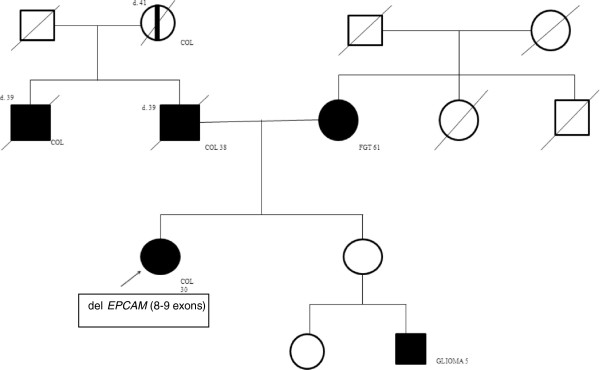
Lynch syndrome (clinically referred to as HNPCC - Hereditary Non-Polyposis Colorectal Cancer) is a frequent, autosomal, dominantly-inherited cancer predisposition syndrome caused by various germline alterations that affect DNA mismatch repair genes, mainly MLH1 and MSH2. Patients inheriting this predisposition are susceptible to colorectal, endometrial and other extracolonic tumors. It has recently been shown that germline deletions of the last few exons of the EPCAM gene are involved in the etiology of Lynch syndrome. Such constitutional mutations lead to subsequent epigenetic silencing of a neighbouring gene, here, MSH2, causing Lynch syndrome. Thus, deletions of the last few exons of EPCAM constitute a distinct class of mutations associated with HNPCC. Worldwide, several investigators have reported families with EPCAM 3'end deletions. The risk of colorectal cancer in carriers of EPCAM deletions is comparable to situations when patients are MSH2 mutation carriers, and is associated with high expression levels of EPCAM in colorectal cancer stem cells. A lower risk of endometrial cancer was also reported. Until now the standard diagnostic tests for Lynch syndrome have contained analyses such as immunohistochemistry and tests for microsatellite instability of mismatch repair genes. The identification of EPCAM deletions or larger EPCAM-MSH2 deletions should be included in routine mutation screening, as this has implications for cancer predisposition.
林奇综合征(临床称为遗传性非息肉病性结直肠癌,即HNPCC)是一种常见的常染色体显性遗传的癌症易感综合征,由影响DNA错配修复基因(主要是MLH1和MSH2)的各种种系改变引起。遗传了这种易感性的患者易患结直肠癌、子宫内膜癌和其他结肠外肿瘤。最近研究表明,EPCAM基因最后几个外显子的种系缺失与林奇综合征的病因有关。这种结构突变导致相邻基因(此处为MSH2)随后发生表观遗传沉默,从而引发林奇综合征。因此,EPCAM最后几个外显子的缺失构成了一类与遗传性非息肉病性结直肠癌相关的独特突变。在全球范围内,已有数名研究人员报告了携带EPCAM 3'端缺失的家系。EPCAM缺失携带者患结直肠癌的风险与MSH2突变携带者的情况相当,并且与结直肠癌干细胞中EPCAM的高表达水平相关。也有报告称其患子宫内膜癌的风险较低。到目前为止,林奇综合征的标准诊断测试包括免疫组织化学分析和错配修复基因微卫星不稳定性检测。EPCAM缺失或更大的EPCAM-MSH2缺失的鉴定应纳入常规突变筛查,因为这对癌症易感性有影响。