Department of Cellular and Integrative Physiology, University of Nebraska Medical Center, Omaha, Nebraska, United States of America.
PLoS One. 2013 Aug 5;8(8):e70926. doi: 10.1371/journal.pone.0070926. Print 2013.
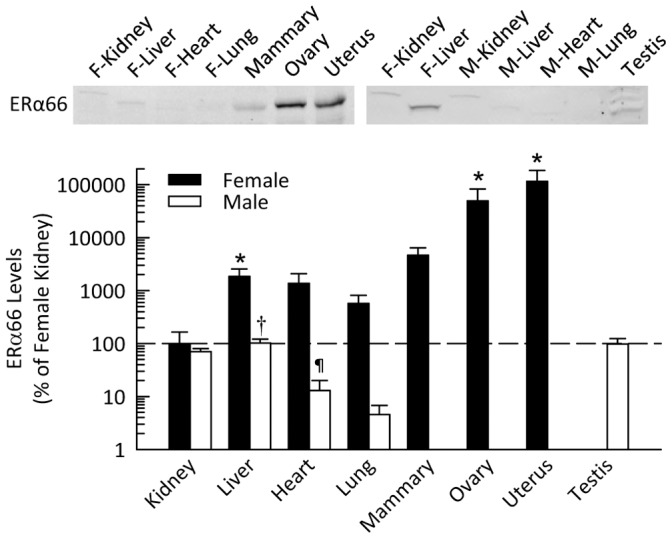
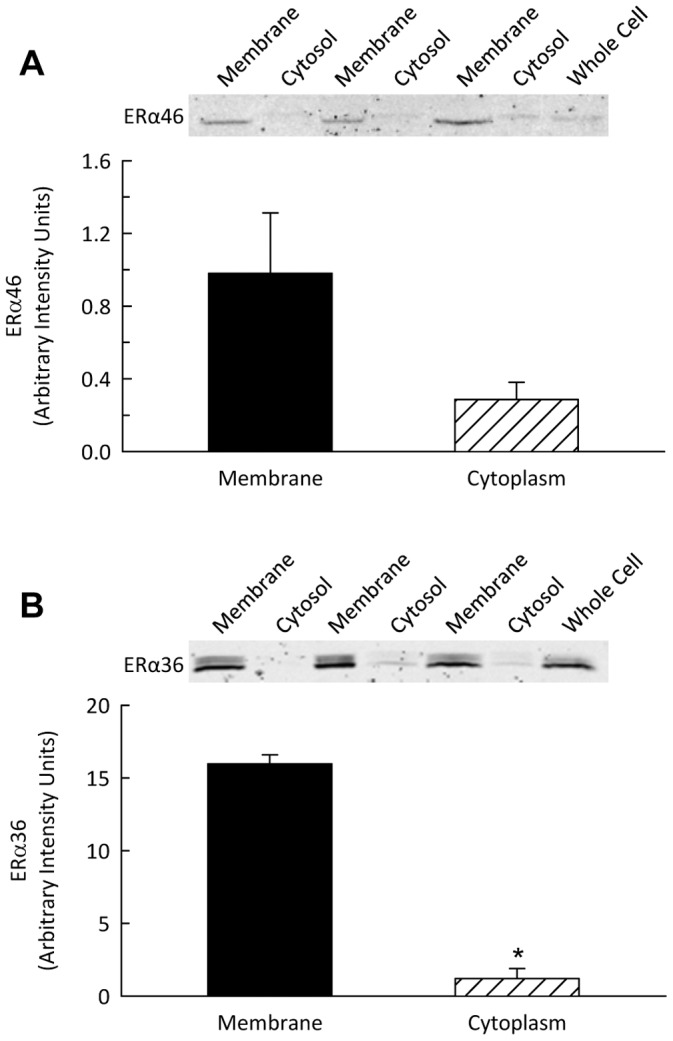
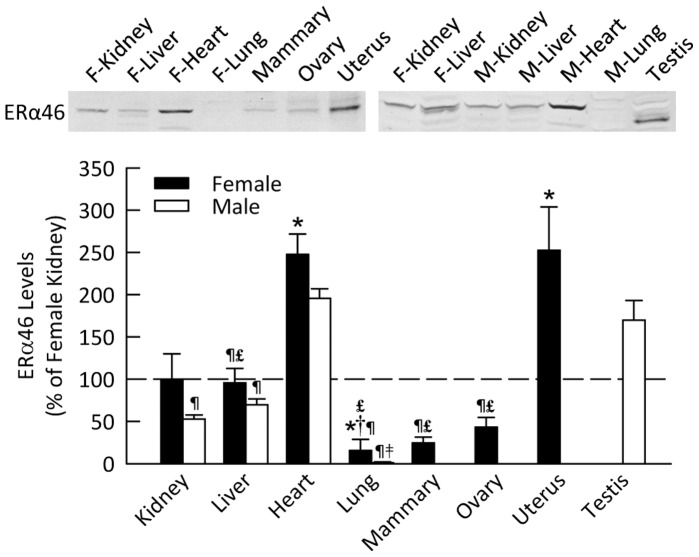
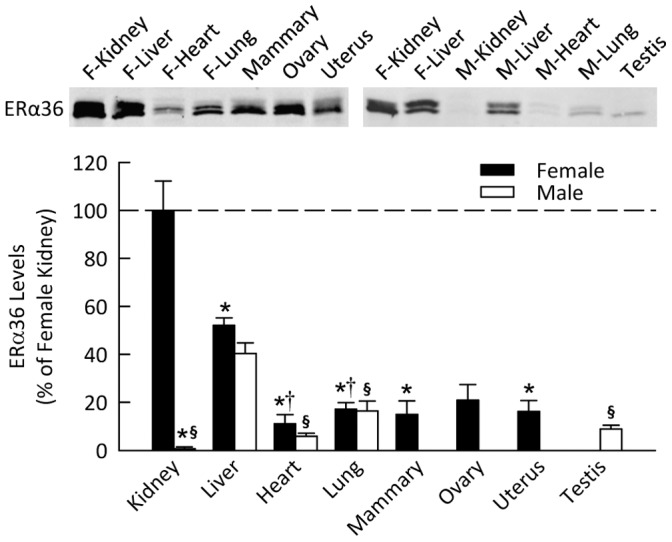
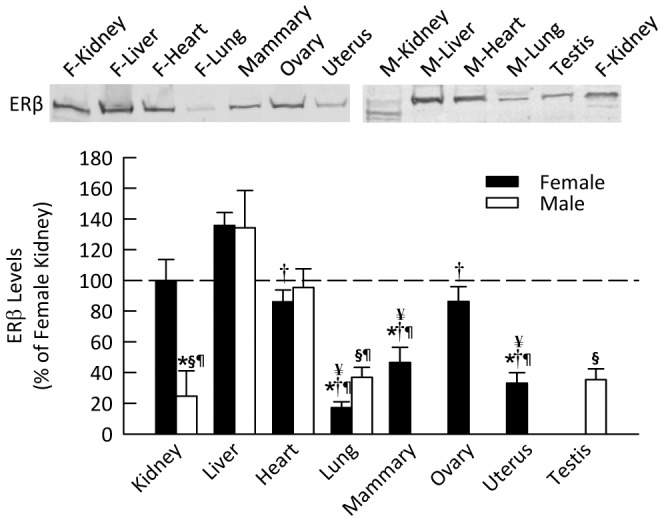
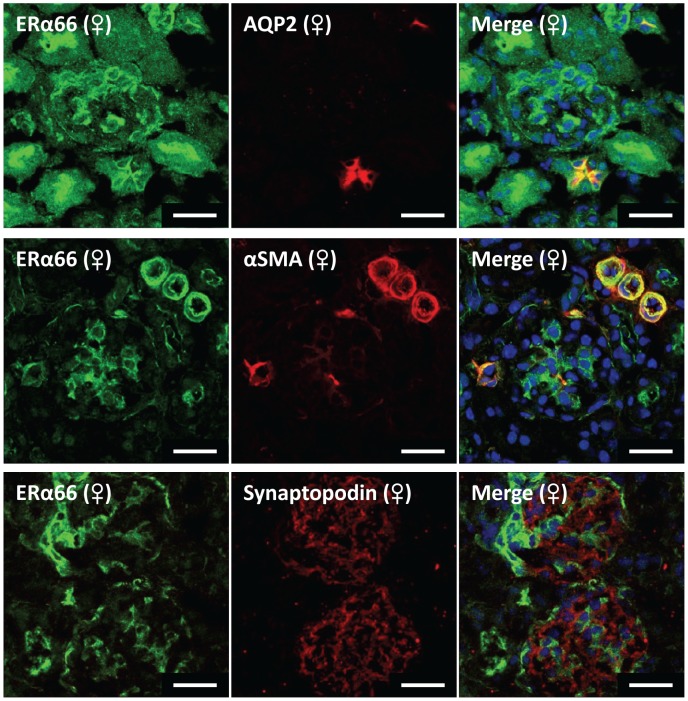
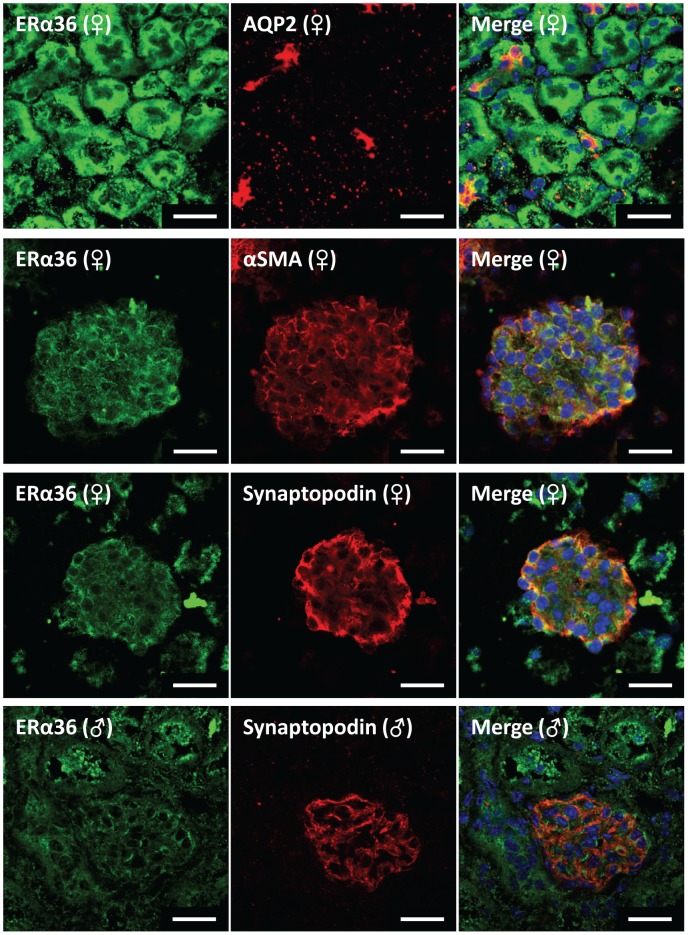
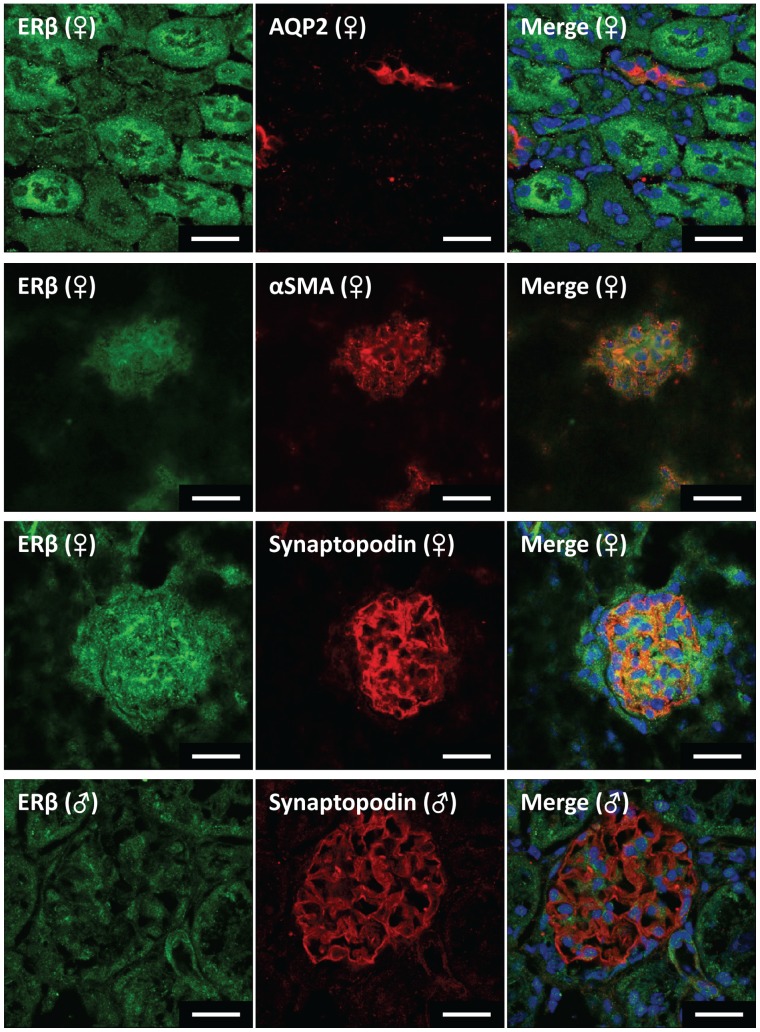
Estrogens exert a variety of effects in both reproductive and non-reproductive tissues. With the discovery of ERα splice variants, prior assumptions concerning tissue-specific estrogen signaling need to be re-evaluated. Accordingly, we sought to determine the expression of the classical estrogen receptors and ERα splice variants across reproductive and non-reproductive tissues of male and female mice. Western blotting revealed that the full-length ERα66 was mainly present in female reproductive tissues but was also found in non-reproductive tissues at lower levels. ERα46 was most highly expressed in the heart of both sexes. ERα36 was highly expressed in the kidneys and liver of female mice but not in the kidneys of males. ERβ was most abundant in non-reproductive tissues and in the ovaries. Because the kidney has been reported to be the most estrogenic non-reproductive organ, we sought to elucidate ER renal expression and localization. Immunofluorescence studies revealed ERα66 in the vasculature and the glomerulus. It was also found in the brush border of the proximal tubule and in the cortical collecting duct of female mice. ERα36 was evident in mesangial cells and tubular epithelial cells of both sexes, as well as podocytes of females but not males. ERβ was found primarily in the podocytes in female mice but was also present in the mesangial cells in both sexes. Within the renal cortex, ERα46 and ERα36 were mainly located in the membrane fraction although they were also present in the cytosolic fraction. Given the variability of expression patterns demonstrated herein, identification of the specific estrogen receptors expressed in a tissue is necessary for interpreting estrogenic effects. As this study revealed expression of the ERα splice variants at multiple sites within the kidney, further studies are warranted in order to elucidate the contribution of these receptors to renal estrogen responsiveness.
雌激素在生殖和非生殖组织中发挥着多种作用。随着 ERα 剪接变异体的发现,先前关于组织特异性雌激素信号的假设需要重新评估。因此,我们试图确定经典雌激素受体和 ERα 剪接变异体在雄性和雌性小鼠的生殖和非生殖组织中的表达。Western blot 显示,全长 ERα66 主要存在于雌性生殖组织中,但在较低水平也存在于非生殖组织中。ERα46 在两性的心脏中表达最高。ERα36 在雌性小鼠的肾脏和肝脏中高度表达,但在雄性小鼠的肾脏中不表达。ERβ 在非生殖组织和卵巢中最为丰富。由于肾脏已被报道为最具雌激素性的非生殖器官,我们试图阐明 ER 在肾脏中的表达和定位。免疫荧光研究显示 ERα66 在血管和肾小球中。在雌性小鼠的近端肾小管刷状缘和皮质集合管中也发现了它。ERα36 在两性的系膜细胞和肾小管上皮细胞中可见,在雌性的足细胞中也可见,但在雄性中不可见。ERβ 主要存在于雌性小鼠的足细胞中,但也存在于两性的系膜细胞中。在肾皮质中,ERα46 和 ERα36 主要位于膜部分,尽管它们也存在于胞质部分。鉴于本文所示表达模式的可变性,有必要鉴定组织中表达的特定雌激素受体,以便解释雌激素作用。由于本研究揭示了 ERα 剪接变异体在肾脏内多个部位的表达,因此需要进一步研究以阐明这些受体对肾脏雌激素反应性的贡献。