Figuera-Losada Mariana, Rojas Camilo, Slusher Barbara S
1Brain Science Institute NeuroTranslational Drug Discovery Program, Johns Hopkins University School of Medicine, Baltimore, MD, USA.
J Biomol Screen. 2014 Jan;19(1):17-31. doi: 10.1177/1087057113499406. Epub 2013 Aug 14.
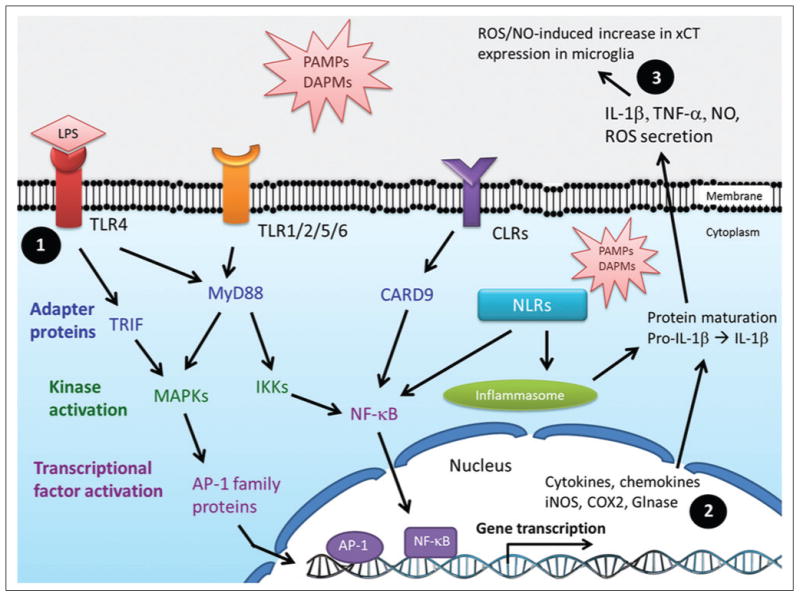
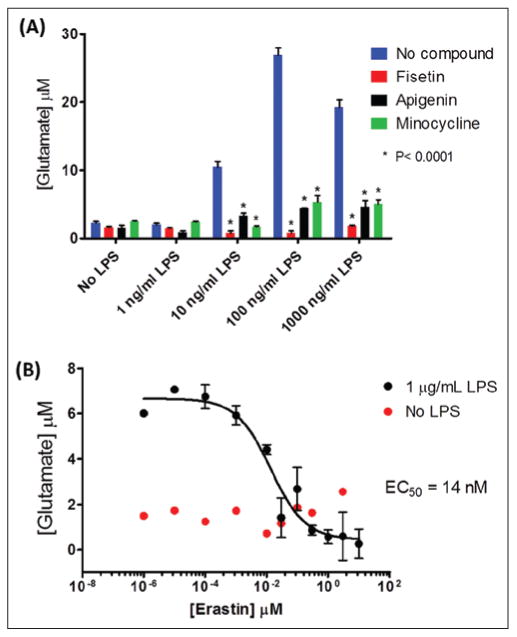
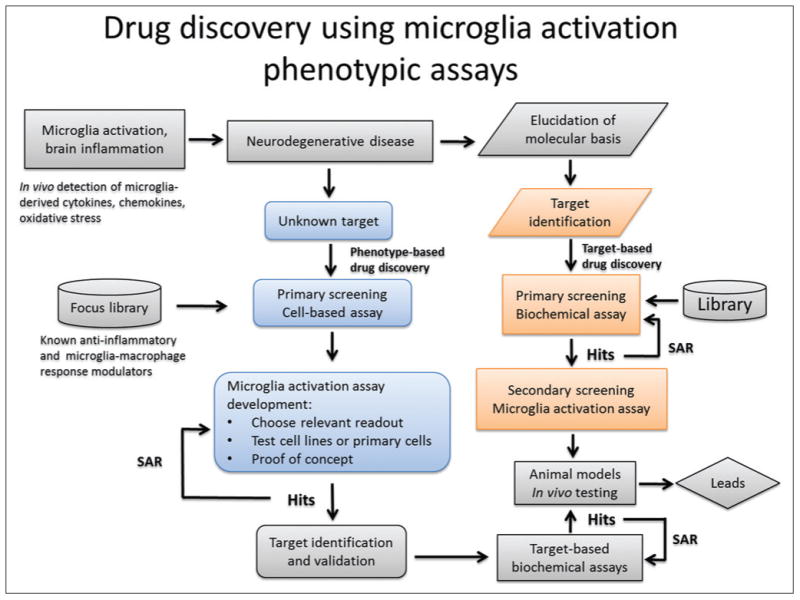
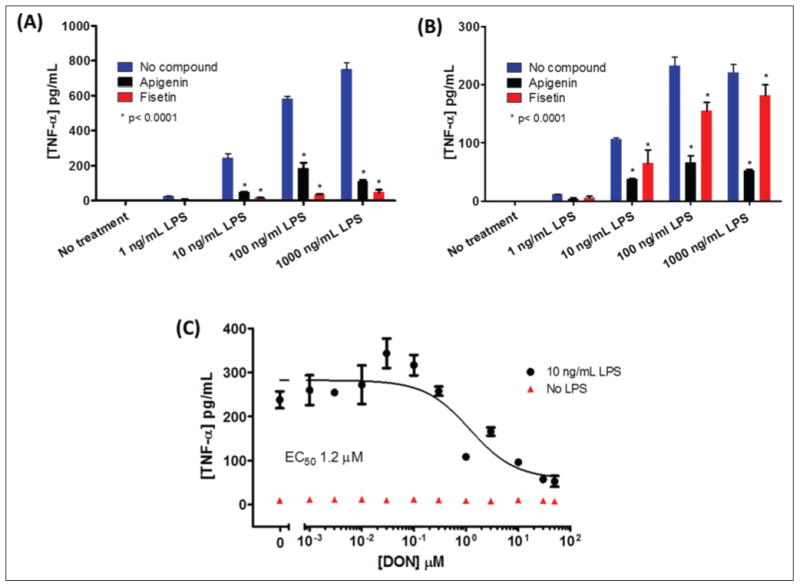
Complex biological processes such as inflammation, cell death, migration, proliferation, and the release of biologically active molecules can be used as outcomes in phenotypic assays during early stages of drug discovery. Although target-based approaches have been widely used over the past decades, a disproportionate number of first-in-class drugs have been identified using phenotypic screening. This review details phenotypic assays based on inhibition of microglial activation and their utility in primary and secondary screening, target validation, and pathway elucidation. The role of microglia, both in normal as well as in pathological conditions such as chronic neurodegenerative diseases, is reviewed. Methodologies to assess microglia activation in vitro are discussed in detail, and classes of therapeutic drugs known to decrease the proinflammatory and cytotoxic responses of activated microglia are appraised, including inhibitors of glutaminase, cystine/glutamate antiporter, nuclear factor κB, and mitogen-activated protein kinases.
诸如炎症、细胞死亡、迁移、增殖以及生物活性分子释放等复杂的生物学过程,可在药物发现的早期阶段用作表型分析的结果。尽管基于靶点的方法在过去几十年中得到了广泛应用,但相当数量的首创药物是通过表型筛选发现的。本综述详细介绍了基于抑制小胶质细胞激活的表型分析及其在一级和二级筛选、靶点验证和信号通路阐明中的应用。文中回顾了小胶质细胞在正常以及慢性神经退行性疾病等病理条件下的作用。详细讨论了体外评估小胶质细胞激活的方法,并对已知可降低激活的小胶质细胞促炎和细胞毒性反应的治疗药物类别进行了评估,包括谷氨酰胺酶抑制剂、胱氨酸/谷氨酸反向转运体抑制剂、核因子κB抑制剂和丝裂原活化蛋白激酶抑制剂。